










































Reporting Research: Using Evidence for Effective Journalism
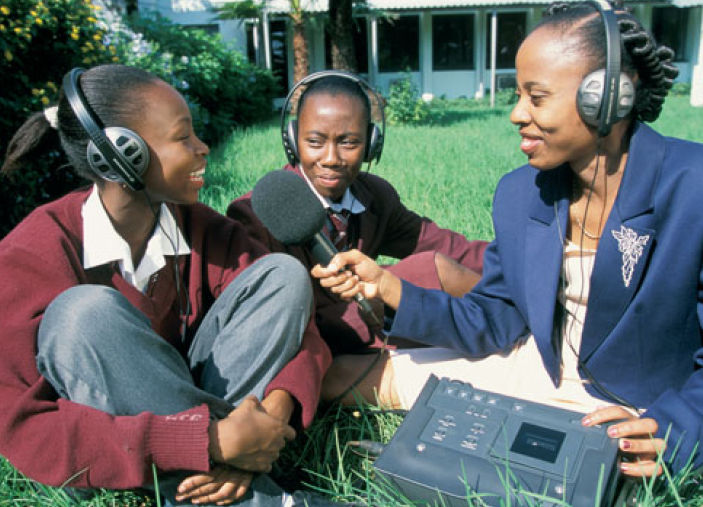
This 8-page media briefing offers communicators and journalists support and ideas on using research to create debates and inform people of problems and possible solutions. Its premise is that research can create powerful stories for news and features that have direct relevance for their audiences.
The document poses the question: "Why report research?" It answers with the following reasons and examples:
- "Research can provide vital information for audiences. For example, an article based on findings from an agricultural research project on a new seed variety can inform extension workers about how to improve the crop resilience, yield, and income of farmers."
- "Research can provide the basis for effective reporting which promotes accountability. For example, Ugandan reporter Ssemujju Ibrahim used a research survey of 685 Ugandan women who nearly died in childbirth to tell the story of one woman’s near miss during the birth of her thirteenth child. He also interviewed government officials about the research recommendations for reducing maternal deaths and made their answers publicly available, helping to make them more accountable."
- "Research can draw in new audiences and provoke responses from policymakers. For example, a talk show broadcast by Radio Gold in Ghana drew on research to ask how far education in Ghana had reduced poverty. The subject encouraged a new group of listeners - school pupils and students - to phone in. The resulting debate prompted a member of parliament to call on the government to fund educational reform."
- "Research can provide sound evidence and hard-hitting facts. For example, research into the working conditions for young women in wholesale shops in Jamaica revealed shopkeepers were in violation of labour laws and human rights agreements. The findings provided reliable material for a headline article on ‘Modern Day Slavery’. They also provided the basis for lively radio debates on women’s rights that drew in wide audiences."
The document describes development research and those who carry it out. It discusses who generally sets the development research agenda and how this impacts and influences what is researched and why developing country universities and research organisations often don't have a voice in agenda setting or in what they research and how they research development. It also illustrates how research organisations can seek participatory input from communities and describes an example of a research agenda in Tanzania that was grassroots-generated.
The strategy of journalists talking to researchers in person or by telephone, rather than using their research documents exclusively, is recommended. "Contacting researchers and asking them a few open-ended questions can help establish how their research connects with individual experiences and bigger policy debates." Examples of questions for journalists to ask researchers are included in the document. The goal shared between journalists and researchers of creating debates about important development issues that reach out to ordinary people is suggested as a commonality to be used in approaching researchers for interviews.
Development research topics are suggested along with ideas for using research to generate audience involvement. These include the following:
- "Research on AIDS or malaria: A round of interviews with different groups involved (e.g. researchers, policymakers, pharmaceutical companies, health professionals, [non-governmental organisations] NGOs, affected patients and their families) could lead to an article on the tensions between these groups."
- "Research on post-conflict reconstruction: Could be presented through a feature story of an individual who is putting back together the pieces of his or her life."
- "Research on gender equality in society: Could be presented through two side-by-side interviews: the first interviewee... believes that gender inequality is a serious problem in society, while the second interviewee... believes that gender equality is not desirable."
- "Research on land rights: Could be presented through a short piece where the journalist presents the evidence about land rights and then offers their own opinion, inviting reactions from readers."
- "Research on livelihoods: Could be presented through a photo essay where all the activities of a rural family are photographed over the course of a week. The journalist can inform readers whether this is a typical family ...or... unusual in some way."
In concluding, the article discusses assessing research. Approaching research with a critical eye, as stated here, includes looking at: ethics; objectivity; methodology used in the research; and qualifications of researchers. The document has questions for distinguishing between poor and good research, including analysing: how it was conducted ; who conducted it (what is their experience and reputation in their field); what was learned; and how researchers decide what to research and how they will communicate the results. Further questions include looking at: how the research meets the needs of local communities who are supposed to benefit from development; who is funding the research; why are they funding it; and how that entity might benefit from its findings, as well as why particular findings and recommendations were highlighted.
Email press release from Panos to The Communication Initiative on December 23 2008.
Comments

- Log in to post comments