










































Rethinking End FGM/C Work: A Guide to Designing Effective Social-Norms-Change Programmes to End FGM/C
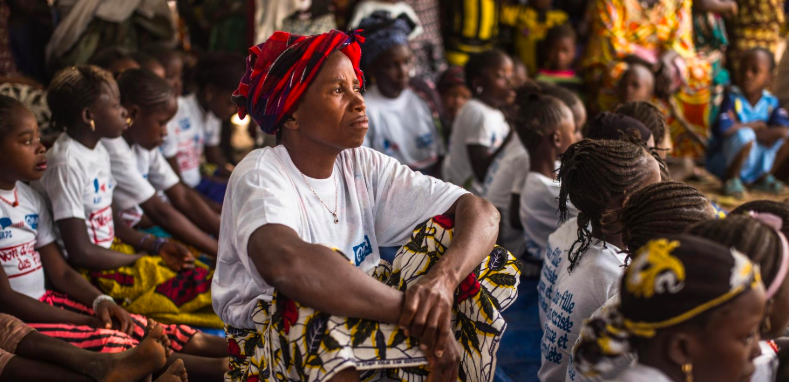
"FGM/C is a cultural practice and, in many cases, a deeply entrenched social norm, rooted in gender norms often aimed at controlling female sexuality."
This document offers guidelines on how to implement a social norms approach to end female genital mutilation/cutting (FGM/C). In particular, it provides guidance on how to design culturally sensitive, community-based programmes to shift social norms around FGM in ways that address a community's needs and priorities and are accepted and supported by key actors who influence and support the practice.
As explained in the guide, "Over the past few decades, many strategies to reduce female genital mutilation/cutting (FGM/C) have been developed. Although there has been a decline in the rate of FGM/C in many countries, it has not been keeping up with the population growth, resulting in a continued rise of absolute numbers of girls and women affected. In addition, it has long been felt that most of the interventions that have been tried failed to take full account of the cultural and social context in which they occurred.
There is a growing consensus that a more effective approach to reducing FGM/C would be through culturally sensitive, community-based programmes that lead to a shift in the deeply embedded social norms that uphold the practice - a social-norms-change approach. This means recognising that there is no one-size-fits-all strategy, that the beliefs and values of each community have to be addressed individually, and the key decision-makers and influencers in each community must be engaged from the start."
The guide defines social norms as "expectations or informal rules shared by people in a group or society as to how people should behave. Norms shape what people believe are typical and/or appropriate behaviours. Gender norms are a significant sub-set of social norms. They are the unwritten rules about how men and women, often of a particular age, should behave. Gender norms reflect hierarchies of power and privilege which often discriminate against women and girls."
The guide outlines four stages that are designed to support programme staff to ask the right questions and to ensure that strategies are locally relevant. It is based on the idea that changing the social norms related to FGM/C can be achieved through three distinct phases: increasing knowledge, changing attitudes, and shifting practice.
The four stages are as follows:
1. Scoping phase - context is critical: This stage explains the questions that need to be asked and the data gathered to fully understand the social environment in which FGM/C is taking place in a specific location. Questions include:
- Where and why is it happening?
- How old are the girls or women when they undergo FGM/C?
- What type of FGM/C do they experience?
- Who decides if/when girls should be cut?
- Who influences that decision?
- Who undertakes the cutting?
2. Programme analysis and design phase: This stage is the process of designing a strategy/ies on the basis of the context that has been researched. It includes guidance on:
- Describing the priority community: who one is trying to reach, where they are located, their age(s), the type of FGM/C they experience, the attitudes of their community towards FGM/C, and who makes and influences the decision on whether or not a girl should be cut.
- Deciding and describing what organisations hope to achieve with the programme: What are the anticipated outcomes and impact?
- Deciding what tactics and interventions to employ. Interventions that have been tried are summarised here, with suggestions about the context for which they are most suited in the social-norms-change process.
3. Implementing your plan: This section looks at some of the features found essential for delivering the social norms approach through K-A-P components (increasing knowledge, changing attitudes, and shifting practice). It offers guidance on:
- The process of implementing a social-norms-based programme to ensure effective transformation and, eventually shifts in behaviour;
- The role and skills of staff required to facilitate community-based dialogues;
- An organisation's duty of care to safeguard its staff from stress and abuse; and
- How to integrate an 'End FGM/C' message into a broader human-rights approach, focusing on girls' and women's empowerment and gender equality.
4. Assessing programme impact: Based on the social norms approach, this section offers guidance on what sort of monitoring and evaluating system can be used to assess the programme. This system should help to answer the following questions:
- Is knowledge increasing?
- Are attitudes changing?
- Is practice shifting?
And, following on from these questions:
- What has been learned?
- What can one build on to extend impact?
- What didn't work and why?
- How can one reduce or mitigate these aspects?
A list of key resources referenced throughout the document is provided.
These guidelines should be read alongside "FGM and Social Norms: A Guide to Designing Culturally Sensitive Community Programmes" (see Related Summaries, below), which sets out the theoretical concepts on which these guidelines are based.
Plan International website on June 24 2024. Image credit: Plan International/Johanna de Tessieres
- Log in to post comments