










































"Saint Google, Now We Have Information!": A Qualitative Study on Narratives of Trust and Attitudes Towards Maternal Vaccination in Mexico City and Toluca
London School of Hygiene & Tropical Medicine, or LSHTM (Simas, Larson, Paterson); University of Washington (Larson); National Institute for Health Research Health Protection Research Unit (NIHR-HPRU) in Immunisation, LSHTM in partnership with Public Health England (Paterson)
"Recognizing trust as a complex web of vaccine-related factors can provide valuable insights into the levers of vaccine acceptance, hesitancy or refusal..."
Different dimensions of trust are associated with the decision to vaccinate. Confidence in vaccines represents trust in the effectiveness and safety of vaccines, in the system that delivers them (including reliability of healthcare professionals), and in policymakers who determine the need for vaccines. Little is known about confidence in maternal immunisation among pregnant Mexican women. In response, researchers conducted a qualitative study to explore trust, views, and attitudes towards maternal immunisation among pregnant women in Mexico.
Altogether, 54 pregnant women from Mexico City (n=26) and Toluca (n=28) participated in in-depth interviews and focus groups. The findings are organised according to different dimensions of trust associated with vaccination:
- Trust in the public health system: The findings point to issues around access and quality of maternal healthcare, including immunisation services. Many participants reported previous negative experiences with healthcare professionals (HCPs) in public services; some felt pushed to vaccinate while they still had concerns. Findings indicate that such mistreatment, coupled with a perceived lack of control over health choices, can drive wealthier patients to switch to private services, where higher levels of trust are recorded, and lead low-income individuals to avoid health services altogether.
- Trust in the safety and efficacy of maternal immunisation: Many participants in this study were mistrustful of the safety of maternal vaccines, worrying that their babies would be born with deformities and disabilities if they vaccinated during pregnancy. These concerns were also shared by pregnant women who had been vaccinated. While participants cited husbands and their own mothers as sources of influence and support for decision making, they recognised the expertise of HCPs. ("Given the authority placed by participants in the expertise of HCPs (and their recommendation of vaccines), more should be invested in how HCPs can better inform and contribute to patient's vaccine literacy...")
- Trust in government: Some participants reported mistrust in vaccination campaigns, believing that the government was using them to divert attention from political issues. Vaccine-accepting participants reported that correcting such rumours could be a driver for maternal vaccination.
- Trust in information: Participants reported not receiving enough information to make informed decisions and used online search engines and digital media to obtain more information about maternal healthcare. For example, they reported turning to apps (e.g., My Embarazo, Babycentre) and social media for health information; many mentioned participating in Facebook groups with other pregnant women. (The concern is that anti-vaccine sentiments and misinformation broadcasted online may impede health-seeking behaviour among this group.)
In reflecting on the findings, the researchers are critical of analyses that place the burden of distrust in vaccines only on individuals. Understanding trust dyanmics, they stress, requires attending to the responsibility of institutions to be trustworthy. For example, health systems should strive to provide "dignity-affirming experiences", especially when providing care to vulnerable populations and/or those who have been impacted by "historical legacies of mistrust".
In conclusion:"Evidence-based interventions and policies are urgently needed to improve vaccine confidence and vaccine coverage in maternal vaccination...[P]regnant women, who are also soon becoming parents and making vaccination decisions for their child, constitute an important target group for policymakers seeking optimal maternal as well as childhood immunization coverage, with targeted communication, trust-building and engagement strategies."
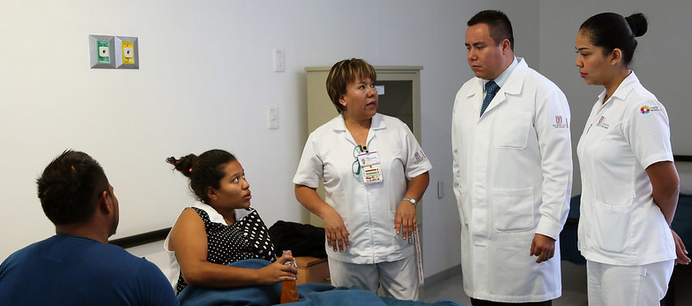
BMC Public Health (2021) 21:1170. https://doi.org/10.1186/s12889-021-11184-y. Image credit: Pan American Health Organization via Flickr (CC BY-NC 2.0)
- Log in to post comments