










































Social and Behavior Change Considerations for Areas Transitioning from High and Moderate to Low, Very Low and Zero Malaria Transmission
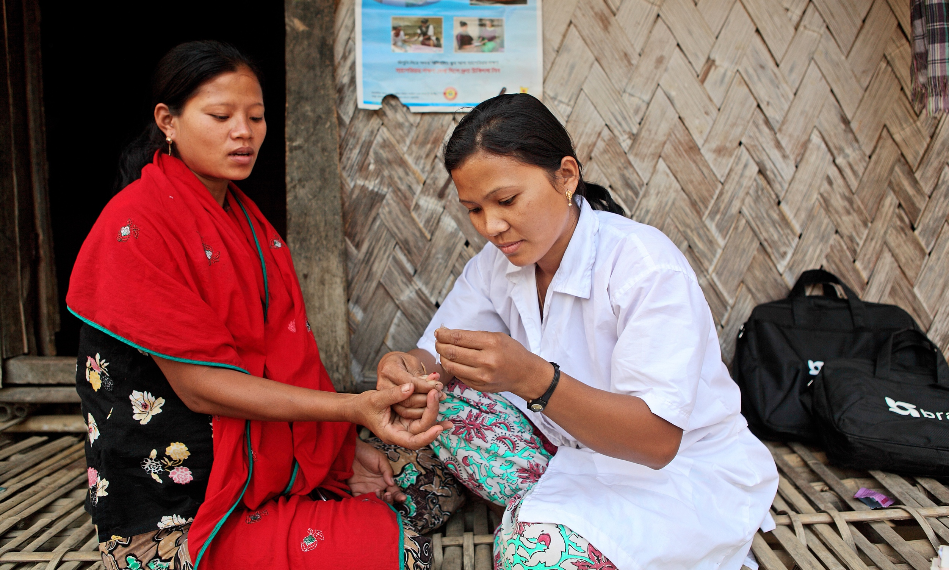
"In areas with high, moderate, low, and very low transmission alike, use and uptake of malaria interventions rely heavily on community awareness, demand, and acceptance of essential commodities and services."
The World Health Organization (WHO) Global Technical Strategy (GTS) goals include reducing malaria incidence and mortality rates by at least 90%, eliminating malaria in 35 countries, and preventing re-establishment in all malaria-free countries. Observing a lack to date of detailed guidance for social and behaviour change (SBC) around malaria in different transmission settings, the Health Communication Capacity Collaborative (HC3) created this document, which describes ways in which programme planners and implementers might tailor their efforts to specific malaria transmission strata and suggests a number of operational research questions. Featuring three case studies, the document is designed to foster understanding in how to scale-up and maintain coverage of proven interventions in all areas and support countries to effectively transition from high or moderate to low, very low, or zero levels of malaria transmission.
Malaria SBC considerations in this document are organised according to the categories of transmission intensity outlined by WHO's Framework for Malaria Elimination (for a visual of the framework, see Figure 1 on page 6). The first section of the HC3 document reviews malaria interventions, categorised by WHO-defined malaria transmission levels, discussing SBC recommendations for each.
While insecticide-treated net (ITN) and indoor residual spraying (IRS) reduce mosquitoes' capacity to transmit malaria, they are most effective when ITN use and/or IRS acceptance is high. Research data shows that exposure to malaria SBC can increase net use, net longevity (see Box 1 on page 7) and IRS acceptance (see Box 2 on page 8). Along the lines of the latter, WHO's Framework for Malaria Elimination [PDF] articulates the following objectives of community participation:
- Encouraging appropriate health-seeking behaviour;
- Strengthening community access to malaria testing, treatment, and reporting;
- Promoting acceptance and appropriate use of vector control tools;
- Empowering communities to strengthen self-monitoring and decision-making about malaria;
- Building community and local political support for eliminating malaria; and
- Increasing active community participation in elimination activities, including a surveillance system linked to district and other systems up to national level.
Described by HC3 as a promising practice for enhancing and optimising vector control is horizontal participatory practices to stimulate community contributions. The "open space" approach, a means of engaging with communities to determine their willingness to contribute to malaria reduction efforts, was employed in the Ruhuha sector of Rwanda. Used as part of an integrated malaria elimination strategy, the community workshops yielded two local solutions: the establishment of a rewards system and malaria clubs. A subsequent Community Malaria Action Teams intervention was conducted. At the end of 2014, these teams reported a reduction of presumed malaria cases, attributing gains to increases in use and acceptance of IRS spraying and community-based health insurance membership. Local health data indicated a malaria burden reduction of 15.5%. A household survey conducted 6 months after the intervention found an increase in IRS acceptance from 94.5% to 98.7%, and a 47% increase in prompt care seeking for fever.
HC3 stresses that, in high transmission and moderate transmission areas, focusing on individual behaviour change is necessary but insufficient. Social change, shifts in behaviour by whole communities, is needed to establish and maintain a culture of net use and IRS acceptance - and coverage rates that bestow a community protective effect. Use of behavioural theory, programme design, and the framing of messages about malaria severity in areas where high malaria transmission has existed for decades should look very different than SBC in areas where malaria has recently been eliminated or re-introduced.
From an SBC standpoint, the mere adoption and scale up of behavioural practice is not enough: Acceptance of IRS spraying and use of ITNs must be maintained at high levels. While behaviour maintenance theory is not yet commonly used to inform malaria SBC programming, its focus on the role of motives, self-regulation, resources, habits, and environmental and social influences may prove useful where ITNs and IRS have been implemented for a number of years. Furthermore, in addition to using routine health facility data collection, the process of assessing behavioural, environmental, and social influences among those who engage in risky behaviour (not using ITNs, for example) may require new surveys and sampling techniques.
Some operational research questions raised here include:
- Almost all standard malaria SBC indicators measure individual behaviour change. Even those that measure social norms are enumerated at the household level. Would the development of an indicator that measures acceptable ITN and IRS attitudes and behaviours at the community level prove to be a more meaningful way of determining if social norms have actually been established?
- ITN and IRS SBC efforts are often informed by behaviour change theory that focuses on adoption of new behaviours. Would the development of programmes designed with behaviour maintenance theory prove to be more effective in areas where ITN and IRS use have already been established?
- Monitoring shifts in human attitudes, perceptions, and behaviours will remain important as countries transition to moderate and low transmission strategies. Can interactive voice response (IVR) and short message service (SMS) be used to quickly and inexpensively determine shifts in these important behavioiral antecedents?
The cornerstone of malaria case management SBC is increasing the proportion of those who seek care for fever quickly, particularly pregnant women and children under five. Programme implementers who have used the positive deviance approach (see Box 4 on page 10) have found that leveraging local voices and modeling behaviour can have a positive impact on prompt care seeking in high transmission areas. Raising awareness about the broad spectrum of causes of fever is particularly important among communities transitioning from high and moderate to low, very low, and zero transmission intensity to avoid confusion and concern about the increasing number of fevers testing negative for malaria. As communities experience fewer and fewer cases of malaria, it may be more effective to maintain levels of perceived severity than perceived risk, as risk will, in fact, decrease, but decreased natural immunity will make imported cases more severe.
Where recommended, HC3 notes, SBC should be paired with intermittent preventive treatment of malaria in pregnancy (IPTp) interventions to increase uptake at the community level. A growing body of evidence suggests that service provider attitudes, biases, and behaviours are a key determinant of IPTp uptake, implying that SBC interventions that include supportive supervision or participatory learning approaches may increase service provider adherence to IPTp guidelines.
Component B of the Framework for Malaria Elimination involves testing all individuals with suspected malaria. At times, malaria case detection and reporting will involve the assent and participation of asymptomatic community members. This represents a necessary shift in messaging at the community level, requiring attention from SBC programmes and practitioners. As areas transition to treat individuals with malaria who are asymptomatic, SBC activities should substitute emphasising exclusive test-before-treat messaging with calls to action that encourage trust of health workers and their new treatment regimens. For example, as malaria cases decreased in Swaziland, the NMCP conducted yearly knowledge attitudes and practices surveys to determine which communication channels to prioritise. Based on these surveys, the National Malaria Control Program (NMCP) is able to adjust messages and campaigns from year-to-year.
HC3 explains that a shift in how we conceptualise those at risk of malaria will require changes not only in demographic focus, but the application of lessons learned about infectious diseases and human movement, including how to locate, track, and influence behaviours of mobile populations. When transitioning to low, very low, and zero transmission, SBC practitioners are urged to shift from measuring fixed geographically and demographically defined populations to examining mobility as a system and looking for ways of reaching and interacting with people in that system who share risk-taking behaviour. Evidence suggests that encouraging them to take an active role in their own well-being will yield positive results. Monitoring human movement, and determining what effect the direction of that movement will have on different areas (e.g., using cell phone records to measure the number of travelers and duration of their stays), will involve understanding and use of malaria vulnerability and receptivity indexes. This will necessitate use of routine data, collected with greater frequency. Snowball sampling and time sampling are two techniques proposed in the document's list of operational research questions.
Component D of the Framework to Eliminate Malaria involves close investigation of every single malaria case and the development of a system to follow up with each case. As vectors of the parasite decrease rapidly, mass communication channels like radio and TV will become less and less relevant, as will widespread use of health workers to communicate with communities about malaria. Points of entry, including country borders, will become increasingly important focal points of malaria communication. Coordination with neighbouring countries can be accomplished through participation in regional strategy development and sharing of best practices through SBC communities of practice, such as the Roll Back Malaria Social and Behavior Change Communication Working Group.
In areas of low and very low transmission, reported cases of malaria will become the most important indicator of progress towards elimination, and service providers will become the chief means of communicating with patients about malaria. As this happens, it will be increasingly important to prioritise messages and promote malaria, emphasising actions to avoid more than one disease or illness. In fact, the WHO recommends taking advantage of opportunities to communicate about multiple vector-borne diseases (those currently posing a risk as well as malaria) when possible. In areas where other vector borne diseases are present, it may be possible to package SBC messaging and materials in a way that provides a set of behaviours families can take to avoid multiple illnesses.
Three case studies exemplify considerations raised in the first part of the document, illustrating SBC activities in different pre-elimination contexts. In brief:
- In Zambia, SBC implementation by the United States Agency for International Development (USAID)-funded Communication Support for Health (CSH) project exemplifies an approach with benefits for areas of high and low malaria transmission intensity. It centres around an interpersonal communication (IPC) approach paired with community-owned surveillance. As the case study explains, the participatory nature of CSH's Champion Communities initiative was designed to ensure that communities set their own goals and created local solutions to health issues like malaria. The notion of communities collecting and using their own data was powerful because reductions in morbidity were noticeable.
- Consistent with the WHO strategy for the Greater Mekong sub-Region, Control and Prevention of Malaria (CAP-Malaria), a USAID-supported project, used human movement patterns to determine where to provide treatment before and after travel, as well as in places where mobile and migrant populations (MMPs) work. The case study describes multi-channel, cross-border initiatives such as net lending programmes, training non-registered medicine vendors, and IPC with travelers at multiple points on known trade routes.CAP-Malaria's fifth year work plan indicates a decrease in incidence, from 22.3 cases per 1,000 in 2011 to 11.4 in 2014 for CAP-Malaria's target areas. Programmes designed for low and very low areas of malaria transmission should build on lessons learned in this region.
- In South America, the Amazon Malaria Initiative (AMI)'s regional coordination between the governments of Latin American countries illustrates the degree of cohesion necessary to sustain gains in an interconnected region. As part of the effort, in addition to regional SBC strategy development, LINKS MEDIA worked with national representatives from six countries to develop country-specific communication strategies for Brazil, Colombia, Ecuador, Guyana, Suriname and Peru, several of which included strategies focused on specific, local migrant groups at risk for malaria. To facilitate country ownership, LINKS Media provided technical support through webinars, materials development, meetings, and internal monitoring opportunities. An intermediate performance evaluation of AMI activities found that the initiative played a major role in the decline of malaria incidence in Latin America and the Caribbean.
In conclusion: "Country-wide SBC campaigns, the high visibility of malaria infection, and resulting social understanding and community norms evolves as transmission is further reduced. At the same time, economies of scale and cost savings inherent in population-level SBC activities, such as mass-media campaigns and nationally representative household survey measurement tools, will be rendered an inappropriate means of measuring and reaching increasingly homogenous at-risk groups....This landscape document explored a number of ways to ensure that on the road to global malaria eradication, provision of medical commodities and clinical services are adequately paired with a human-centered SBC response within specific malaria transmission strata and suggested a number of operational research questions for further exploration."
H3C website, January 19 2018. Image credit: HC3
- Log in to post comments