










































Translating Community Research into Global Policy Reform for National Action: A Checklist for Community Engagement to Implement the WHO Consolidated Guideline on the Sexual and Reproductive Health and Rights of Women Living with HIV
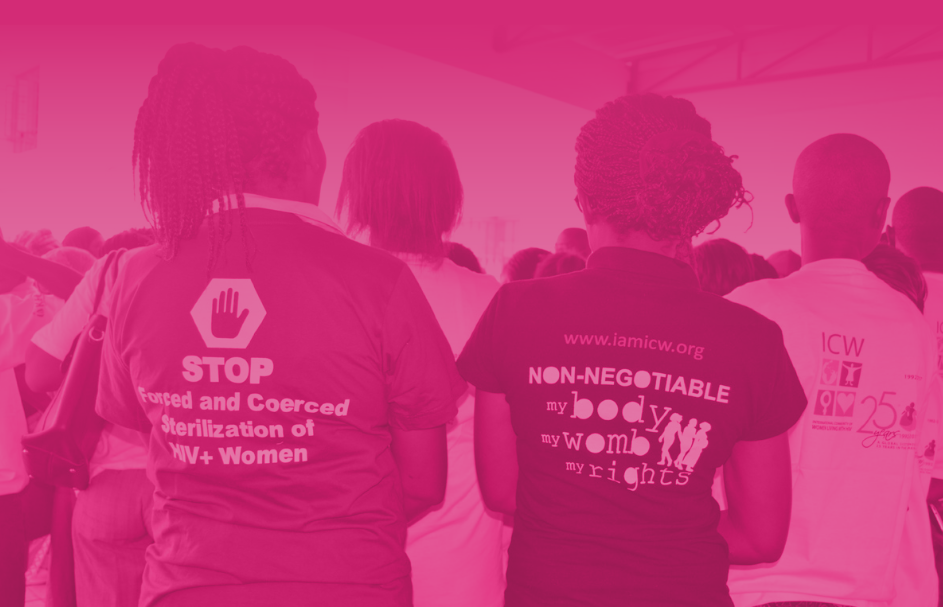
Developed by the Salamander Trust, this document supports implementation of the 2017 WHO Consolidated Guideline on Sexual and Reproductive Health and Rights of Women Living with HIV (see Related Summaries, below). The document presents a checklist for women living with HIV to advocate for the full rollout of the guideline in their own countries. The publication is a joint United Nations (UN) document, supported by World Health Organization (WHO), the Joint United Nations Programme on HIV and AIDS (UNAIDS), United Nations Population Fund (UNFPA), and the Office for the High Commission for Human Rights (OHCHR).
The context of the development of the WHO guideline - and this checklist - is that women living with HIV face barriers to service uptake, use, and meaningful engagement. In all epidemic contexts, these barriers occur at the individual, interpersonal, community, and societal levels. They may include challenges such as social exclusion and marginalisation, criminalisation, stigma, gender-based violence, and gender inequality. Strategies are needed across health system building blocks to address barriers and improve the accessibility, acceptability, affordability, uptake, equitable coverage, quality, effectiveness, and efficiency of health services for women living with HIV.
The WHO guideline seeks to support frontline healthcare providers, programme managers, and public health policymakers to better address the sexual and reproductive health and rights (SRHR) of women living with HIV in all their diversity. It was developed with engagement from communities of women living with HIV throughout its development, publication, and dissemination. In line with this collaborative process, it provides: (i) evidence-based recommendations (RECs) for the SRHR of women living with HIV, with a focus on where the health system has limited capacity and resources; (ii) good practice statements (GPSs) on key operational and service delivery issues that need to be addressed to: increase access to, uptake of, and the quality of outcomes of SRH services; improve human rights; and promote gender equality for women living with HIV.
Networks of women and individuals living with HIV or other advocates can use the checklist in different countries. The process is estimated to take between 4 and 5 months to complete at the national level. The checklist highlights 6 specific stages and 15 steps to support this process:
- Obtain high-level commitment
- Step 1: Convene an advisory group of women living with HIV
- Step 2: Secure high-level commitment
- Step 3: Develop a resource plan
- Step 4: Secure a lead organiser to support the process
- Conduct a desk review
- Step 5: Review the RECs and GPSs and agree on the desk review outline
- Step 6: Conduct the desk review
- Step 7: Share the draft report with the advisory group
- Step 8: Finalise the report
- Conduct a review workshop
- Step 9: Organise a workshop with women living with HIV
- Step 10: Identify workshop participants
- Step 11: Hold the workshop
- Use the findings
- Step 12: Identify priority initiatives
- Step 13: Develop an advocacy plan
- Step 14: Develop a communication plan
- Step 15: Develop a fundraising strategy
- Carry out monitoring and evaluation
- Share the work
One example of how women living with HIV track the national situation and report on their findings: The International Community of Women Living with HIV AIDS (ICW) Latina created a virtual tool to raise awareness of laws, policies, and regulations related to the rights of women with HIV, particularly in the areas of HIV, SRHR, violence against women (VAW), and gender equality. The tool supports national and regional political advocacy processes to advance the human rights of women with HIV and is available here. Following this, 3 mobile applications are being produced for: women with HIV, service providers, and decision-makers.
The Salamander Trust contends that understanding and having ownership of the guideline and its new and existing RECs and GPSs: enables women living with HIV to fully understand what is/is not being implemented; increases their ability to demand accountability; and fosters access to improved and respectful care that results in better SRHR outcomes.
This is the fourth edition of this Checklist (first published in April 2018 with WHO funding). A pilot workshop, hosted by Women Fighting AIDS in Kenya (WOFAK) and supported by UNAIDS, took place in Nairobi, Kenya at the end of April 2018 with 25 women living with HIV to review an earlier edition of the checklist and to validate the findings of a desk review. It also provided space for women to develop priorities and action plans to sustain community-led efforts on the SRHR of women living with HIV in all their diversity. The checklist has been updated based on the workshop and its outcomes.
This checklist and process of the development of the guideline it supports has been endorsed by many networks of women living with HIV around the world as well as the heads of 5 UN agencies (OHCHR, UNAIDS, UNFPA, UN Women, and WHO).
83
Emails from Alice Welbourn to The Communication Initiative on November 26 2018, December 13 2018, and September 11 2019. Image credit: © Namibia Women's Health Network
- Log in to post comments