










































Triggering Organic Growth: A Fresh Challenge to Behaviour Change
University of Trento
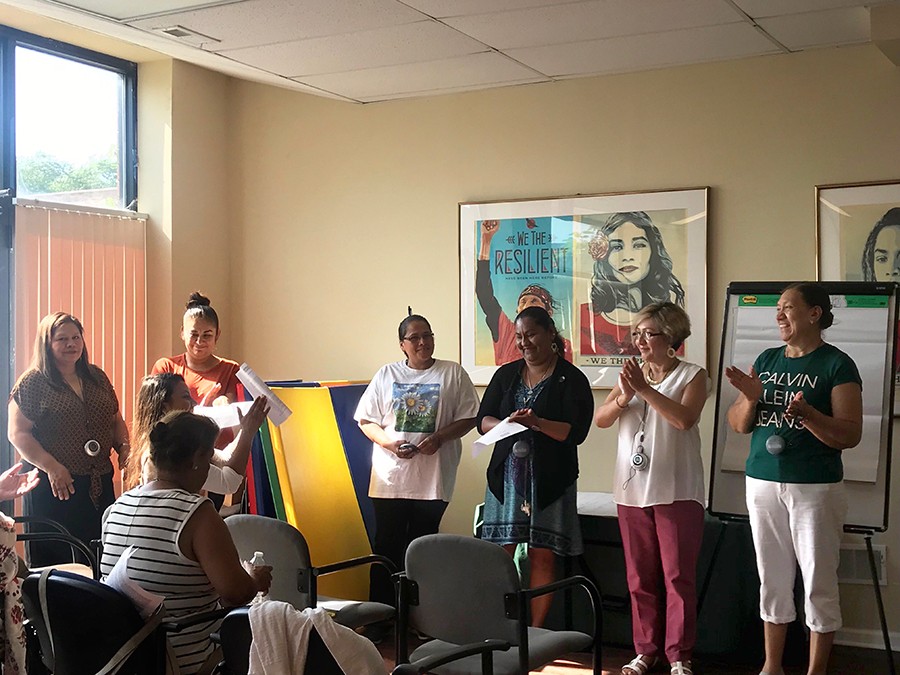
"Community empowerment builds organically from the individual, to the group, to a wider collective as people become more concerned with addressing the social and political causes of powerlessness and poor health. This must come from within an individual, group or community, and cannot be given to them."
Behaviour change communication, manifested through approaches such as water, sanitation, and hygiene (WASH), follows the logic that providing information, primarily through communication, is an effective way to reduce illness because it persuades people to change their unhealthy behaviours. However, according to author Glenn Laverack, single interventions that target a specific behavioural risk have little impact on the determinants that actually cause poor health, especially for vulnerable people. In this paper, he discusses "behaviour change beyond communication to trigger 'organic growth'", defined here as "a marked increase in the competencies, skills and knowledge in communities, societies and local economies to allow people to better organise and mobilise themselves towards achieving desired changes".
Laverack delves into the meaning of organic growth, centring it in the notion of community involvement and action. He cites the use of "organic organisers", local leaders amongst economically poor people in the Philippines, as an early example of facilitating organic growth at the community level. He also points to the example of the Stadtteilmütter (Neighbourhood Mothers) project in Neukölln, Berlin, which operated on the principle that the people who are the most capable of quickly building a meaningful relationship with migrant mothers are those who have shared similar experiences, such as other migrant mothers. According to Laverack, the "sustainability and the real success of the approach lie in the way it empowers women by increasing the interaction of migrant families with local service providers."
Organic growth requires strategic planning designed to help communities build their capacity to define, assess, analyse, and then to act to influence societal norms and behaviours, policy and legislation. Behaviour change approaches such as the "domains approach" use a range of tools to build capacity. The nine domains to build community capacity are community participation, problem assessment capacities, local leadership, organisational structures, resource mobilisation, links to other organisations and people, ability to ask "why?" (critical awareness), community control over programme management, and an equitable relationship with outside agents. Used in public health programmes around the world, the domains approach is often carried out in collaboration with a group of 10-15 community representatives in a facilitated workshop setting, which should be appropriate to the cultural context. The Altogether Better Project in the United Kingdom (UK) involved a collaborative partnership aimed to empower communities to improve their own health and wellbeing. Another example, one that illustrates the need to break down cultural barriers as organic growth takes place, is that of Compagnia Teatro dell'Argine in Italy. This approach uses participatory theatre to remove physical and psychological barriers and prejudices by including migrants and non-migrants in performances to foster inclusiveness.
Laverack argues that organic growth is unlikely to have broad influence without "organic change", concerted actions at an individual or community level to gain control over the social, economic, and political influences that are necessary to improve people's lives and health. Organic change sometimes involves an emotional or symbolic response that can be triggered by an evidence-based argument as part of a behaviour change approach. In Liberia, raising the awareness of communities about the benefits of quarantines and giving them control (empowerment) in helping to prevent further cases was, Laverack observes, essential to achieving success in an infectious disease outbreak. Quarantines were most effective when led at the community level, coordinated by local people and religious leaders. "By participating in groups, individuals can better define, analyse and then, through the support of others, collectively act on their shared concerns."
In conclusion, Laverack has sought in this paper to help the reader "visualise behaviour change in a fresh way that goes beyond communication to articulate capacity building and community action" through organic growth and organic change, "such that communities can have an impact on the determinants that actually cause poor health."
Challenges 2019, 10(1), 27; https://doi.org/10.3390/challe10010027 - sourced from a posting from Glenn Laverack to The CI's Social Change Network on July 8 2019. Image credit: Healing to Action - The Reader
- Log in to post comments