










































UGANET: Uganda Network on Law, Ethics & HIV/AIDS
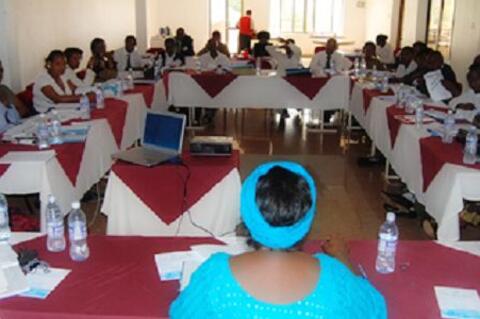
UGANET is a non-governmental organisation (NGO) that was established in 1995 to bring together organisations and individuals who are interested in advocating for development and strengthening appropriate policies, legal human rights, and ethical responses to HIV/AIDS in Uganda.
Legal aid - legal counsel, representation, and mediation - is one of the core programmes of UGANET. It informs UGANET's advocacy, community engagement, and gender-based violence (GBV) prevention programmes. In 2012, for example, UGANET provided legal aid to 336 clients, making possible the re-union of families, the recovery of property for mostly women beneficiaries by enforcing property and inheritance rights (often widows who have been pushed off their property after the death of their husbands), and the safety of persons living with and affected by HIV.
UGANET has a team of 100 paralegals trained in the elementary basics and components of the law, human rights, community mobilisation, and sensitisation. The paralegals go into their communities and assist in raising awareness about basic rights. They refer community members for legal support and conduct mediation, in partnership with their local leaders, in simple family and community disputes. To ease the movement of paralegals within the sub-counties where they work, UGANET, with support from Open Society Initiative for Eastern Africa (OSIEA), purchased and distributed bicycles to each of the paralegals.
Advocacy is also a core part of UGANET's work. The organisation has been involved, for example, in advocating for support to the East African Community HIV/AIDS Prevention and Management Act 2012, which is grounded in the realisation that, in order to achieve public health goals, human rights of all persons need to be at the centre. It scales up uptake of care and treatment services and seeks to reduce vulnerability of groups such as people living with HIV (PLHIV), the disabled, women and children, and the elderly. It is designed to protect the rights of infected persons against discrimination. Amongst UGANET's suggestions on the entire bill: Encourage the 9th Parliament to enact a wholesome law that outlaws discrimination, guarantees the right to privacy, upholds informed consent, and ensures the provision of healthcare regardless of HIV status.
UGANET has also been working to inspire communities to question value systems that perpetuate violence against women, which increases the spread of HIV. Using the SASA (Start, Awareness, Support, Action) approach, which is premised on the fact that intimate partner violence is brought about by imbalance of power between men and women, communities are taught to stand up against violence. UGANET entered a partnership with Centre for Domestic Violence prevention (CEDOVIP) in 2010 to use the SASA approach; this has involved working with groups of community action teams and community activists. The role of UGANET has been of a peer educator that organises and facilitates the volunteers, who have been mobilised to form Community Action Teams (CATS) and then trained to understand intimate partner violence in their community context and advocate for its prevention. These teams are comprised of medical counsellors, local council leaders, religious leaders, women's groups, and human rights advocates who use their experience, exposure, and strategic information to start community conversations that question negative community beliefs and practices that perpetuate power imbalance between men and women. The CATS also conduct outreaches to communities, medical centres, local community meetings, and clubs.
The UGANET website provides more information about these projects as well as access to various publications and a resource centre. It also has a Facebook presence.
HIV/AIDS, Rights, Women
UGANET observes that domestic violence is one of the risk factors that increase women's susceptibility to HIV because it inflicts trauma, an entry point for HIV infection. According to the Uganda AIDS Indicator Survey 2011, HIV prevalence is higher among women (8.3%) than among men (6.1%). The problem gets more complicated because, according to UGANET, there is no strategic focus by health care providers to screen, counsel, and support victims of intimate partner violence.
Kamba William, a paralegal of UGANET in Pallisa district, claims that there has been a reduction in the incidence of domestic violence as a result of the work they do. Yet, while there is progress, there are also challenges. For instance, Kamba, like all paralegals, works as a volunteer and therefore has to sacrifice his time and energy to serve his community. However, according to UGANET, local council chairpersons are increasingly summoning UGANET paralegals in their communities to support them in resolving complaints.
Posting from Brett Davidson to the Health, Rights, Media networking space, July 2 2013; and UGANET website, July 22 2013. Image credit: United Nations General Assembly Special Session (UNGASS)