










































Using Branded Behaviour Change Communication to Create Demand for the HPV Vaccine among Girls in Malawi: An Evaluation of Girl Effect's Zathu Mini Magazine
Girl Effect
"This study highlights the value of girl-centred communications for demand generation for the HPV vaccine."
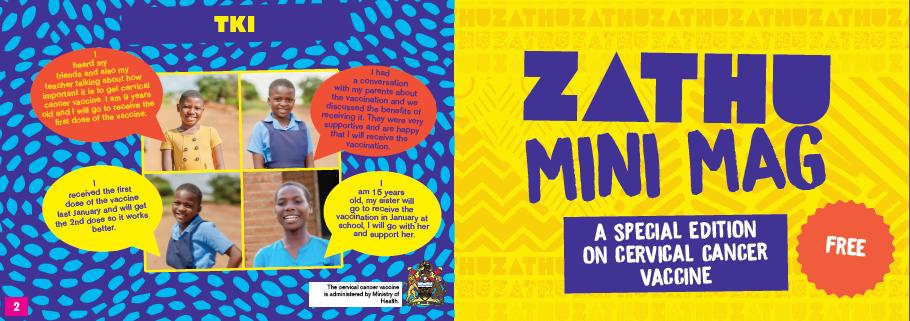
The human papillomavirus (HPV) vaccine was introduced nationally in Malawi in 2019 and is administered to 9-year-old girls. However, formative and desk research conducted by Girl Effect, a non-governmental organisation (NGO) that creates girl-centred communications and programmes across Africa and Asia, revealed barriers to uptake, such as lack of information about HPV and fear of vaccine side effects. In order to increase demand for the HPV vaccine, Girl Effect used their youth brand, Zathu (see Related Summaries, below), to deliver messaging on the HPV vaccine. This evaluation assessed the effectiveness of the Zathu "mini magazine" against two outcomes: (i) Girls are more informed & motivated to receive the HPV vaccine, and (ii) girls talk to their caregivers about the HPV vaccine.
Zathu mass media content on the HPV vaccine was created to reach Malawian youth through radio and a magazine (not evaluated here). Due to the especially young age of to-be-vaccinated girls, a Zathu-branded mini magazine was also distributed to 9-year-old girls through schools ahead of the vaccination campaign. This mini magazine consisted of simple, visual, and engaging information to address the hypothesised key stages for driving uptake, as per Girl Effect's Theory of Change (below). The goal was to provide information, prompt household conversations, and build empowerment around the HPV vaccine.

Data were collected from a recruited and consenting panel of 9-year-old girls and their female caregivers, using quantitative and qualitative methodologies. Namely, a pre-vaccine-administration survey was conducted in November 2019, with a follow-up survey conducted in February 2020, a week following vaccine administration in schools. Thirty-six households dropped out between the pre (n = 1,160) and post (n = 1,124) data collection rounds, but the data for these respondents were still included anonymously in the analysis at each stage. Also, face-to-face interviews were conducted with 9-year-old girls using Girl Effect's peer-to-peer mobile-assisted qualitative methodology called Technology Enabled Girl Ambassadors (TEGAs).
The study found positive correlations between consumption of the Zathu mini magazine and awareness: Girls and caregivers in the exposed groups (a subset of those who have been exposed and claim to have read the mini magazine) were significantly more likely than those in the non-exposed groups to be aware of cervical cancer, spontaneously mention the HPV vaccine as a means of preventing cervical cancer, agree that cervical cancer can be prevented by vaccination, believe that all eligible girls should receive the HPV vaccine, and know that the vaccine comes in two doses. "The Zathu characters and storylines seem to aid recall of the key messages pertaining to cervical cancer and the HPV vaccine and through storytelling the characters reassure girls of the safety of the vaccine."
Readers also had more positive attitudes towards vaccines more generally. Furthermore, girls in the exposed group were more likely to express that they want the HPV vaccine "to protect themselves", indicating a more informed motivation or sense of agency. With regard to the uptake of the HPV vaccine, girls who had read the Zathu mini magazine were significantly more likely to have had their allocated doses of the HPV vaccine. Through regression modelling, consumption of the Zathu mini magazine was the strongest predictor of vaccination uptake when accounting for caregiver job level, district, caregiver level of schooling, and religion. The TEGA-collected qualitative data also highlighted the impact of the Zathu mini magazine on intention to take the HPV vaccination, and how the storylines drove positivity towards the vaccine.
Around half of the girls in the exposed group stated they had spoken to someone else about the Zathu mini magazine, and this was predominantly their female caregiver. The qualitative data collected using the TEGA methodology also showed that girls were talking to others about the Zathu mini magazine, including the themes covered and characters outlined. Girls were also more likely to have spoken to their caregiver about their broader health, indicating that the Zathu mini magazine may act as a tool to prompt conversations between girls and their caregivers about other topics beyond the HPV vaccine. In addition, 89% of caregivers and 86% of girls in the exposed group self-reported that reading the Zathu mini magazine made them more confident in talking about the HPV vaccine. "The Zathu mini magazine content appears to be used as a resource at the household level and is boosting confidence to aid discussions about the HPV vaccine."
Girls reported they were particularly interested in reading the content in the Zathu mini magazine, as they were already familiar with the characters and believed the Zathu brand to be trustworthy and reliable. The data showed that girls do not readily recall other sources of information about the HPV vaccine when asked how they have come to learn about the issue. For example, only 7% of girls say they heard of the vaccine through a health extension worker and 2% through radio content, compared to 48% of girls in the exposed group attributing their knowledge to the Zathu mini magazine.
While the Zathu mini magazine has created positive outcomes relating to the HPV vaccine, literacy is a key barrier for content in printed form. World Bank data (2015) show that the literacy rate for Malawi is only 55% among females aged 15 and above, and in the current study, non-readers from the exposed group cite a lack of literacy as the main barrier to consuming the content.
The Ministry of Health in Malawi intends to continue using a toolkit of materials provided by Girl Effect to support the ongoing demand generation campaign for the HPV vaccine. In addition, there are plans for the HPV vaccine to move away from a school-based delivery for 9-year-old girls toward administration through health centres as part of the routine immunisations for a multi-age-cohort. "With this in mind tailored and appropriate programming to drive demand in this different setting will be required, and the efficacy of these efforts must be evaluated."
Vaccine https://doi.org/10.1016/j.vaccine.2021.07.011; and email from Amy Jones to The Communication Initiative on August 4 2021.
- Log in to post comments