










































To Vaccinate or Not: The Relative Impact of Attitudes toward Autism Spectrum Disorders and the Ability to Interpret Scientific Information on Vaccination Decisions
University of New England (Australia)
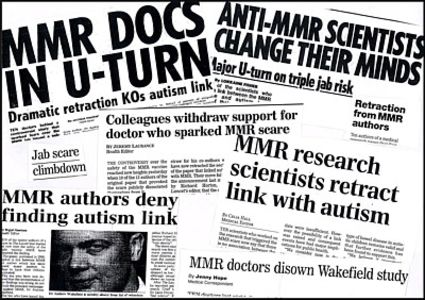
The measles-mumps-rubella (MMR) vaccine has a controversial history. In 1998, Andrew Wakefield et al. incorrectly asserted a link between the MMR vaccine and the development of autism spectrum disorder (ASD) in young children; though the study was later retracted, media coverage concerning the autism-vaccine link significantly impacted public awareness. The aims of the present study were to explore associations between attitudes towards the MMR vaccine, scientific literacy, knowledge of and attitudes towards ASD, and vaccine-related decisions (behaviours). It also examines the information sources used by different groups of participants and potential reasons for participants not to vaccinate.
A sample of 132 parents and expectant parents (84.8% of whom lived in Australia) participated in an online survey and completed a standardised science test to test their scientific literacy. Key findings:
- 104 (78.8%) participants indicated a positive attitude toward MMR immunisation (i.e., has or will immunise against MMR), 21 (15.9%) indicated a negative attitude toward MMR immunisation (i.e., has not and will not immunise against MMR), and 7 (5.3%) of participants gave inconclusive or ambiguous answers.
- Parents who had a better understanding and awareness of ASD also held more positive attitudes towards the disorder. Furthermore, as parents' knowledge of ASD increased, so did their favourable attitudes to ASD.
- Parents who held more favourable attitudes towards ASD were more likely to hold more favourable attitudes towards the MMR vaccine, but these were weak correlations.
- The hypothesis predicting a positive relationship between scientific literacy and attitudes to ASD was supported, thereby providing some support for the suggestion that changes in attitude can be promoted through learning how to think and reason critically and scientifically.
- Level of scientific literacy was not significantly related to vaccination behaviour. This may be due to the limited number of participants that completed the scientific literacy test.
- Based on the supposition that many individuals still believe MMR vaccine causes ASD, it was expected that less favourable attitudes towards ASD and the MMR vaccine would be associated with non-vaccination of children with the MMR vaccine. This hypothesis was supported.
- Attitudes towards MMR were positively correlated with MMR vaccine status (i.e., vaccination decision).
- Participants that were positive towards the MMR vaccine were more likely to have sought information from a general practitioner (GP) than their counterparts that were negative towards the MMR vaccine, while the latter were more likely to have sought information from friends and websites. Analysis of these data about online sources of information suggests that parents may have been more likely to access information provided by others who hold similar views as themselves in respect to the vaccination of children with MMR. As such, these findings offer support for the Cultural Theory of Risk, which theorises that there is a psychological predisposition for one to access information that fits with one's own worldviews and group membership, dependent on cultural affiliation.
The researchers point out that, even if parents have not immunised their children, it is important to ask why, as the study found that many are simply waiting for their child the reach the appropriate age for the given vaccination. It is also clear that the refusal to vaccinate is driven by several different reasons, such as negative medical family experiences that are related to vaccinations by the parents, concerns about the safety of the vaccines and ingredients more specifically, and for religions or ethical reasons.
In conclusion, parental attitudes to the MMR vaccine itself, irrespective of attitudes to ASD, appeared in this study to be the most significant factor determining vaccination behaviour.
International Journal of Environmental Research and Public Health 2020, 17, 2542; doi:10.3390/ijerph17072542. Image credit: Speaking of Research
- Log in to post comments