










































Vaccine Hesitancy and Post-vaccination Adherence to Safety Measures: A Mixed-method Study
COMSATS University Islamabad (Inam, Wasif, Noor, Khan); National University of Modern Languages (Mushtaq); Fatima Jinnah Women University Rawalpindi (Zaman)
"The findings of the current study may help in devising a health model for the public from the developing world to deal with future pandemic situations."
Many factors influence people's attitudes toward vaccines in different socioeconomic, geographical, and demographic contexts. Pakistan has a history of reluctance toward all vaccines; a prominent example of this attitude is reflected in the plight of polio vaccination in the country. This study used a two-pronged approach in analysing vaccine hesitancy and health behaviours after vaccination by employing a mixed-methods design. Phase 1 sought to identify predictors of COVID-19 vaccine hesitancy and acceptance among the Pakistani population using protection motivation theory (PMT), which is a widely used model in the health sector to understand and reflect on the attitudes and practices that motivate an individual to perform protective behaviours, whereas Phase 2 explored factors related to COVID-19 vaccination.
In Pakistan, generally, people have COVID-19 vaccine hesitancy, as there is a prevalence of mistrust in vaccines along with the belief in conspiracy theories about the vaccine. Social media, a widely available source of information, has played a role in spreading false information regarding COVID-19. Narratives such as the vaccine damaging or changing the DNA of individuals have also been prevalent. Another narrative claims that the vaccine will result in the person getting affected with coronavirus rather than making a person immune to it. Furthermore, religious scholars have played a role in making people fearful of the vaccine and believing it will sterilise all Muslims, along with other adverse side effects.
To investigate these issues, a sample of 1,736 individuals from the vaccine-eligible population (12 years and above) was selected for data collection on vaccine hesitancy and acceptance (Phase 1). Phase 2 of the study explored post-vaccination health behaviours, especially adherence to safety measures for COVID-19, through 23 in-depth interviews with the vaccinated population.
Multiple regression analyses showed that response cost is a major predictor of vaccine hesitancy (in Phase 1). In terms of the role of demographic variables, the results showed that being male (for severity: B = −0.481; threat appraisal: B = −0.737), old age (B = −0.044), not vaccinated, and not infected with COVID-19 (themselves and family members) are strongly associated with vaccination hesitancy.
Results of thematic analysis in Phase 2 revealed that most of the respondents had a vague and incorrect understanding of how a vaccine functions. Perceived individual experience and insensitivity toward the severity of the disease are strongly associated with a lack of adherence to safety measures of COVID-19. Faith and religious beliefs and reliance on traditional remedies are also key predictors of people's general non-compliance with health behaviours. In addition, it was observed that people who follow safety behaviours experience negative feedback from relatives, friends, and coworkers. It was also reported that following safety behaviours is considered a sign of cowardice and/or an indicator of lack of faith in God. One of the respondents said, "My neighbors questioned my stance of not going to mosque due to COVID restrictions and said that this is against religion. I then started going to [the] mosque to offer my prayers." These accounts suggest that social pressure significantly contributes to non-compliance to safety behaviour.
This research found that fear of COVID-19 leads to people adhering to standard operating procedures (SOPs). According to research studies, the COVID-19 vaccine lowers worry as well as anxiety about becoming infected by COVID-19. Another identified predictor of lack of SOP adherence among the population is "public confidence" reported by the respondents about being protected after receiving one vaccine. In addition to this, participants do not adhere to SOPs after vaccination because of their personal experience of not being re-infected even when they did not follow SOPs. Researchers have discussed that those who cannot be immunised due to comorbidities or who do not develop personal immunity to COVID-19 infection are at risk from vaccine refusers and people who lack SOPs adherence.
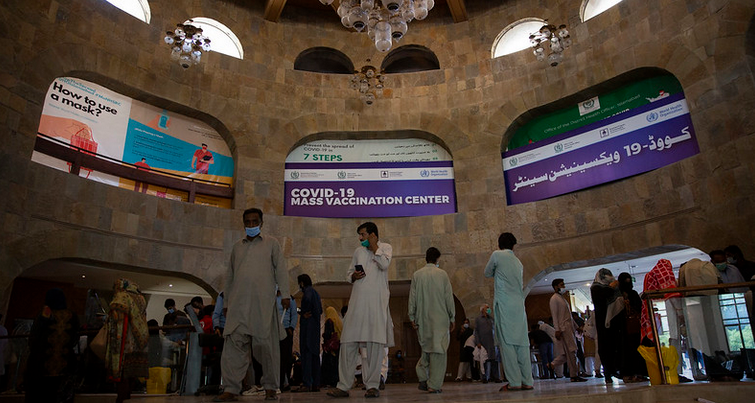
As of January 2023, Pakistan had administered a total of 317,696,373 doses of vaccine, with 56.8% of the population fully vaccinated. The findings of the present study show that effective measures should be taken to address the problems related to vaccine acceptance and that all institutions have to play a role in creating awareness related to the safety, efficacy, and acceptance of the COVID-19 vaccine. It is also recommended that long-term policy measures should be taken to promote the acceptance of health-related safety behaviours. Programmes should be designed for communities to raise awareness of communicable diseases and their prevention.
Frontiers in Public Health 11:1072740. doi: 10.3389/fpubh.2023.1072740. Image credit: IMF Photo/Saiyna Bashir via Flickr (CC BY-NC-ND 2.0 Deed)
- Log in to post comments