










































What Does Accountability Mean in Sierra Leone? The Role of the Media in Governance, Particularly in the Context of Ebola
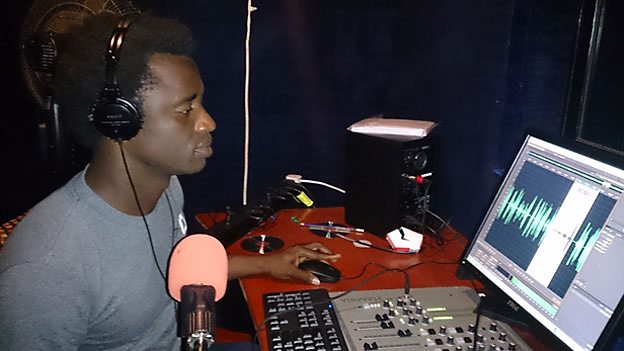
"BBC Media Action's radio programmes Fo Rod and Tok Bot Salone aim to improve people’s understanding of governance issues while also creating platforms to hold leaders to account. Interviews with experts on governance and media in Sierra Leone, following the outbreak of the Ebola virus in 2014, highlight how increasing public demands for accountability are not being met."
In November and December 2014, this research project from BBC Media Action asked people with expertise in governance and media "to speak about the key authority figures in Sierra Leone, governance processes, the methods of interaction between the population and key authority figures, people’s expectations of those in authority and the roles and responsibilities of the public. The interviews also sought to understand whether experts felt these had changed as a result of the Ebola outbreak." The paper includes responses from a March 2015 audience response study.
Beginning in 2012, BBC Media Action in Sierra Leone has produced two radio programmes, Fo Rod and Tok Bot Salone, broadcast by over 40 partner radio stations and funded by a United Kingdom Department for International Development (DfID) Global Grant. "During the Ebola outbreak, both programmes sought to challenge leaders without increasing public fears. They created opportunities for audience participation (through methods such as SMS [text messages], phone calls, WhatsApp, and Facebook, which were still viable despite the emergency measures which banned public gatherings). The shows also included moderated discussions about various issues relating to governance and the outbreak, and produced broadcasts which explained government initiatives, looked at the impact of Ebola on areas such as transport and education and continued programming on other key areas of service delivery."
Key findings include the following:
From experts -
- "People had little faith in their leaders and had a lot of questions about how the government had responded to the Ebola outbreak.
- The outbreak of Ebola had increased public demand for accountability and expectations of what the government should be offering.
- It was not always clear how the government was spending money dedicated to tackling the Ebola crisis and new laws and processes have been introduced that some people do not understand. The point on financial transparency was echoed in audience research."
Their reflections on the state of the media overall -
- "Radio is the most popular and accessible interface between leaders and the public - especially in urban areas.
- A lack of good editorial practice in media houses meant the quality of output was sometimes poor or biased. Recently, there had been too much focus on Ebola compared with other issues.
- However, the media was seen to have been providing better journalism than ever during the outbreak - particularly in disseminating information and producing tailored programmes in response to the virus.
- The unsalaried nature of some journalist positions was viewed as a core reason for biased reporting, with journalists often publishing paid-for stories or self-censoring.
- There was not enough information in the media about how people with disabilities could protect themselves against Ebola, and women’s issues did not receive enough attention either."
Implications and impact include:
"When considering accountability, programming should continue to provide a forum for people to question their government, particularly around how funds which have been allocated to help contain such an outbreak are being used. This space for debate should also focus on civic responsibility and how individuals can contribute to better governance.
To improve the quality of the media, capacity strengthening work should continue to focus on introducing regular editorial meetings at partner radio stations. BBC Media Action’s capacity strengthening of local radio should also continue to work with station managers to identify alternative income generation schemes.
Furthermore, to improve inclusion and representation, programming needs to focus more on the lives of the most vulnerable; in this case women and people with disabilities."
BBC Media Action website, December 4 2015.
- Log in to post comments