










































The Journey
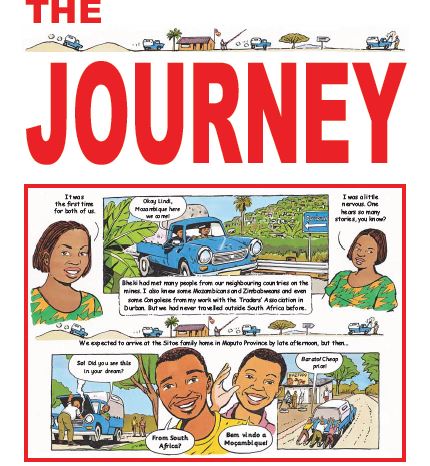
The International Organization for Migration (IOM)'s Partnership on HIV/AIDS and Mobile Populations in Southern Africa (PHAMSA) programme, in partnership with the non-governmental organisation (NGO) Comic Works, has developed "The Journey" series of short comic stories. Funding partners include the Swedish Development Cooperation Agency (Sida), The Southern African Migration project (SAMP), and TEBA Development.
This comic aims to capture "slices" or "moments" in the lives of characters modeled on migrant workers in South Africa and the host communities with whom they interact. The series of comic stories feature Mozambican migrant workers in the mining, commercial farming, and informal trading sectors. The stories aim to break stereotypes and increase the reader’s understanding of migration dynamics in this region, ultimately attempting to reduce xenophobia and discriminatory practices and dispel myths (e.g., that migrants bring in communicable diseases).
The Journey also contains a number of informational pages related to migration in Southern Africa, HIV, and human rights issues, as well as a section on the positive aspects of migration. It discusses answers to question such as:
- Who are migrants?
- Where do they come from? Where do they go?
- Why do people migrate? What can't they stay in their own countries?
- Why are migrants more vulnerable to HIV?
- What is xenophobia?
- What is the extent of it in South Africa?
- Are there many female migrants?
- Are female migrants different from male migrants?
- Are female migrants more vulnerable to HIV?
- What are human rights and to whom do they apply?
English
36
Email from Reiko Matsuyama to Soul Beat Africa on September 13 2006 and IOM website on October 17 2006 and on January 6 2008.
- Log in to post comments