










































SocialNet2019 - Community Engagement Training: White Paper and SocialNet Experience
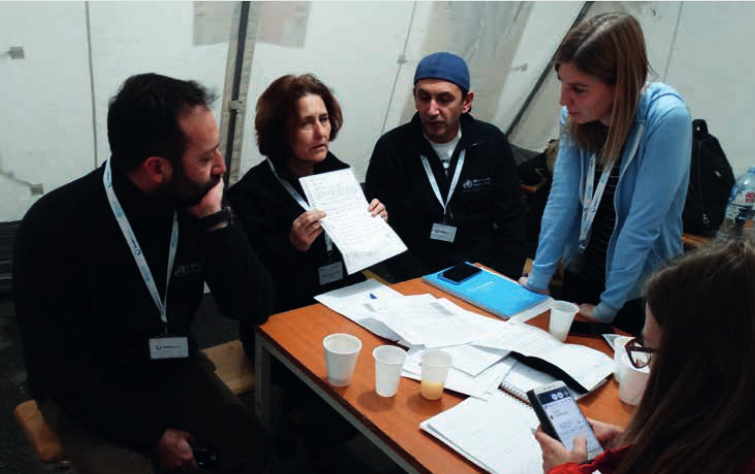
"When, previously, they had gone to work in their institutions or responded to emergencies, their attention to the 'other', the receiver, the beneficiary and lastly the community had not been so acute in their minds and hearts as it would be in the future."
Implementing social science interventions, community engagement, and risk communication as part of emergency preparedness and response ensures that affected populations are involved and enabled to make informed decisions to protect themselves and their loved ones during crises. In 2017, the World Health Organization (WHO) Health Emergency Programme (WHE) developed the SocialNet training course, designed to prepare social scientists, communicators, and emergency response experts to engage communities effectively in emergency response. This report from the December 2019 SocialNet, held in Belgrade, Serbia, consists of two main sections. The first contains a series of white papers based on the main sessions during the first 3 days of SocialNet, and the second covers the SocialNet experience itself, which drew over 50 participants from the WHO European Region.
Section 1 features white papers on the following key topics - each of which was covered during the training by an interactive lecture combined with workshop-style sets of exercises, teamwork, and short presentations:
- WHO/WHE in Outbreak and Emergency Response: Two Frameworks - Explores the International Health Regulations (2005) and the Emergency Response Framework (ERF), covering topics such as 5 indicators for evaluating risk communication capacity under IHR, 4 core capacities (each of which contributes to trust as the core driving principle of effective risk communication), and the WHE Incident Management System (IMS) structure - illustrated by an example from the field.
- Community Engagement - Covers general key principles of community engagement:
- Be clear about the purposes or goals and the populations and/or communities you want to engage - risk assessments (rapid qualitative behavioural assessment).
- Know the community's perceptions, culture, economic conditions, social networks, political and power structures, norms and values, languages, beliefs, history - social data.
- Learn about the community's perceptions of those initiating the engagement activities - feedback.
- Establish relationships, build trust, work with the formal and informal leadership, and seek commitment from community organisations and leaders - influencers.
- Recognise and respect the diversity of the community - rights-based.
- Consider community feedback and cultures of a community in planning, designing, and implementing approaches - participation/engagement.
- Commit long-term to community collaboration by the engaging organisation and its partners - building capacity.
Other topics include: defining and understanding the community, collecting information, community influence and empowerment, socio-ecological models, and methods and approaches for including the community in the response. Regional/national case studies from the Red Cross of Serbia are featured.
- Data Collection and Analysis - Examines the added value of integrating behavioural and social sciences into data collection in emergency and outbreak response - covering quantitative and qualitative methods.
- Intervention Design Considerations - Explains how a number of important considerations from social and behavioural sciences feature in the design and development of public health interventions: behaviour change communication; social media for social science; vulnerable populations; monitoring and evaluation; community preparedness and community engagement; and accountability to affected populations. Case studies illustrate these considerations.
- Training Social Science and Community Engagement Teams - Notes that "Training in behavioural and social science response can address many issues in a community and build skills and understanding about how to address a response. To better integrate responders (especially those from the affected community such as police, health workers and students) it is important not just to undergo training but to also understand training methods, how to conduct a training needs assessment, how to plan, conduct and evaluate training." This chapter is meant to help the reader do just that.
- Risk Communication - Under the rubric of emergency risk communication (ERC), highlights the 4 core capacities for trust in the emergency lifecycle, methods for framing your communication and developing messages and materials, 2 organising principles, 5 steps for ERC capacity building, case studies, and more. As outlined here, good messages follow the acronym of SUCCES(S), meaning they are:
- Simple: Give a single message and action, break down numbers, and avoid jargon.
- Unexpected: Tap into surprise, interest, shock, revelation, or curiosity.
- Concrete: Be specific instead of abstract, and use analogies and examples.
- Credible: Use evidence, use credible spokespeople as influencers, or use a personal angle (depending on the context).
- Emotional: Draw on this strong motivator to action, following the adage "they may forget what you said, but they will never forget how you made them feel".
- Stories: Paint a visual picture to give people something to connect the messages to.
- Rumour Management and Misinformation - Looks at rumours and public health risks, how rumours develop, rumour monitoring and management, rumour strategy and preparedness, and risk perception.
Section 2 details the SocialNet experience: the practical exercises that brought the theoretical lessons in the above white papers to life. Twenty WHO staff members, together with people from four partner organisations, were facilitators, mentors, and role-players. Classroom days with lectures, working groups, simulations, 72 role-plays, games, and discussions established an intense interactive environment. In particular, the 2-day field simulation in the Serbian Red Cross camp was said to be an eye-opener with regard to peer support, empathy, and emotional intelligence. This section also shares results from pre- and post-tests that show growth in participants' self-assessed knowledge, skills and confidence, as well as feedback on the training content, setup, and recommendations for future SocialNet trainings.
WHO holds that the SocialNet2019 experience "will contribute to identifying suitable deployees in emergencies, to building better risk communication, community engagement and social science capacities in European countries and to advocating for this field of expertise to be embedded into emergency preparedness and response."
The annexes include background and reference materials, including the agenda for SocialNet 2019, list of participants and facilitators, the SocialNet Competency Framework, and a bibliography of resources for further reading.
WHO/Europe website, July 8 2022. Image credit: ©WHO/EURO