










































The Impact of a Direct to Beneficiary Mobile Communication Program on Reproductive and Child Health Outcomes: A Randomised Controlled Trial in India
University of Cape Town (LeFevre, Bashingwa); Johns Hopkins Bloomberg School of Public Health (LeFevre, Shah, Scott, Mohan); BBC Media Action (Chamberlain, Ummer, Godfrey, Dutt); Oxford Policy Management (Ummer); University of the Witwatersrand (Bashingwa); Oxford Policy Management (Chakraborty); National Health Systems Resource Centre (Ved); Bill and Melinda Gates Foundation (Ved)
"Evidence linking scaled mHealth messaging programmes to changes in health outcomes is limited...which may impede sustainability and further expansion."
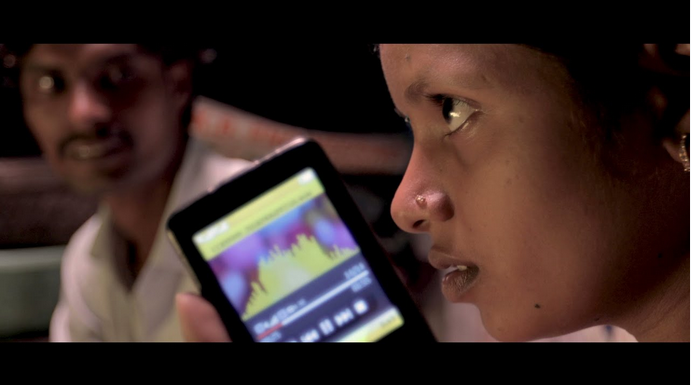
Direct-to-beneficiary mobile health (mHealth) programmes that provide health information to new and expectant mothers have been taken to scale in low- and middle-income countries (LMICs), where the majority of maternal and child deaths occur. One such programme, Kilkari, is an outbound service that makes weekly, stage-based, prerecorded calls about reproductive, maternal, neonatal, and child health (RMNCH) directly to families' mobile phones, starting from the second trimester of pregnancy until the child is 1 year old. Kilkari has reached over 10 million women and their families across 13 states in India. From 2018 to early 2020, an individually randomised controlled trial (RCT) was conducted in 4 districts of Madhya Pradesh to assess whether exposure to mHealth information calls during pregnancy and postpartum improved infant feeding and family planning practices.
BBC Media Action designed and piloted Kilkari in the Indian state of Bihar in 2012-2013, and then redesigned and scaled it in collaboration with the Ministry of Health and Family Welfare (MOHFW) between 2015 and 2019. Kilkari, which is described in more detail at Related Summaries, below, is comprised of 90 minutes of RMNCH content sent via 72 once-weekly voice calls: 24 during pregnancy, 24 within the first 6 months postpartum, and 24 from 7 to 12 months postpartum. Individual calls span an average of 77 seconds in duration and are framed as coming from "Dr Anita". Kilkari includes health information content across more than 11 health areas.
Women were randomised to either an intervention group where they received up to 72 Kilkari messages or a control group where they received none. At baseline, there were 5,095 women: 2,695 in the intervention arm and 2,400 in the control arm. To assess the impact of Kilkari exposure on RMNCH outcomes, endline surveys were administered to enrolled women and their husbands after 12 months postpartum. The primary outcome of the study was the reported practice of exclusive breastfeeding for infants 0-6 months of age. The secondary outcome was the use of modern reversible contraceptive methods (including intrauterine contraceptive device (IUCD), injectables, oral contraceptive pills, emergency contraceptive pills, condoms) at 1 year postpartum.
Kilkari was not observed to have a significant impact on the primary outcome of exclusive breastfeeding (intention-to-treat (ITT), relative risk (RR): 1.04, 95% confidence interval (CI) 0.88 to 1.23, p=0.64; instrumental variable (IV), RR: 1.10, 95% CI 0.67 to 1.81, p=0.71). However, across study arms, Kilkari was associated with a 3.7% higher use of modern reversible contraceptives (RR: 1.12, 95% CI 1.03 to 1.21, p=0.007) and a 2.0% lower proportion of men or women sterilised since the birth of the child (RR: 0.85, 95% CI 0.74 to 0.97, p=0.016). Higher reversible method use was driven by increases in condom use and was greatest among those women exposed to Kilkari with any male child (9.9% increase), those in the poorest socioeconomic strata (15.8% increase), and those in disadvantaged castes (12.0% increase). Immunisation at 10 weeks was higher among the children of Kilkari listeners (2.8% higher; RR: 1.03, 95% CI 1.00 to 1.06, p=0.048). Significant differences were not observed for other maternal, newborn, and child health outcomes assessed.
Findings suggest that an average of 65% of subscribers listened to more than 50% of the cumulative total of successful calls, while 31% listened to more than 75% of the total content of calls. High listenership rates were stable over time, which is a likely indication that if calls reach the mobile device and are answered, subscribers tend to the listen to them. Analyses of the programme's algorithm that attempts to call subscribers up to 9 times to yield a successful call found that a greater number of call attempts are needed to reach the most marginalised.
The discussion section of the paper provides some explanation and context for some of the findings, such as the fact that significant improvements were not observed in exclusive breastfeeding. "In sum, complex behaviours that have competing social norms and are currently seen to work quite well are challenging to change and receiving a small number of Kilkari voice calls advocating that one adopt a particular practice did not catalyse a change in behaviour."
Also noted is the fact that increases were significantly higher among subgroups, including those with any male children. "Given social norms around gender preferences for children, Kilkari may have served as a 'tipping point' to prompt behaviour change among those who had already had a male child. Indeed, qualitative findings suggest that men and women retained and appreciated Kilkari messages that aligned with their pre-existing worldviews, social norms and existing practices but overlooked or de-emphasised content that did not..."
The researchers suggest that "programmes like Kilkari, which have the infrastructure in place to send health information content out to millions of beneficiaries, offer much potential for delivering other kinds of health information..." Further research is needed, they say, to understand whether the impact might be deepened by: reaching out to specific subsets of the beneficiary population with tailored programme content; changing the number of messages and the duration of the service; and complementing Kilkari with face-to-face communication to create an enabling environment more supportive of behaviour change.
In conclusion, the findings "underscore the potential impact mHealth messaging programmes may have in providing women and their families with access to health information. By not restricting the framing of Kilkari messages to women, the programme may have tapped into a demand among men for health information. Further, efforts to ensure that Kilkari content was accessible regardless of subscribers' education, caste or socioeconomic status, may underpin pro-poor findings observed for reversible contraceptive method use. Long-standing social norms, particularly those around son preference, are challenging to change. However, efforts to differentially target key population segments whom we know services are likely to impact the most may be one future avenue to explore."
BMJ Global Health 2022;6:e008838. doi:10.1136/bmjgh-2022-008838; and emails from Anna Godfrey and Amnesty Elizabeth LeFevre to The Communication Initiative on September 20 2023. Image credit: BBC Media Action via YouTube
- Log in to post comments