










































The Impact of Social Mobilization on Health Service Delivery and Health Outcomes: Evidence from Rural Pakistan
The World Bank (Giné, Mansuri); International Monetary Fund (Khalid)
"[C]ommunity collective action can improve the performance of service providers only if the provider is accessible and can be held accountable by the village."
Community-driven development (CDD), which often centres around the social mobilisation of economically poor and disenfranchised groups, is viewed as an important vehicle for improving public sector accountability and the quality of public service delivery. Assessing the impact of CDD is difficult, however, since social mobilisation is frequently combined with other interventions (e.g., skills training) that can impact the demand for improved public services through other channels. This book chapter provides evidence on the impact of social mobilisation on the quality of public service delivery in a context where other simultaneous inputs are absent. The Social Mobilization for Empowerment (MORE) programme was implemented as a large-scale randomised intervention in rural Pakistan in 2010.
Before describing the study, the chapter explores existing literature that suggests potentially positive impacts of CDD activities on health outcomes, particularly in the domain of maternal and child health. Community-based health service programmes can be roughly divided into 2 categories: (i) projects where communities are encouraged to take an active role in resource allocation, and (ii) interventions where community volunteers or community-based health workers are mobilised to deliver health services or information.
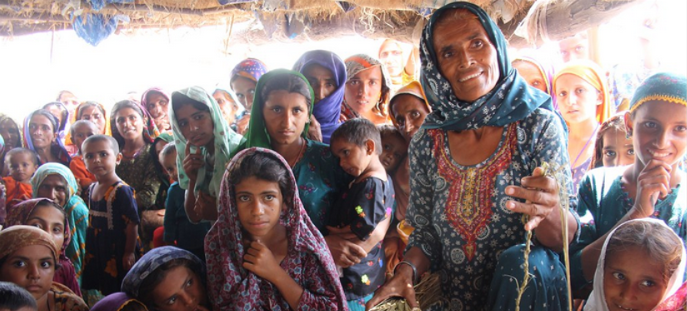
The study took place in 108 villages with relatively high levels of malnutrition and maternal and child mortality. Women have low decision-making power within the household, and social mores restrict female mobility and autonomy. Education levels among adult women also remain extremely low, limiting their ability to access information or engage effectively with service providers. This context allowed the researchers to examine whether social mobilisation geared toward women can lead to an improvement in the performance of public health providers, even in a context of low female literacy and mobility.
Specifically, MORE had a strong emphasis on organising women, who also identified health services as a development priority at baseline. Implemented by The World Bank in partnership with the Pakistan Poverty Alleviation Fund (PPAF), MORE created community- and village-level organisations and provided village-level development funds. Social mobilisation activities in the study areas were supported by a key partner of the PPAF, the National Rural Support Program (NRSP). NRSP identified 158 villages drawn from 5 districts where it currently has presence. The identified villages had no prior history of social mobilisation by either NRSP or any other organisation. A total of 108 study villages were randomly assigned to treatment status, with the remaining being held as controls.
In treatment villages, representatives from NRSP helped organise villagers into 15- to 20-member community organisations (COs) that provided a platform for collective efforts and allow members to pool their resources for common development goals. COs held regular meetings where members could discuss local issues, prioritise community needs, and resolve any conflicts at the local level. The procedure began with a social mobilisation team (SMT) approaching a few people in the village to help organise a meeting of the community with the social organiser (SO). In that meeting, the SO introduced the concept of the CO, sharing examples of other areas where people formed COs and were able to achieve significant improvement in their lives through this platform.
Once 40% of village households had at least one CO member (a requirement to receive funds for developmental activities), the village formed a village support organisation (VSO) comprising 2 elected members from each CO in the village. One of the main tasks of the VSO was the design and implementation of the village development plan (VDP), a document that prioritised village development projects to be funded by the grant. The VSO was also charged with the management of the grant and the active involvement of community members in monitoring and promoting transparency.
The MORE intervention was successful at encouraging broad participation from the community. On average, 59% of households in treatment villages were organised. Women comprised 51% of CO members and 41% of VSO members per village, on average.
In each treatment and control village, households were surveyed at baseline, after the formation of the first COs in treatment villages. Households were surveyed again 3 years later at midline. In treatment villages, the midline survey occurred after approval of the VDP but before the disbursement of grant funds. The study examine the effects of community mobilisation on two sets of health-related outcomes. The first focuses on women's interactions with service providers (health care utilisation, access to and quality of care from lady health workers, or LHWs), the second looks at improvements in health outcomes for women and young children such as the incidence of illness, ante- and post-natal care, well-baby checkups, and child immunisation.
The researchers found that, at midline, the mobilisation effort alone had a significant impact on the performance of village-based health providers. They detected economically large improvements in pregnancy and well-baby visits by LHWs, as well as increased utilisation of pre- and post-natal care by pregnant women. Sample findings at midline (see tables 11.3-11.10):
- Self-reported incidence of illness was significantly lower among households in treatment villages relative to those in control villages where no mobilisation had occurred.
- The likelihood of the LHW visiting pregnant women in treatment villages rose by 19% from a base of 35% in control villages. Treatment villages also reported a 37% higher probability that pregnant women received antenatal care from LHWs, from a base of 14% and a near doubling of LHW provided post-natal care, though from a very low base of 3%.
- The odds of the LHW making a well-baby visit more than doubled in the treatment sample, though the probability in control villages was only 4%.
- The impact of social mobilisation on the LHW index was positive and statistically significant at the 1% level.
- The odds of having an immunisation card were substantially higher in treatment communities (39% increase from a base of 11% in control communities). However, there is no statistically significant impact on the completeness of the immunisation record.
In contrast to the finding that a range of health services that fall under the purview of the LHW show a significant improvement in villages that were mobilised, the quality of supra-village health services at basic health unit (BHUs) did not improve. BHUs cater to multiple villages in a catchment area, not all of which were organised, limiting the capacity of any one village to influence BHU level performance through any collective action measures. In comparison, the LHW's catchment area is limited to the village in which she typically resides, allowing for a more effective exercise of collective action on the part of the community in ensuring her presence and monitoring her performance. These findings underscore the importance of community enforcement and monitoring capacity for improving service delivery.
In conclusion, the "results suggest that while community collective action is not a panacea for improving all levels of public service delivery, it can be quite effective in improving aspects of service delivery where community members have enforcement and monitoring capacity. The results also show that the active engagement of women in efforts to improve community collective action can have important payoffs in improved service provision targeted towards to the needs of women and young children."
Chapter 11 (pages 237-52) in Towards Gender Equity in Development by Siwan Anderson (ed.), Lori Beaman (ed.), and Jean-Philippe Platteau (ed.), Oxford University Press. https://doi.org/10.1093/oso/9780198829591.003.0011. Image credit: DFID/Magnus Wolfe-Murray via Flickr (CC BY-SA 2.0)
- Log in to post comments