










































Perceptions toward Ebola Vaccination and Correlates of Vaccine Uptake among High-risk Community Members in North Kivu, Democratic Republic of the Congo
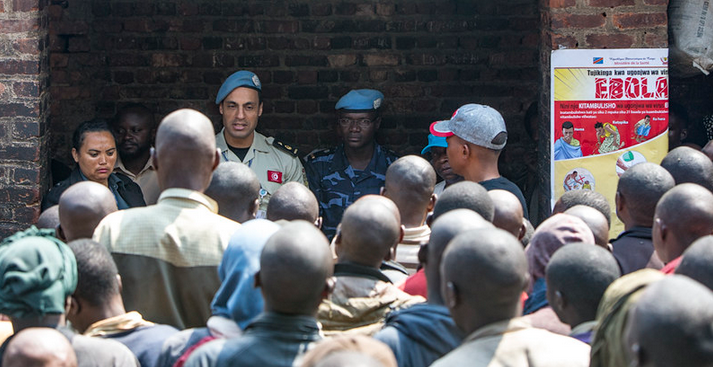
International Medical Corps (Perera, Mbong); Brown University (Garbern) - plus see below for full authors' affiliations
"Developing a deeper understanding of the public perceptions of the Ebola vaccine, vaccine confidence, and the sociodemographic and behavioral determinants of vaccine uptake can drive interventions aimed at increasing vaccine confidence."
Responses to the tenth Ebola Virus Disease (EVD) outbreak (2018-2020, North Kivu, Ituri, South Kivu) in the Democratic Republic of the Congo (DRC), including vaccination, were complicated by a complex humanitarian crisis in the region that led to community mistrust in the government and the response. Rumours and misinformation about EVD and Ebola vaccination spread throughout the community and social media platforms, which contributed to reduced confidence in the response and difficulties with vaccination, including community resistance and vaccine refusals. The research shared in this article evaluated community perceptions toward Ebola vaccination and identified correlates of Ebola vaccine uptake among high-risk community members in North Kivu, DRC.
In March 2021, a cross-sectional survey among adults was implemented in 3 health zones. The researchers employed a sampling approach mimicking ring vaccination, including 39 EVD survivors, 45 members of the survivors' households, and 547 survivors' neighbours. Data collectors (10 in Beni, 10 in Butembo, and 8 in Mabalako) who were not affiliated with the government and 3 supervisors per health zone received a 4-day training. Data collectors worked in pairs (male and female) so that participants were interviewed by someone of the same sex. The research team assessed outbreak experiences and perceptions toward the Ebola vaccine and used modified Poisson regression to identify correlates of Ebola vaccine uptake among those offered vaccination.
Among the 631 individuals surveyed, most (90.2%) reported a high perceived risk of EVD, and 71.6% believed the vaccine could reduce EVD severity; however, 63.7% believed the vaccine had serious side effects, and 20% disagreed that the vaccine prevents EVD. The most common negative information respondents had heard was that the vaccine would make one sick (358; 63.1%), cause infertility (320; 56.4%), was unsafe (310; 54.7%), had side effects (295; 52.0%), and would lead to death (73; 12.9%). Other negative information they had heard was that the vaccine is experimental, contaminated, and not accepted by religious leaders. A few respondents reported hearing that healthcare personnel receive a different vaccine than the rest of the population. Mistrust was relatively common, with 223 (35.3%) reporting mistrust of the vaccination team, and 245 (38.8%) reporting mistrust of the vaccine source.
Among the 474 individuals who had been offered vaccination, 397 (83.8%) received the vaccine; 180 (45.3%) of those vaccinated received the vaccine only after 2 or more offers. Correlates positively associated with vaccine uptake included having heard positive information about the vaccine (risk ratio (RR) 1.30, 95% confidence interval (CI) 1.06-1.60), holding the belief that the vaccine could prevent EVD (RR 1.23, 95% CI 1.09-1.39), and reporting that religion influenced all decisions (RR 1.13, 95% CI 1.02-1.25). Respondents who heard positive instead of negative information about the Ebola vaccine were more likely to accept the vaccine when offered. "Therefore, positive and transparent communication about the benefits of vaccination and dispelling negative rumors and harmful misinformation through multiple communication channels and approaches are crucial."
Among the 77 respondents who were eligible but declined vaccination, the most common reasons for declining the vaccine included: the belief that the vaccine would make them sick (13; 16.9%), did not believe the vaccine was safe (11; 14.3%), the belief that Ebola was not real (10; 13%), did not feel at risk of EVD (9; 11.7%), the belief the vaccine would give them EVD (9; 11.7%), and not having enough information about the vaccine (8; 10.4%). Most unvaccinated respondents (71; 92.2%) indicated that a social or religious group did not influence their decision to take the vaccine.
Respondents had overall high general vaccine confidence (i.e., perceptions toward routine immunisations), with 460 (72.9%) very much or somewhat agreeing that vaccines were good, and 488 (77.3%) very much or somewhat agreeing that vaccines protect against diseases. There was no significant difference found between the mean general vaccine confidence score between those who received the vaccine and those who declined (11.9 vs 11.4, respectively; p = 0.34).
Thus, while Ebola vaccine uptake was high in this population, mixed attitudes and vaccine delays were common. The finding that nearly half of the respondents reported only receiving the vaccine after 2 or more offers highlights the importance of repeated efforts to engage the "moveable middle", those individuals who have concerns regarding vaccines but who may be willing to change their decisions with additional information or influence from other sources.
The research team recommends communicating positive vaccine information, emphasising the efficacy of the Ebola vaccine, and engaging religious leaders to promote vaccination may aid in increasing Ebola vaccine uptake during future outbreaks. For example, incorporation of religious leaders in community sensitisation campaigns can be used to build vaccine confidence and convey positive information about the vaccine during an outbreak.
In conclusion: "Continuing RCCE [risk communication and community engagement] efforts with targeted messages that build Ebola vaccine confidence and address the remaining concerns of those who delay vaccination or refuse are important for designing interventions in future EVD and other infectious disease outbreaks."
Full list of authors, with institutional affiliations: Shiromi M. Perera, International Medical Corps; Stephanie Chow Garbern, Brown University; Eta Ngole Mbong, International Medical Corps; Monica K. Fleming, Centers for Disease Control and Prevention (CDC); Rigobert Fraterne Muhayangabo, International Medical Corps; Arsene Baleke Ombeni, International Medical Corps; Shibani Kulkarni, CDC; Dieula Delissaint Tchoualeu, CDC; Ruth Kallay, CDC; Elizabeth Song, Brown University; Jasmine Powell, Brown University; Monique Gainey, Rhode Island Hospital; Bailey Glenn, CDC; Ruffin Mitume Mutumwa, International Medical Corps; Stephane Hans Bateyi Mustafa, Expanded Programme on Immunization, Goma, Democratic Republic of the Congo; Giulia Earle-Richardson, CDC; Rena Fukunaga, CDC; Neetu Abad, CDC; Gnakub Norbert Soke, CDC; Dimitri Prybylski, CDC; David L. Fitter, CDC; Adam C. Levine, Brown University; Reena H. Doshi, CDC
PLOS Global Public Health 4(1): e0002566. https://doi.org/10.1371/journal.pgph.0002566. Image credit: MONUSCO Photos via Flickr (CC BY-SA 2.0 Deed)
- Log in to post comments