










































Seeking Input from Communities, Caregivers, and Frontline Health Workers on the Perceived Barriers and Potential Solutions to Reaching Zero-Dose and Under-Vaccinated Children in Kenya: A Photovoice Study
"In finding solutions for any public health-related problem, it is crucial to seek and use the input of the people who are affected. Thus, the importance of participatory research and community engagement methods cannot be overstated."
Like many nations, Kenya faces challenges with equitable distribution of vaccines among various social and economic groups. This study from the United States Agency for International Development (USAID) MOMENTUM Routine Immunization Transformation and Equity project sought to explore and establish key barriers and potential solutions to the uptake of routine vaccines among zero-dose, under-immunised children, and missed communities in Kenya's Vihiga, Homa Bay, and Nairobi counties. It employed photovoice as a community-based participatory research (CBPR) approach, which supports "...calls for a nuanced understanding of the barriers to immunization from a community-based, locally owned, and data-driven perspective to help develop interventions that are tailored to the needs and social and cultural circumstances of people and communities that record low coverage."
This qualitative study used a cross-sectional design. It included community members and local health personnel. Among community members were caregivers of zero-dose and under-immunised children, community leaders (including but not limited to administrative chiefs and village elders), and community health volunteers. Among local health personnel were frontline health workers and health management team personnel. The study also recruited co-researchers who were not directly involved in generating data except in the solutions workshop.
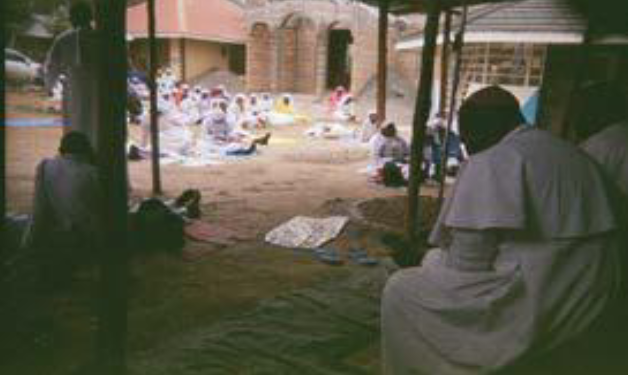
The study's CPBR approach sought to collaborate with the communities in which the study was conducted. The study collected data using Photovoice, a visual research methodology that puts cameras into the participants' hands so they can document, reflect upon, and communicate issues of concern, while stimulating social change. The photographs formed the basis upon which the researchers conducted in-depth interviews and focus group discussions to identify barriers and potential solutions to childhood vaccine uptake. Next, a workshop was held to probe proposed solutions and make them specific, short-term, realistic, and implementable by local health workers and the community.
Information analysis used the socioecological model (SEM) to understand the interplay between individual, community, and societal factors and how it affects access to and use of immunisation services, as well as potential local solutions. The overlapping themes about barriers to childhood immunisation were divided according to the SEM model into personal barriers (perception of need, attitudes and beliefs, and previous experience with health service), organisational barriers, and financial barriers (direct and indirect cost). The individual and relationship level of the model were grouped together as "personal", the community level as "organisational", and the societal level as "financial" variables.
Consistent across communities, the main barriers to vaccination services related to personal capacity (older caretakers, lack of partner support and gender-based violence concerns, religious and cultural beliefs and practices, and myths, misconceptions, and lack of knowledge); organisational capacity (inconvenient clinic hours, long waits at a clinic, and vaccine supply shortages); and financial capacity (poverty, poor transport infrastructure, teen pregnancy/motherhood, overcrowded households, and alcohol abuse).
The study elicited practical solutions from participants, most of which focused on problems related to personal and financial capacity, since health-system-related limitations were considered out of their control. These solutions were grouped into five categories: conditional cash transfer; efforts to identify and reach out to underserved groups; community engagement; targeted health education; and health service organisation.
Suggestions for public health practitioners emerging from the research include:
- Engage with the public, listen to feedback, and adapt programmes accordingly.
- Establish local public oversight committees (leveraging existing community health committees for this role) so that community members can lead solutions and frame vaccination as a public good.
- Continue to earn community trust and improve vaccine uptake by building relationships, centring community voices, working toward equity, and being transparent about progress and setbacks.
In conclusion, this study "employed a methodology not typically used in the field of immunization and provided a deep understanding of the challenges and experiences of people who are often missed by immunization efforts. The findings are consistent with barriers that have been identified globally and in Kenya as contributing to non- and undervaccination of children. Community engagement to co-create solutions to these barriers is critical."
USAID Momentum website, August 20 2024. Image credit: USAID Momentum
- Log in to post comments