










































Community Outreach: Lessons Learned in How to Improve Outreach
As detailed in this 4-page document, the Private Sector Project for Women's Health (PSP) in Jordan is implementing an outreach strategy designed to contact women with the highest unmet needs for family planning (FP) services, and to then change their attitudes about FP. According to the 2007 Jordan Population and Family Health Survey (JPFHS), 12% of married women of reproductive age (MWRA) report unmet needs for FP, with higher unmet needs among women with little or no education and among those in the economically poorest households.
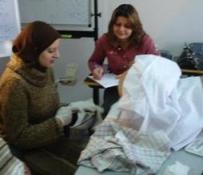
To address this situation, PSP joined with 2 local non-governmental organisations (NGOs): Circassian Charity Association (CCA) and General Union of Voluntary Societies (GUVS). GUVS and CCA recruit and train women in the communities to become community health workers (CHWs) who provide health information to women aged 15-60 years old in towns and villages across Jordan, through home visits. The CHWs promote awareness and demand for birth spacing and use of modern contraceptives, self-breast exams (SBE) and pap smears, antenatal care (ANC), postnatal care (PNC), and contraception options following delivery. Women willing to accept a modern FP method or other services are referred to a nearby clinic. Interpersonal communication messages are reinforced by mass media communications on TV and radio and in print materials.
Since its inception in early 2005, CHWs have reached 909,103 out of the 1.1 million women the programme hopes to reach. Out of all women reached, 667,787 are MWRA, of whom 84,407 women have become new acceptors of modern contraceptive methods (12.6%). In this time, CCA and GUVS have found that women who are non-method users adopt modern methods at rates higher than women who use traditional methods (safe period, withdrawal). Furthermore, contrary to expectations, few women visited report that cultural or religious beliefs prevent them from adopting an FP method. In the first visit, women who indicate that they do not use an FP method because they wish to become pregnant are unlikely to adopt an FP method.
New visit protocol has been developed, and is illustrated in graphic form within the document. In essence, under this new protocol, all women from the ages of 15 through 60 will receive at least 2 visits. Approximately 26% of the women contacted in these visits require additional visits, at which time the CHW will focus on early adopters, non-users, and women who are pregnant. Approximately 66% of the women contacted during visits 3 and 4 will require additional home visits to encourage them to adopt and/or continue with a modern FP method. Follow-up visits 5-8 focus on the potential late adopters who are, according to the data, non-users, pregnant, and/or breastfeeding. Once a woman adopts a method, the CHW follows up with her to ensure she is comfortable with, and continues to use, her method of choice.
PSP has found that approximately 60% of women acted upon the clinic referral received from a CHW.
Global Health Council Weekly Update, March 30 2009.
- Log in to post comments