










































Mobilising for Malaria - Mozambique

M4M activities in Mozambique have included the following:
- Conducting studies of malaria in the workplace;
- Organising long-lasting insecticidal nets (LLINs) and artemisinin-combination therapy (ACT) campaigns - some of which involve communication-specific elements - with the private sector and coalition members;
- Advocating for free LLINs for people living with HIV/AIDS (PLHA) and pregnant women (through antenatal care services);
- Increasing and improving access to malaria treatment;
- Identifying and disseminating malaria case studies highlighting best practices around increased access; and
- Organising exhibitions and fairs.
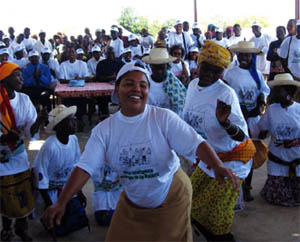
The following is an example of an M4M Mozambique community mobilisation event reflective of the strategy of using street theatre to reach people who are largely illiterate through their strong storytelling tradition: Every year countries like Mozambique in Southern Africa commemorate Malaria Day on November 9, providing local health workers and performers with an opportunity to work together to educate local people on the causes and dangers of malaria. On Malaria Day 2006, when the Provincial Health Authority and Malaria Consortium members arrived in Montepuez in the northernmost province of Mozambique, they found a large crowd gathered around a theatre group called Mhoro. The specialised script was designed to help teach the audience - mostly women and children - about malaria. "We go door-to-door to call everyone to come and gather here to receive information about malaria and to join efforts in the fight against malaria taking place throughout Southern Africa," said João Vinte, leader of Mhoro. "We encourage women to come with their children and participate actively and take home an insecticide-treated net to protect the family from malaria and to share what they learn with their husbands and families." In addition to the street theatre performance, the day-long activities included local dance groups, sport competitions, and a malaria knowledge quiz for younger participants.
Malaria.
According to the State of the World's Children's Report 2009, in Mozambique there has been a significant reduction in infant mortality, although 115 out of every 1,000 children still die before the age of one. Mozambique has one of the world's highest infant mortality rates and the main cause of child death is malaria. Nationwide, 60% of hospital out-patients have malaria.
The Mozambique project is part of the global M4M project that promotes and encourages partnerships and collaboration between all civil society actors (including the media) - not only in their own countries but through joint "North" - "South" initiatives in order to increase public and political awareness and support for an effective and sustained response to malaria at global, national, and local levels. The programme aims to establish a common framework for mobilisation and coordination that strengthens the impact of malaria advocacy by fostering alliances of malaria activists - in both the "developed" and "developing" world - and addressing the need for complementarity and the magnifying effect of media coverage, policy debate, and non-governmental organisation (NGO) action.
The Mozambique Malaria Consortium first worked on the Voices for a Malaria Free Future project with the support of John Hopkins University. Reportedly, the success of this project led to their involvement in implementing the M4M programme in Mozambique.
Malaria Consortium, Ministry of Health, National Malaria Control Program, Provincial Health Authority, Roll Back Malaria Facilitators Group, NAIMA+ (a network of NGOs working in the health sector in Mozambique).
Voices for a Malaria Free Future website on May 8 2009 and January 22 2010; and email from Claudia Manjate to Soul Beat Africa on June 18 2009.
- Log in to post comments