










































Modhumita (Sweet Friend)

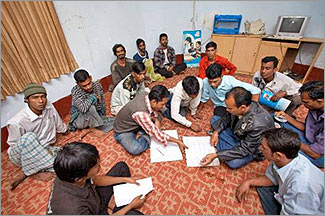
Under the Modhumita programme, 10 SMC Centres have been operating in 10 separate strategic locations of the country, offering services including sexually transmitted infection (STI) services, voluntary counselling and testing (VCT), group awareness-building on HIV/AIDS and STI, awareness of correct use of condoms, condom and lubricant distribution, awareness-building on TB, and referrals to the Government of Bangladesh (GOB) and non-governmental organisation (NGO) facilities for sputum tests, etc. Specifically, key activities include the following:
- Providing HIV communication and health service delivery for MARP, including VCT and STI diagnosis and treatment;
- Supporting HIV-related prevention, care, and treatment programmes for injecting drug users;
- Supporting people living with HIV with care and support services, including referrals for antiretroviral treatment;
- Improving HIV commodity distribution through health centres;
- Promoting HIV prevention messages through faith-based programmes;
- Enhancing the capacity of NGOs/faith-based organisations (FGOs)/the private sector to design and implement HIV prevention and care programmes;
- Supporting the national response in addressing TB and HIV coinfection;
- Implementing advocacy activities to reduce stigma and discrimination; and
- Identifying needed policy changes to strengthen HIV prevention programmes.
HIV/AIDS, Health.
During the period of October-December 2009, 10 SMC Centres had the following programme achievements:
- 32,377 clients were contacted for STI and VCT services (awareness creation).
- 1,937 clients received STI services.
- 737 clients received VCT services.
- 1,855 students were oriented on HIV/AIDS.
- 2,353 youth were oriented on HIV/AIDS.
- 4,251 demonstrations on correct use of condoms were held.
Social Marketing Company (SMC) and Bangladesh Center for Communication Programs (BCCP), with funding from the United States Agency for International Development (USAID).
SMC website, Center for Health Market Innovations website, and FHI website - all accessed on January 4 2011.

- Log in to post comments