










































Chenicheni Nchiti? (What is Real?)
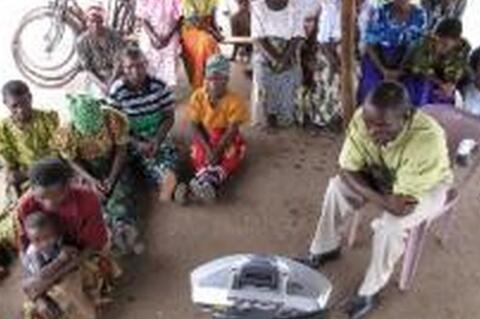
Produced by Johns Hopkins University's Center for Communication Programs (JHU/CCP) under the Bridge II Project, Chenicheni Nchiti? (What is Real?) is a five-year United States Agency for International Development (USAID)-funded radio programme that showcases real-life stories of Malawians, to provide information and promote open discussion about HIV. By offering interviews of well-known Malawians, airing reports from community-based correspondents, and taking polls of average citizens, the programme works to address HIV/AIDS issues such as multiple concurrent partnerships, male circumcision, risk reduction, positive prevention, and treatment.
Chenicheni Nchiti? is the flagship mass media intervention of CCP’s Bridge II which is built around the theme Tasankha (“We have chosen”). The concept of “choice” is woven across Chenicheni Nchiti?’s programmes: choices, large and small, are made every day, and lives are shaped by these choices. Chenicheni Nchiti? examines the choices people make and the resulting consequences. The programme was created based on the premise that everyone has a story to tell.
Chenicheni Nchiti? is aired three times each week on Malawi national radio, MBC1. The 30-minute magazine radio show airs on Mondays and is repeated on Wednesday, and a 30-minute live phone-in national feedback show is aired on Sundays. Click here in order to listen to an episode.
In producing each segment, the radio programme’s topics are outlined in advance, but the stories aren’t planned; they are told spontaneously in places such as on buses, in bars, or in village markets. Field producers, many of whom do not have formal media training, listen for compelling stories in their local community and use these stories to showcase issues related to HIV/AIDS.
The field producers record many more stories than can typically be squeezed into the show. The extra stories are made available to the other Malawian radio stations, free of charge. According to JHU/ CCP, this is intended to improve the quality of radio programming across Malawi, and broaden the reach of its message.
HIV/AIDS
JHU/ CCP says listener response has been overwhelmingly positive; listeners from across Malawi, and as far away as Tanzania, Zambia, and Mozambique have sent the show feedback.
The BRIDGE II Project is a five-year USAID-funded HIV prevention programme designed to promote normative behaviour change and increase HIV preventive behaviour among the adult population in Malawi. JHU/CCP describes BRIDGE II as a strategic, evidence-based communication programme that builds on the Nditha! ("I can") brand developed under BRIDGE I, a USAID-funded HIV Prevention project that was led by JHU/CCP from 2001-2008. Through the combination of community methodologies, interpersonal communication, and innovative approaches, BRIDGE II is scaling-up BRIDGE I’s successes while confronting specific drivers of HIV such as multiple concurrent partnerships (MCPs), alcohol/substance abuse, women’s vulnerability, and male norms, and promoting collective efficacy and normative change.
Johns Hopkins Bloomberg School of Public Health Center for Communication Programs (CCP), Save the Children Federation (SC), Pact Malawi, The International HIV/AIDS Alliance (Alliance), Youth Net and Counseling (YONECO), Galaxy Media Consultants, Story Workshop, National People Living with HIV/AIDS in Malawi (NAPHAM).
Center for Communication Programs website on May 27 2011; and JHU/CCP website on August 9 2011.
- Log in to post comments