










































The Jane Goodall Institute in Tanzania: Mainstreaming HIV Programming into Natural Resource Management and Economic Growth Activities
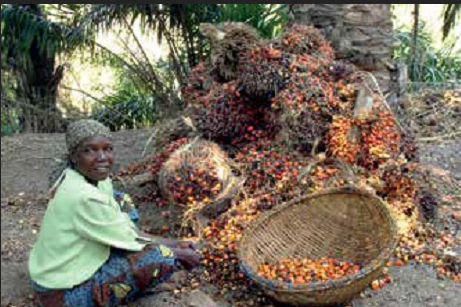
This 16-page case study, which forms part of the AIDSTAR-One Case Study Series, shares the experience of the Jane Goodall Institute (JGI) to mainstream HIV prevention, care, and support into natural resource management (NRM). According to the case study, HIV has had a significant effect on conservation in sub-Saharan Africa. The case study finds that JGI's work in the Kigoma District in Tanzania provides an example of successful implementation of PEPFAR wraparound funding to mainstream HIV and broader health issues into NRM and economic growth (EG) activities. JGI has designed a community-centred model of conservation that addresses the socioeconomic development priorities of the local people, including health, education, safe water, and access to capital.
The case study explains that national park and wildlife conservation staff are especially vulnerable to HIV because many people work away from their families for extended periods in remote areas. Loss of staff adversely impacts institutional memory and continuity of operations, and conservation funds are diverted to pay for HIV- and AIDS-related staff costs such as sick leave, medical expenses, terminal benefits, funerals, and training of replacement staff. In addition, as HIV-affected households lose wage earners and capacity for heavy agricultural labour, they turn increasingly to natural resources as a safety net, putting a strain on conservation. The HIV-related services that JGI externally mainstreams into its NRM/EG activities include: home-based care for HIV-affected households; microenterprise/credit for people living with HIV (PLHIV); fuel-efficient stoves to decrease indoor air pollution for PLHIV; forestry reserves, woodlots, and agro-forestry to decrease daily labour requirements for PLHIV; and HIV education. JGI also mainstreams broader health initiatives into its NRM/EG activities and implements internal mainstreaming among JGI staff and their family members.
The case study identifies the following strategies that have worked well for the organisation:
- Adapting the organisational mission to address community needs: JGI recognised very early on that achieving its mandate of "conserving biodiversity and protecting and restoring wildlife habitat in critical ecosystems in western Tanzania" required expanding its scope of work. JGI has fully integrated health promotion and socioeconomic development of the local communities into NRM.
- Leveraging the NRM/EG platform for maximum health impact: JGI's community-based NRM/EG activities are well established at the grassroots level, creating a cost-effective platform for implementing community-based health interventions. By leveraging an already existing platform that was established using NRM/EG funds, JGI is able to invest the majority of its President's Emergency Plan For AIDS Relief (PEPFAR) wraparound funds in direct HIV activities.
- Committed, multidisciplinary staff: JGI's staff members are multidisciplinary, with expertise in a broad range of technical areas, including primatology, botany, conservation, microenterprise, health, governance, and community development. JGI employs a full-time health specialist to coordinate its HIV mainstreaming work and to build the capacity of the organisation on broader health issues. JGI's staff members share a deep sense of commitment and responsibility to the communities they serve and understand the intimate linkages between the socioeconomic status of the people and conservation of the land.
- Partnering with local government: At the centre of JGI's work in the Kigoma District are strong partnerships with the district councils, village-level government, and the Ministry of Health and Social Welfare (MOHSW). JGI supports MOHSW trainers to train community-based health workers. It also works directly with the district councils and village-level government to develop land use management plans, implement water and sanitation projects, roll out cervical cancer screening, set up microenterprise groups, conduct HIV educational campaigns, and establish HIV committees within the village-level government structure.
- Use of community-based health workers: The community-based health workers provide a critical linkage between clients and the health system. They act as a conduit for rural and remote populations to access facility-based health services and serve as effective health educators and mentors to improve the uptake of health messages. Reaching beyond the dispensary down to the hamlet level, they support patients throughout the full continuum of care to promote adherence and to improve retention.
The case study identifies key challenges as: weak HIV capacity and lack of clarity on mainstreaming; funding from different United States Agency for International Development (USAID) offices with different reporting requirements; fitting into PEPFAR indicators; and resource limitations.
The case study outlines several recommendations for other programmes:
- Practice internal mainstreaming to foster staff's understanding and commitment: For staff to effectively mainstream HIV into their daily work, they must be well educated about HIV infection and understand its impact on the communities they serve. Internal mainstreaming, including training during staff meetings and support for staff members and their families affected by HIV, fosters a sense of well-being that will extend to their work in the communities. One recommendation is the recruitment of a full-time staff member with health expertise to coordinate the mainstreaming of HIV into an organisation's NRM/EG activities and to build staff capacity.
- Maintain effective communication between recipient and donors: To minimise confusion, regular communication between the donors (in this case, USAID/Tanzania staff from the Health and NRM/EG teams) and the wraparound funding recipient is imperative. Although quarterly reports are a form of regular communication, they have some inherent challenges. A schedule of regular check-ins, including in-person meetings and field visits, might help improve the implementation of wraparound programming.
- Promote sustainable, country-led programming: Strong partnerships with the government are critical, beginning at the national level and continuing down to the regional, district, and village levels. These partnerships ensure that programming is locally appropriate and that governments have the technical capacity and political commitment to sustain programming in the future.
- Mainstreaming should extend beyond HIV to broader health issues such as maternal and child health, water and sanitation, malaria, and nutrition: The benefits of such an approach include the mitigation of HIV stigma, improved cost effectiveness, and better attention to community health needs overall, not just the relatively small number of households affected by HIV.
The case study concludes that through thoughtful leveraging of the NRM/EG platform, JGI has effectively balanced community priorities and adherence to its core mandate of protecting chimpanzees and their habitat. Lessons that have emerged during JGI's work in the Kigoma District could help other organisations, programme managers, policymakers, donors, and country governments to more effectively mainstream HIV and broader health issues into NRM/EG activities within their own contexts.
Click here to read the case study online.
AIDSTAR-One website, October 7 2012.
- Log in to post comments