










































Facilitating a Three-Way Engagement between Study Communities, Policy Makers and Researchers in Stroke Research in Hai and Dar-es-Salaam, Tanzania
This project aimed to raise awareness and stimulate dialogue about health research and its impact on health in the Hai district and Dar-es-salaam, Tanzania - in particular, engagement with, and understanding of, stroke research. Two members of United Kingdom (UK)-based academic institutions sought to build local capacity through knowledge and skills transfer and to support ongoing targeted training and development for a Tanzanian researcher as well as for members of the media and policymakers. This project is based on research in Hai and Dar-es-Salaam which included the Tanzanian Stroke Incidence Project (TSIP) and social research on the perceptions and treatment of stroke. The objectives were to:
- Assess the understanding within this population of the reasons for health research, as well as of the research findings of this stroke incidence study, published in The Lancet Neurology: "Stroke Incidence in Rural and Urban Tanzania: A Prospective, Community-Based Study".
- Using the findings from the stroke studies and the findings from objective 1, design an information and education tool about health research in this population and thereby facilitate dissemination and dialogue about the research findings of the stroke studies.
- Facilitate dialogue between researchers, communities in research areas, and policymakers in the Ministry of Health (MoH).
- Strengthen the capacity of local people to facilitate public engagement with health research.
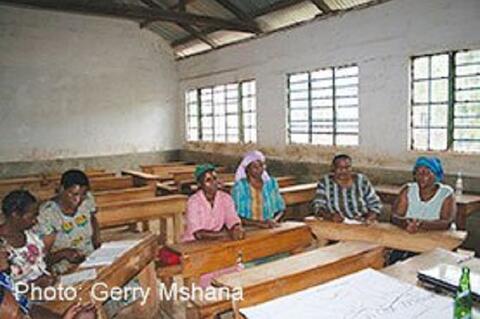
By means of interactive interviews with stroke patients and participatory focus group discussions with family members of stroke patients, villagers, social leaders, religious leaders, and other members of the general public, the project team examined understandings of the research process in general, and the specific research carried out in relation to stroke. The team also provided feedback on stroke research results, assessed the response, and discussed implications of the research. A facilitated dialogue between the communities and policymakers in the MoH was also conducted.
Specifically, under the direction of one member of the project team, a videographer undertook video interviews with local health professionals and researchers involved in stroke care/research to elicit their views on the barriers and facilitators of getting stroke research evidence into practice in Tanzania. Also taking part were village-based "enumerators" from the Stroke Incidence study cited above. (Each village is covered by one of the enumerators, and they are reportedly a useful conduit for information back to the villagers themselves.) From this study, the team produced a video entitled: "Publication Is Not Enough - Getting Stroke Research Evidence into Practice in Tanzania". The video highlights recommendations shared by participants, such as the necessity for:
- Valuing the study community by ensuring translation of research evidence into practice;
- Producing locally relevant and useable research evidence;
- Sharing feedback and findings with local health professionals and communities;
- Creating partnerships between researchers and health professionals to facilitate translation; and
- Undertaking advocacy to communicate research findings and engage policy makers and health professionals in translation of findings into practice.
In addition, the project team sought to communicate the results of TSIP to local researchers by undertaking meetings with district medical officers in Temeke and Hai, as well as policymakers and researchers from the MoH, including a representative of director of preventive services and the desk officer responsible for non-communicable disease (NCD) in the Ministry, Muhimbili University College of Health and Allied Sciences (MUHAS), National Institute of Medical Research (NIMR), and Kilimanjaro Christian Medical Centre (KCMC). According to the project team, these interactions promoted discussion to clarify understanding and also raised questions such as "How do you persuade someone who feels perfectly well, but is found to have a high blood pressure (BP), to take drug treatment potentially for the rest of their lives, to lower their chances of having a stroke?" Research workers felt that this was an easier problem to tackle when there was someone well known to the rest of the village who was disabled by a stroke. They found that promoting discussion was more difficult when this wasn't the case. Another problem, particularly in Dar-es-Salaam, occurred because of beliefs around the cause of stroke, which many perceived to be due to evil spirits, leading to people seeking help from traditional healers. In response, the project team engaged with traditional healers and led education seminars with local health professionals about the prevention and management of stroke.
A programme of research training/master classes was provided to the participating Tanzanian researcher during a study visit to the UK in July 2009. For example, he took part in classes in qualitative research methodology and analysis and health promotion theory and in risk communication. He undertook research meetings with academics, and he attended research meetings held by the Risk Communication and Decision Making Research Group and the Research Day of the Institute of Health and Society.
The project team engaged the media, particularly radio and newspapers, about the issues surrounding stroke and, in particular, important measures for prevention, such as decreasing salt intake to decrease BP. Through education workshops with journalists and media coverage, they sought to contribute to a greater awareness of the increasing problems that stroke is causing. They met with national newspaper editors and TV executives and also spoke to local radio programme producers (e.g., Kili FM). A consultant/neurologist participated in radio and TV interviews for the project. The result was, reportedly, a significant amount of media coverage in the English and Swahili language press.
Furthermore, based on connections made during the publication of the stroke incidence paper (referenced above) in 2010, organisers were able to activate their media contacts for World Stroke Day in October 2010. Members of the project in Tanzania held a press conference about stroke on October 28, which was widely covered by the local media organisations. Several newspapers covered World Stroke Day and the dissemination news conference.
Based on the aforementioned public engagement activities carried out through the media, the project team formed a national network of 6 journalists (4 from print media and 2 from electronic media) who were interested in covering stroke matters. The goal is to empower these personnel to foster a better understanding of stroke and its risk factors and of the principles of research as a whole.
Health
According to organisers, stroke is a significant problem and major cause of mortality in sub-Saharan Africa (SSA), yet many people don't seek medical care following a stroke. TSIP, which commenced in 2003, established that, compared to African Americans in Manhattan, New York, United States, the age-adjusted stroke incidence is similar in Hai and greater in Dar-es-Salaam, Tanzania. The main modifiable risk factor is hypertension, which is often undiagnosed and very rarely adequately controlled, despite the availability of affordable, sustainable drug treatment. Over the years, hypertension control rates have not improved. Organisations wanted to elicit the understanding of the population and local health care professionals about the reasons for health research and their knowledge of the TSIP findings. They then wanted to design an information and education tool about health research in order to improve dissemination and discussion about the research findings within the communities in the research areas as well as among policymakers. This would, it was hoped, enable local people themselves to facilitate public engagement with health research as it relates to stroke, and more generally.
Through this project, the team learned that the context of lack of resources and poor infrastructure is fundamental to understanding translation of research evidence into practice in the Hai district of Tanzania.
- Research can provide an immediate benefit, beyond the intrinsic benefits of research, by providing access to research equipment and transport for use in local care, treatment, and education.
- Research may exacerbate lack of resources if the research deflects resources from primary care and health education by examining issues of little direct concern to practice or that do not provide better understanding of the situated practices of healthcare provision. It is additionally problematic if the information is not fed back in ways that can be used in the local setting.
The team evaluated the feedback workshop for the research staff through open questions at the time of the workshop. They also carried out semi-structured interviews with 6 of the enumerators. The feedback was generally very positive, and people felt afterwards that they were more informed about why research is important and why different methods are used. They also felt they had a better understanding of important factors for the prevention of stroke, such as identification and treatment of high BP. However, they also felt that this information was hard to get across to the public, as most media health campaigns are dominated by infectious diseases such as tuberculosis (TB), malaria, and HIV. There was a feeling that there should be more user-friendly feedback material developed for both healthcare professionals and the local population.
The project team learned several lessons that could be shared with others undertaking similar projects. For instance, explaining research and research findings within a setting such as Tanzania is very different from doing so within a developed country environment. Many adults, particularly those who are older, have not received secondary education; there is, therefore, a limit to their understanding of basic medical facts. Allied to this, there are strongly held beliefs about causation, such as evil spirits, which means that, in some communities, people are often reluctant to seek help from "western-style medicine". Organisers stress that is important to accommodate these ideas and to work with local traditional healers. Otherwise, there will be a large part of the population with whom it will not be possible to engage.
Institute of Health and Society, University of Newcastle; Department of Health Sciences, University of Leicester; and National Institute for Medical Research - with funding from the Wellcome Trust.
"International Engagement Awards: Projects funded in 2008" [PDF]; and email from Richard Walker to The Communication Initiative on December 19 2012. Image credit: Gerry Mshana
- Log in to post comments