










































By bike, by bus and by boat: Our Ebola radio show's incredible bi-weekly journey across Sierra Leone
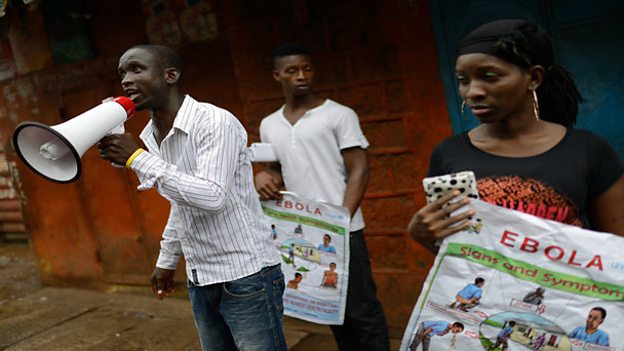
Author: Paul Massaquoi, March 23 2015: What do a priest, a boat, a bus and a bike have in common? Despite sounding like the start of a bad joke this is in fact an important part of our strategy for circulating and transmitting our life-saving Ebola information radio programmes to stations across Sierra Leone.
Brown paper packages
While most BBC programmes are sent down ISDN lines or shared via storage systems backed by huge servers or cloud-based systems, we dispatch our programmes on CDs in brown paper packages.
Internet connections are too slow, too unreliable and in the smallest and most remote radio stations – non-existent. Our partner stations stretch from the island of Sherbro in the south of Sierra Leone to the rural borders of Guinea and Liberia and no single commercial courier covers the whole country. And even if it did Ebola-related travel restrictions make it logistical headache to deliver the programme safely and on time.
Though Sierra Leone has successfully emerged from the decade-long civil war and is developing its infrastructure tricky transport links and pot-holed dirt roads muddied by heavy rains mean a long and arduous journey for anything sent by post.
Canoes used for fishing
Under these difficult circumstances, ingenious ways are found on a bi-weekly basis to deliver radio shows to partner stations using every means of transport available. Our creative selection of options includes rickety motor bikes, cantankerous commercial buses, ancient jeeps supplied by a friendly NGO - and for one radio station based on an island - canoes normally used for fishing.
Father Mansaray
One marathon journey to distribute our Ebola-response radio programme Kick Ebola from Sierra Leone starts out at a lorry station in the capital, Freetown; the CD is then passed to a priest named Father Mansaray in the bustling city of Magburaka; the package then hitches a ride on a bus from the once Ebola-quarantined city of Makeni and ends up at Radio Bintumani in the far reaches of northern Sierra Leone. In total, the radio show travels over 450km over two to three days - every single week.
We encounter all sorts of obstacles. We’ve missed connections for buses which leave only every couple of days; during heavy rains, packages have been lost after delivery cars literally sank into sticky mud; and last month, we were prevented from driving into an Ebola-quarantined town by authorities. But by hook or by crook, we’ve still managed to deliver the programmes - albeit (and understandably) - sometimes a few days late.
It’s not just Ebola awareness programmes that embark on the bi-weekly tour of Sierra Leone. Through radio, BBC Media Action in Sierra Leone is helping address women’s legal rights, re-build farming skills damaged by years of civil war; encourage debate and accountability before elections; and we have facilitated journalistic coverage of the Sierra Leone-based trial of former Liberian president, Charles Taylor.
So what do a priest, a boat, a bus and a bike have in common? It’s actually no laughing matter. Against the odds, they are all helping us to get life-changing radio programmes out to communities across Sierra Leone.
Click here to access this BBC Media Action blog and related links on their work in Sierra Leone.
Image credit: BBC Media Action
Contact:
BBC Media Action
BBC Media Centre, MC3A, 201 Wood Lane
London
W12 7TQ
United Kingdom (UK)
Phone: 44 (0) 20 8008 0001
Fax: 44 (0) 20 8008 5970
Media.action@bbc.co.uk
- Log in to post comments