




























The Effectiveness of Disaster Risk Communication: A Systematic Review of Intervention Studies
Public Health Agency (Bradley); Belfast Health and Social Care Trust (McFarland); Queen's University Belfast (Bradley, Clarke)
The aim of this systematic review is to identify, appraise and synthesise the findings of studies of the effects of risk communication interventions during 4 stages of the disaster cycle: mitigation and prevention, preparedness, response, and recovery. Included in the analysis were 27 studies of risk communication interventions that were implemented in the context of a variety of man-made, natural, and infectious disease disasters around the world. The contexts, interventions, and outcomes were diverse. The effectiveness of the interventions was evaluated by assessing knowledge, behaviour, and incidence of health outcomes (e.g., injuries, deaths).
There were several different types of communication method used in these studies. Mitigation and preparedness interventions used face-to-face group participation and education in 8 studies, one of which included the use of a specially designed board game. Two early warning alerts used several communication channels and another used Reverse 911 (a system that uses a database of telephone numbers and associated addresses, which, when tied into geographic information systems (GIS), can be used to deliver recorded emergency notifications to a selected set of telephone service subscribers). Mitigation and preparedness studies that did not use face-to-face communication used a telephone intervention and a computer game. The response phase interventions were multi-channel information campaigns (with different methods and balance of methods between studies) and a school-based participatory intensive education programme. The 3 recovery phase interventions used media campaigns to encourage members of the public to access telephone help lines for mental health problems and to undertake healthy behaviours following disasters.
The authors next look at the results of individual studies grouped into each of the 4 stages of disaster response. For each, the settings, participants, interventions, and results are described in detail. A common thread is that most studies used non-randomised designs that make interpretation challenging; inferring causality from the reports is difficult. The one study that did use a randomised trial to compare small group discussions with community health promotion officers lasting one hour (high-intensity intervention) compared to simply receiving written information (low-intensity intervention) for Latino residents of Los Angeles County, United States. Those who took part in a community-based preparedness discussion with a health promoter and people who received written information made significant improvements in disaster preparedness according to a self-reported checklist. The platica (discussion) group was slightly better prepared for 10 of 13 measures before the intervention. Overall, preparedness score for the written information group increased from 29% to 52%, and for the platica group increased from 38% to 76%.
In reflecting on the results, the authors reflect that some disaster mitigation and preparedness interventions appeared to improve knowledge and behaviour relating to disaster risks. Yet there was little robust evidence of the effectiveness of risk communication for disaster knowledge, behaviour, and health outcomes in the response and recovery phases of disasters. In fact, one intervention was associated with an undesirable reduction in protective behaviours. Though the authors felt that a meta-analysis was inappropriate due to the diversity of the studies reviewed, they do offer some general observations such as this one in the discussion section: "It is interesting to note that natural disaster preparedness interventions, which authorities might wish to target at a whole population, mainly involved interpersonal communication and seemed quite resource-intensive. During disasters, responses were characterised by the need to communicate quickly, often by all available methods. The ability to directly communicate with people believed to be at risk, such as by the Reverse 911 alert, offers potential advantages over the use of third-party broadcast media, which usually targets a wider audience than those directly at risk."
Reiterating that most of the studies were controlled or uncontrolled before and after studies, and few of these used appropriate paired analyses, the authors stress that separating the effect of the intervention from outside influences in uncontrolled studies is very difficult, particularly in disaster situations. They acknowledge that the suddenness of many disasters that require evacuation means that planning and conducting prospective studies is difficult. From their perspective, some disaster risk communication interventions are, however, amenable to study by more reliable methods, including individual or cluster randomised trials. In places where disasters occur relatively often, it may be possible to plan prospective comparisons of what are assumed to be similarly effective communication methods. Ethical issues must be addressed, they stress, when planning such studies, but in principle, preparedness studies in which the control group subsequently are offered the intervention, or response studies that compare two generally accepted as similar methods of risk communication (where it is not standard practice to use both together) are likely to be ethically sound.
"The major finding for future research from this study is that there is an absence of high-quality robust trials relating to disaster communication that should be remedied. Modern internet-based interactive social media present opportunities for risk communication, and may facilitate evaluation because it may be possible to invite recipients to complete knowledge or behaviour questionnaires, or even to request position-based information from mobile devices. Randomised trials (individual and cluster) of risk communication may have become more difficult in recent years because of the likelihood of 'contamination' between intervention and control groups due to sharing of information, which means that designing comparisons of information interventions will require careful planning to either prevent, or more likely, incorporate, the interpersonal information sharing that is a defining feature of modern communication methods."
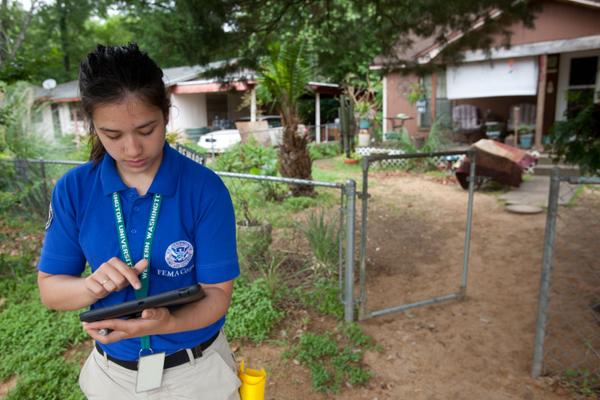
PLoS Currents: Disasters, August 22 2014, sent to the Humanitarian Communication LinkedIn Group, September 2 2014, accessed March 14 2016. Image credit: Federal Emergency Management Agency (FEMA)
- Log in to post comments