










































Women Engage! Living with HIV and Cervical Cancer - A Guide to Our Involvement in Its Prevention, Screening and Early Diagnosis, Treatment and Research
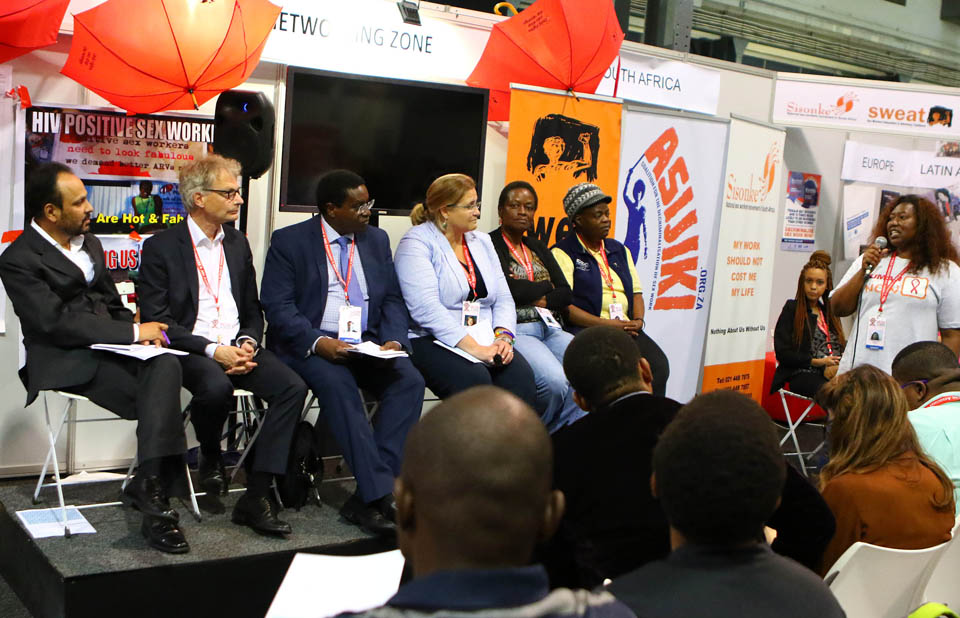
"It is essential that...key messages are shared throughout our communities, and that all people see this as their collective responsibility in our communities, health centres and policy fora to support women and girls in all our diversity to be protected against HPV and cervical cancer."
Written by and designed primarily for women living with HIV and those who seek to support them, this advocacy booklet offers recommendations that reflect and communicate diverse realities, priorities, and rights of women living with HIV around cervical-cancer-related prevention, treatment, and services. It was produced by the Salamander Trust and partners with funding from the Joint United Nations Programme on HIV/AIDS (UNAIDS).
Women living with HIV are 4-5 times more vulnerable to developing cervical cancer. HIV and cervical cancer disproportionately affect women in lower- and middle-income countries (LMICs) due to the fact that cervical cancer is detected too late and women lack access to prevention (screening services and human papillomavirus (HPV) vaccination) and treatment. A critical component of the right to health as it relates to cervical cancer requires that governments ensure access to prevention and treatment. Yet practices that directly or indirectly affect women's choices, including barriers to treatment and services (e.g., the overall costs that make financing vaccination of girls (and boys) a challenge, particularly in LMICs), undermine human rights and can have grave consequences. In 2018, approximately 570,000 women were diagnosed with cervical cancer, and 266,000 women died of the disease.
Salamander Trust explains that there seems to be a lack of documentation relating to how cervical cancer is experienced by women living with HIV in all their diversity, but it is safe to say that groups that may lack essential screening and early diagnosis services include: women of same-sex orientation, trans men (who are not seen as vulnerable), sex workers and women who use drugs (whose labour and behaviour is criminalised or stigmatised), women with disabilities, and adolescent girls and young women. Despite the need, cervical cancer prevention has, for the most part, been left out of sexual and reproductive health (SRH) services for women living with HIV in many LMICs. Furthermore, there is lack of their engagement at many levels.
The booklet, which is a call to action, explains key facts around cervical cancer to ensure that women living with HIV in all their diversity understand what is required to protect themselves, what the global response has been, and what opportunities exist to ensure their leadership and engagement. The booklet also explores why this is important to women as individuals and community advocates and what they require: from the UN; from other partners investing in cervical cancer prevention and treatment services; and from governments who respond at national levels.
Pages 14-23 feature a series of recommendations directed toward specific audiences; each section speaks to areas of engagement, prevention, screening and early diagnosis, treatment of precancerous cells, and research.
- Women living with HIV in all our/their diversity - Sample recommendation: "Work together with your community and with women's rights groups; networks of women from key populations (sex workers and women who use drugs); or women-specific cancer organisations or perhaps even through a community health council. Think about who are the most marginalised girls and women who also need this information. This could help to bring visibility to this booklet and encourage a wider discussion about how your community can promote and support a community-wide girls' vaccination and screening programme, to protect the next generation as well as all of us now. If no vaccination programme exists, use this opportunity to lobby your community health council. If one of you feels comfortable, share some of your own experiences to build understanding of the challenges faced and how these were overcome."
- Healthcare providers and programmers - Sample recommendation: "Follow up to ensure that women get the follow-up screening and/or treatment and that they are linked to funded peer support and connected to other women living with HIV who have experiences of abnormal cells or cervical cancer."
- National policy - Sample recommendation: "Leverage group discussions to strengthen or create community approaches to ensure all girls have access - in ways that minimize any stigma, discrimination or fear around the vaccine."
- The World Health Organization (WHO) Cervical Cancer Elimination Initiative and donors - Sample recommendation: "We [women living with HIV in all their/our diversity] request a seat at the table. We would like to know how women living with HIV and adolescent girls and young women are deliberately being meaningfully engaged in policy that directly affects our lives at global, regional and national levels. We also request an update from the UN Joint Global Programme on cervical cancer Prevention and Control on key countries including the six focus countries: Bolivia, Tanzania, Morocco, Myanmar, Uzbekistan, Mongolia."
- Employers - Sample recommendation: "Ensure all employees have full access to regular and updated information and support about the importance of screening; and the means to access it regularly."
- Media - "One example of good practice is when a UK [United Kingdom] government body, Public Health England, met with all national newspapers and other media to explain the public health importance of the HPV vaccine for girls....All the newspapers and diverse radio and TV channels took part, affirming their support for the campaign when it was launched by the government. This was an effective way to reach a wide diversity of people across England. There has been a routine schools-based programme ever since, with over 85% of girls vaccinated..."
- Research - "The ALIV[H]E Framework [see Related Summaries, below] sets out an approach to holistic research, which combines formal and participatory quantitative and qualitative data collection. This offers the opportunity for women and girls most affected by these issues to be meaningfully involved in the whole research process, so that our own priorities can be articulated and included as indicators of effective and ethical programmes and policies."
28
Emails from Alice Welbourn to The Communication Initiative on March 22 2019 and March 23 2019; and Salamander Trust website, March 22 2019. Image credit: UNAIDS
- Log in to post comments