










































TogetHER for Health
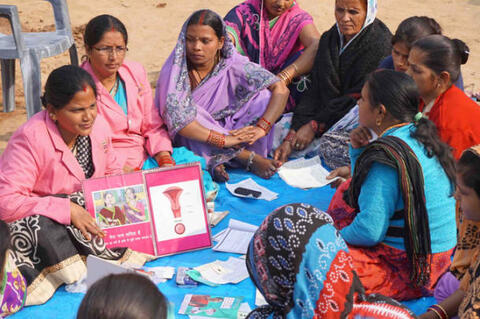
Founded in February 2018, TogetHER for Health is an international private-public partnership focused on advocacy and communication to end cervical cancer, especially in the low-resource countries where the burden is greatest.
TogetHER advocates for adolescent vaccination against human papillomavirus (HPV, which causes most cases of cervical cancer), screening and treatment for precancerous lesions ("screen-and-treat") in women, and research and development (R&D) designed to lead to less expensive and more effective diagnostic and treatment methods. TogetHER works with policy experts and government officials to determine the policy decisions that will benefit the women and girls at risk of cervical cancer in a given location and to lay the groundwork for successful implementation of the chosen policies. An example of an advocacy action was TogetHER's attendance at the 2018 UN General Assembly, where the group co-hosted a side event and an Advisory Board member joined in other voices in global health making the case for action to eliminate cervical cancer.
Part of TogetHER's awareness raising involves publication on its website of fact sheets, videos, photos, and stories that convey the human stories behind the cervical cancer statistics. For instance, the "Faces of Hope" project introduces women affected by cervical cancer in Kenya, as well as the doctors, policymakers, and advocates working to alleviate their suffering and end cervical cancer deaths. The materials are freely available to help supporters highlight the urgency of addressing cervical cancer.
One story focuses on Christine (also depicted in video, below), who, after learning from her doctor that cervical cancer is preventable with the HPV vaccine and overcoming her cultural reluctance to talk about an issue related to sexuality, decided to have her 14-year-old daughter vaccinated. In Kenya, where Christine lives, religious institutions are powerful sources of information and are influential in the adoption of national HPV vaccination campaigns. Their reach is broad: On any given Sunday, 3,000 people worship at Parklands Baptist Church in Nairobi, where Christine is a member, and thousands more watch its online broadcast. The leader of Parklands' youth ministry, Pastor Sylvester, oversees programmes to educate young people about how to address risk factors that can impact their long-term health, like the HPV infection.
As noted in this story, Rwanda launched its national HPV vaccination programme in 2011, delivering the vaccine in schools to all girls in primary grade 6. Reported coverage was 93% in the first year and 98% in 2014. The country credits the programme's success to: a public-private partnership with a vaccine developer; a high-level political commitment by champions such as the First Lady; the strong Rwandan health system; and comprehensive community sensitisation to promote vaccine introduction. TogetHER is an example of an organisation that is working to increase strategic alliances, as well as funding.
TogetHER's Cervical Cancer Grants Program provides small, highly targeted grants that address barriers and strengthen the adoption of cervical cancer primary and secondary prevention technologies. The programme seeks to generate evidence and lessons that address market barriers and speed wider product access and uptake.
Immunisation and Vaccines, Youth
According to the Joint United Nations Programme on HIV/AIDS (UNAIDS), 90% of 311,000 cervical cancer deaths globally per year occur in low- and middle-income countries (LMICs). Only 10% of girls in LMICs access the HPV vaccine, compared with 90% in high-income countries. Nearly all cervical cancer deaths could be avoided if adolescent girls were immunised against HPV and if women were screened and treated, according to the World Health Organization (WHO).
TogetHER argues that the slow pace of policy change hinders health impact. And, the group indicates, despite several new sources of implementation money announced in 2018, scale-up of cervical cancer services and the development of new tools is chronically under-funded.
American Cancer Society, Basic Health International, Bristol-Myers Squibb Foundation, Global Good, Pathfinder International, Population Services International (PSI), Project Concern International, Vizas Family Philanthropy Fund, Women to Watch Foundation.
"The women's health advocates pitching the end of cervical cancer", by Catherine Cheney, Cevex, May 22 2018, TogetHER website, and UNAIDS website - all accessed on August 2 2019. Image credit: PSI
- Log in to post comments