










































Impact of HPV Vaccine Hesitancy on Cervical Cancer in Japan: A Modelling Study
Cancer Council NSW (Simms, Smith, Keane, Canfell); Hokkaido University (Hanley); University of Sydney (Simms, Smith, Keane, Canfell); University of New South Wales (Canfell)
"This study shows the importance and urgency of increasing HPV vaccination coverage in Japan, and the substantial health gains that could be made if the vaccine hesitancy crisis were to be addressed."
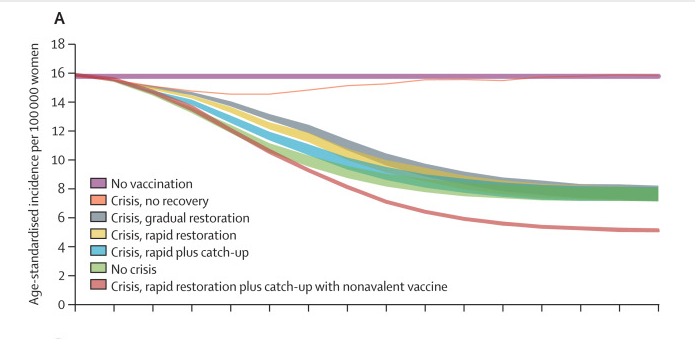
Two months after formal inclusion in Japan's national immunisation programme, proactive recommendations for the human papillomavirus (HPV) vaccine were suspended following reports of adverse events since found to be unrelated to vaccination, but that were extensively covered in the media (e.g., emotive images of girls having difficulty walking or controlling their movements were broadcast extensively on news programmes). Despite the publication of a position paper endorsing HPV vaccine safety, vaccine coverage subsequently dropped from approximately 70% to less than 1% and has remained low to date. This modelling study aimed to quantify the impact of this vaccine hesitancy crisis, and the potential health gains if coverage can be restored.
The researchers used an adapted version of the Policy1-Cervix modelling platform, which is a dynamic model of HPV transmission, vaccination, type-specific natural history, cancer survival, screening, diagnosis, and treatment. They evaluated the expected number of cervical cancer cases and deaths over the lifetime of cohorts born from 1994 to 2007 in the context of the vaccine hesitancy crisis, which is defined here as the period of low coverage from 2013 to 2019, and ongoing.
The researchers found that the vaccine crisis is predicted to result in an additional 24,600 - 27,300 cases and 5,000 - 5,700 deaths over the lifetime of cohorts born between 1994 and 2007, compared with if coverage had remained at around 70% since 2013. However, restoration of coverage in 2020, including catch-up vaccination for missed cohorts, could prevent 14,800 - 16,200 of these cases and 3,000 - 3,400 of these deaths. If coverage is not restored in 2020, an additional 3,400 - 3,800 cases and 700-800 deaths are expected occur over the lifetime of individuals who are 12 years old in 2020 alone. If the crisis continues, the researchers suggest that 9,300 - 10,800 preventable deaths due to cervical cancer will occur in the next 50 years (2020-69).
Reflecting on the findings, the researchers cite studies finding that, because of the instant and wide-ranging influence of the internet and social media, suspension of proactive recommendations for the HPV vaccine not only resulted in the crisis in Japan, but also probably contributed to vaccine hesitancy crises in Denmark, Ireland, and Colombia. They point out that, despite negative media coverage, the Danish and Irish governments continued to proactively promote HPV vaccination, and various medical and non-medical organisations formed an alliance to actively advocate for HPV vaccination. As a result of these governments acting quickly to regain control of the narrative, a turnaround in uptake was seen in both countries. In light of these examples, the researchers recommend an appropriate and timely response to reports of adverse events following immunisation (AEFIs) in order to sustain and rebuild public trust.
In conclusion, the "results show the intermediate-term and long-term cost of vaccine hesitancy in Japan, but they also indicate that much of the negative health impact could be mitigated if high-level political support for HPV vaccination were restored and proactive recommendations reinstated....Strong support from government is required and is most effective when there is cooperation across multiple sectors."
The Lancet Public Health. https://doi.org/10.1016/S2468-2667(20)30010-4