










































6 Ways Technology is Helping to Fight Ebola
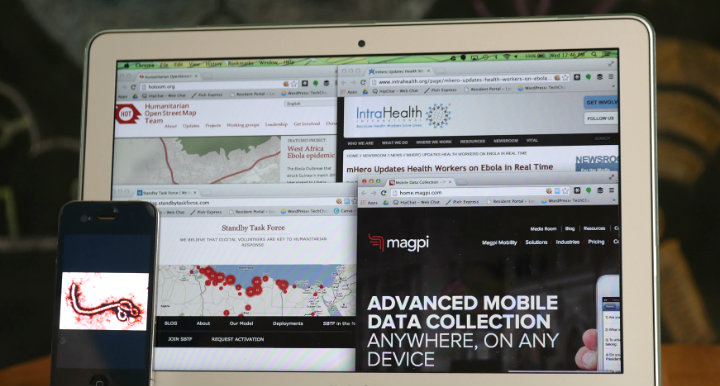
Based on consultations with the TechChange Alumni community and other experts in international development and humanitarian assistance, the author of this article, Timo Luego, has pulled together a list of different technologies being applied to manage Ebola. The list includes concrete examples of what different organisations are doing and offers links to further information.
The following is a brief summary of the six ways that technology is being used:
1. Tracing outbreaks with mapping and geolocation
One of the biggest challenges in the Ebola response is tracing all contacts that an infected person has been in touch with. In many areas of West Africa, technology has helped to map areas to more easily identify villages, and locate communities and people. They also help in mapping health services.
2. Gathering Ebola information with digital data collection forms
As stated in the article, "contact tracing involves interviewing a lot of people and in most cases that means writing information down on paper which then has to be entered into a computer. That process is both slow and prone to errors." Technology is helping organisations working in the Ebola response to replace their paper forms with digital forms so that enumerators can, for example, collect data using their phones.
3. Connecting the sick with their relatives using local Wi-Fi networks
Technology, such as the local Wi-Fi network, is being used to connect patients in the isolation ward with the relatives through video calls. In situations where video calls are not possible, cheap mobile phones can be used so that patients can talk with their relatives.
4. Sharing and receiving Ebola information via SMS text messages
A variety of SMS systems are being used to share information and also to receive information.
5. Mythbusting for diaspora communities via social media
Social media can also be used to address Ebola but there are limitations in West Africa. "With internet penetration at less than 5 per cent in Liberia and less than 2 per cent in Sierra Leone and Guinea, it is simply not relevant for most people – unlike radio for example. However, all of these countries have huge diasporas." Very often people in affected countries will assume that their relatives in the US or Europe will know more, and will turn to them for information, often because many don’t trust their own governments to tell the truth. Social media can play an important role in giving diasporas the correct information which can be passed on to relatives and friends in affected countries.
6. Supporting translations of Ebola information remotely online
Technology is also being used by Translators without Border to help non-governmental organisations from all over the world to remotely translate posters into local languages.
TechChange website on October 22 2014.
- Log in to post comments