










































Adolescent Girls in Disaster and Conflict: Interventions for Improving Access to Sexual and Reproductive Health Services
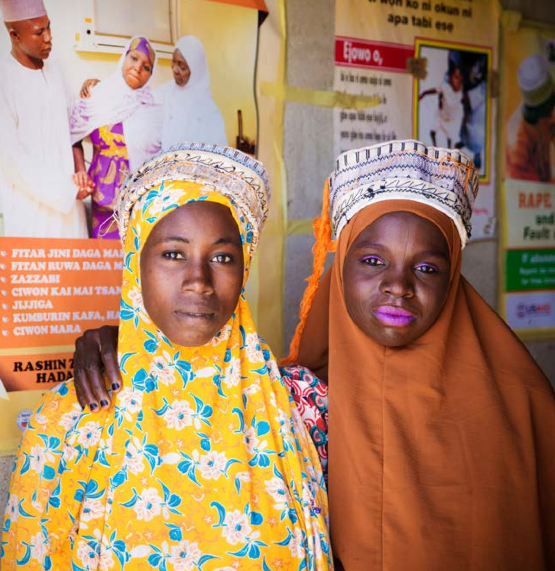
“Adolescent girls are overlooked in turbulent times of disaster and conflict. Traumatized, constrained by tradition, torn from school and family structures and familiar social networks they can be lost in the crowd in a refugee camp or disrupted community. We must look harder to see the realities of girls aged 10 to 19, include them in humanitarian programming, and plan interventions that restore health and hope at a critical time between childhood and adulthood.”
This report offers a collection of case studies on United Nations Population Fund (UNFPA)-supported humanitarian interventions that focus on reaching adolescents during humanitarian crises caused by natural disasters or conflict. The report highlights three approaches to reaching displaced, uprooted, and crisis-affected adolescent girls: the creation of safe spaces, mobile clinics and outreach, and youth participation. Case studies from Malawi, Myanmar, Nepal, Nigeria, Pakistan, the Philippines, and Somalia are used to illustrate each approach.
As stated in the report, “[M]illions of adolescent girls are in need of humanitarian assistance. A crisis heightens their vulnerability to gender-based violence, unwanted pregnancy, HIV infection, maternal death and disability, early and forced marriage, rape, trafficking, and sexual exploitation and abuse. In emergencies, adolescent girls need tailored programming to increase their access to sexual and reproductive health [ASRH] services, including family planning, and to protect them from gender-based violence.”
The document is divided into three sections according to the three approaches. Although most interventions highlighted in the case studies use all three approaches, certain case studies were chosen to illustrate the use of a particular approach. Each case study includes information on the following: the context, the objectives of the intervention, the strategy and implementation, progress and results, and lessons learned and recommendations.
Safe spaces
The report first looks at the strategy of creating safe spaces using examples from Malawi, Nepal, Nigeria, and Pakistan. As stated in the report, “The establishment of safe spaces for women and girls affected by crisis is increasingly recognized as a good practice of emergency response and recovery, and a key strategy for the protection, leadership and empowerment of women and girls.” They provide adolescent girls with livelihood skills, psychosocial counselling for gender-based violence, access to sexual and reproductive health information, and referral to services.
The case study from Malawi looks at the establishment of youth club tents that give girls and boys displaced by floods their own safe spaces. The youth clubs offered recreational opportunities as well as youth-friendly access to sexual and reproductive health information and services. In Nepal, the case study looks at the creation of ‘corners’ for adolescent sexual and reproductive health within mobile reproductive health camps following the earthquake in Nepal. In these separate spaces, youth volunteers, educators, and coordinators offered youth-friendly access to information and commodities and a valuable opportunity for peer-to-peer knowledge sharing. The participation of young people was considered important, as it was an effective way to reach adolescents who might otherwise have received less attention. As stated in the report, “Building the capacity of local adolescents and young people as volunteers and first responders was highly effective in terms of engaging directly (peer-to-peer) with adolescent girls and boys to deliver sexual and reproductive health information and education. The benefits of this training for youth volunteers is expected to benefit girls and boys not only in the emergency phase, but also in the long term after the emergency, and build resilience within the community and among young adolescents.”
The case study from Nigeria looks at the creation of safe spaces for girls and women displaced by Boko Haram. In Pakistan, where communities are being displaced by military security operations, the case study describes how girls are benefitting from Women-Friendly Health Spaces and culturally sensitive strategies.
Mobile clinics and mobile outreach
As explained in the report, mobile clinics and mobile outreach teams bring life-saving services and supplies, including contraceptives, to adolescent girls in hard-to-reach locations when health systems are damaged or destroyed and not functional. “Mobile outreach teams do not wait passively for people to come to a fixed facility but equip a clinic on wheels - a minivan, bus or container truck - and drive out to meet the people where they are.”
To describe this approach in more detail, the report highlights an intervention that worked with the displaced and stateless population of Rakhine State, a conflict-torn region of Myanmar. This project reached adolescent girls, though they were not the primary intended population. Young women and girls benefitted from services and from the education sessions around reproductive health. The case study highlights the fact that “[A]dolescent-specific interventions can help to prevent early and unwanted pregnancy, delay sexual initiation, and address a lack of information related to sexual and reproductive health and gender-based violence.” It recommends that reproductive health projects should raise awareness among communities to avoid the risk of stigmatising adolescents and youth as they seek access to life-saving reproductive health services including family planning.
This approach is further illustrated by the case study from Somalia, which offers monthly ‘community reproductive health camps’ for displaced and marginalised Somali women and girls. The strategy involved: mapping districts through a participatory process; building capacity of Ministry of Health (MOH) and implementing partners; providing training for services providers; creating demand for reproductive health services and products through health education sessions; and implementing the ‘community reproductive health camps’. The case study highlights the importance of collaborating through a participatory process with key stakeholders from the start, as this contributes to ownership of the project and to its sustainability. Culturally sensitive approaches are also necessary to reach and engage the hard to reach and the most conservative actors.
Engagement and participation of adolescents and youth
The case study from the Philippines around the humanitarian response to tropical storm Washi highlights the importance of the engagement and participation of adolescents and youth, especially girls. As stated in the report, “[O]pportunities to participate in humanitarian activities empower adolescents and youth to see themselves not as victims but as agents of change. In humanitarian settings, the contributions of adolescents and youth are undeniable. They can be effective brokers of information to their peers. After being consulted about their own needs and ideas, they may choose to lead information and education sessions promoting ASRH [adolescent sexual and reproductive health], distribute dignity kits or supplies such as condoms and contraceptives, collect data or carry out other activities to help their friends and families. Adolescents and youth are eager to channel their energy in ways that contribute to their communities and to be regarded as part of the solution, not part of the problem.” The strategy outlined here - of using young people as first responders and outreach volunteers in the humanitarian response - has since become known as the Adolescent Sexual and Reproductive Health in Emergencies (ASRHiE) strategy and has been used to respond to other emergencies in the Philippines.
UNFPA website on November 1 2016.
Image credit: © UNFPA/Simi Vijay
- Log in to post comments