










































Approaches to Mobile Outreach Services for Family Planning: A Descriptive Inquiry in Malawi, Nepal, and Tanzania
The RESPOND Project
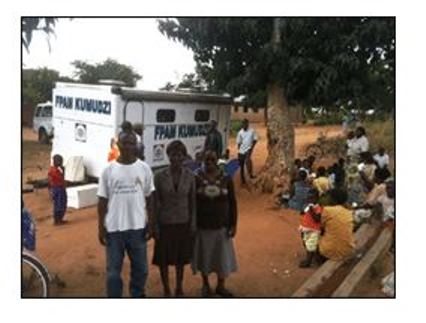
Mobile outreach services for family planning (FP) are teams of trained providers traveling to provide FP services and, for this study, long-acting and permanent methods of contraception (LA/PMs) (the intrauterine device [IUD], hormonal implants, vasectomy, and tubal ligation). The RESPOND Project with the Johns Hopkins University Center for Communication Programs (JHU-CCP) undertook a study of those services in Malawi, Nepal, and Tanzania in areas with limited or no FP or health services in order to document the "long-established and diverse mobile outreach programmes implemented by both the public and nongovernmental sectors."
After the observation of 20 facilities, as well as interviews with more than 150 providers, clients, managers, and policymakers, some programmatic considerations include:
- prior work to ensure that staffing and supplies will meet potential added client interest in FP;
- supervision of teams through regular monitoring and supervision visits by senior medical personnel, who can then provide feedback to teams and support planning and coordination;
- on-the-job training, coaching, and skills improvement for new staff and for those needing refresher training;
- demand creation through interpersonal communication and community mobilisation through village health workers and/or volunteers (who conduct community talks or make house-to-house visits), loudspeakers in marketplaces, posters, and radio;
- trained community health workers (CHWs) and/or volunteers who counsel and pre-screen potential clients, inform clients about mobile service schedules and the methods that will be available, help clients with transportation, and follow up with clients after service delivery and refer them if complications arise;
- public-private partnerships, ensuring free services, in which district health officials coordinate all programmes offering mobile services to prevent duplication of effort and ensure maximum coverage;
- improved data collection, analysis, and disaggregation by mode of service delivery.
Successful mobile outreach service providers for FP respect client choice, provide high-quality services that are close to the client's home, and offer the services at no or low cost to clients. Communication-related inputs to be considered when planning and implementing mobile outreach services should include:
- Policies that allow for task shifting and the availability of personnel;
- Careful management, planning, and coordination among stakeholders;
- Systems to estimate the needs for personnel, equipment, instruments, and supplies;
- Scheduling systems that allow collaboration and communications between stakeholders within the health system and the communities to be served;
- Mobile outreach teams, including skilled medical personnel as well as staff who drive vehicles, clean and prepare services delivery site, and keep records;
- Local health staff and/or volunteers to inform and mobilise the community, register clients, pre-screen clients, etc.;
- Procedures for follow-up care, management of complications, and referrals;
- Record-keeping mechanisms that feed into existing health information systems and allow for disaggregated data for mobile outreach and static services.
Successful mobile outreach services will explain, through community engagement using mobilisation, education, and counselling activities, the following differences between mobile services and routine services to communities:
- Mobile services are offered at limited times;
- They may be offered in non-health care settings;
- They may involve providers who are unknown to the community;
- They offer a choice of FP methods that may otherwise be unavailable in or near the community.
Email from The RESPOND Project at EngenderHealth to The Communication Initiative on September 11 2013. Image credit: J. Yanulis/EngenderHealth.
- Log in to post comments