










































Community Engagement in Outbreak Response: Lessons from the 2014-2016 Ebola Outbreak in Sierra Leone
Restless Development Sierra Leone (Bedson, Bah, Fofanah); consultant to the Bill and Melinda Gates Foundation (Bedson); FOCUS 1000 (M.F. Jalloh, Oniba, M.B. Jalloh, Sengeh); Bill and Melinda Gates Foundation (Pedi); GOAL (Owen); BBC Media Action (Sangarie); Institute for Disease Modeling (Althouse); University of Washington (Althouse); New Mexico State University (Althouse); University of Vermont (Hébert-Dufresne)
"Community engagement and other community-centred approaches during public health emergencies are increasingly recognised as important components of health emergency preparedness and response..."
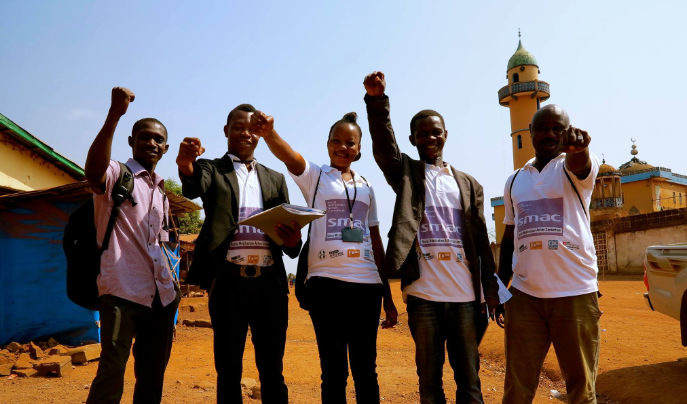
The importance of community engagement to foster enabling and reinforcing conditions for behaviour change to reduce the spread of disease was exemplified during the 2014-2016 outbreak of Ebola Virus Disease (Ebola) in West Africa. This paper analyses the Community Led Ebola Action (CLEA) approach implemented through the Social Mobilization Action Consortium (SMAC) within the Sierra Leone outbreak response. It also identifies key lessons and makes recommendations for future design, implementation, and research of community engagement activities within epidemic response and other health emergencies.
In August 2014, a national assessment of public knowledge, attitudes and practices found that, while Ebola awareness and knowledge were already high in Sierra Leone, misconceptions, stigma, and other barriers were prevalent. In response, five partner organisations - GOAL, Restless Development Sierra Leone, FOCUS 1000, BBC Media Action, and the United States (US) Centers for Disease Control and Prevention (CDC) - developed an integrated, community-led, data-driven approach to Ebola social mobilisation, with its core component consisting of a large-scale community engagement to support outbreak containment.
Specifically, the SMAC initiative consisted of a network of 2,466 trained community mobilisers who were recruited from an existing cohort of community health workers, former Restless Development youth volunteers, trusted people nominated by communities, and Ebola survivors. Active in nearly 70% of all 14 districts across the country, they used the CLEA approach to facilitate community analysis, trigger collective action planning, and maintain community-identified and -developed action plans over time. This CLEA process, which draws on Participatory Learning and Action (PLA) and Community-Led Total Sanitation (CLTS), involved participatory activities such as: body mapping; danger discussion; burial roleplay; personal protective equipment (PPE) demonstration; Ebola survivor stories; and an Ebola spread exercise.
CLEA was complemented by intensified religious leader engagement and interactive radio programming. FOCUS 1000 trained, engaged, and supported over 6,000 religious leaders from over 2,000 mosques and churches to promote key messages and role-model promoted behaviours, especially around safe burials. In addition, BBC Media Action supported 42 local radio stations in all 14 districts to improve the quality and synchronisation of radio programming. The researchers assert that "behaviour change interventions are most likely to be effective when a combination of communication channels and platforms are used, including community-level interpersonal communication and mass media..."
The CLEA model was focused not only on supporting and encouraging Ebola-safe behaviour but also on providing a reliable communications infrastructure for directly linking communities with response authorities. Mobilisers collected operational and behavioural data on a weekly basis, which enabled them not only to link people to resources and service providers but also to monitor progress, listen to emergent needs and changes, and support maintenance of agreed actions within communities.
Researchers conducted a retrospective analysis of more than 50,000 of such weekly reports from approximately 12,000 communities from December 2014 to September 2015. In brief, the data showed that 100% of the communities that were engaged had one or more action plans (often in the form of bylaws - e.g., restricting entrance to, and exit from, a community) in place. Out of the 63,110 cumulative action points monitored by community mobilisers, 92% were marked as "in progress" (85%) or "achieved" (7%) within 9 months. (The in-progress status was indicative of the long-term sustainability of most action points (e.g., continuous monitoring of visitors into the community) versus one-off action items that were marked as achieved (e.g., initial installation of handwashing station.) Analysis of behavioural outcomes of the intervention indicate an increase over time in the fraction of reported safe burials and fraction of reported cases referred for medical care within 24 hours of symptom onset in the communities that were engaged.
The study also revealed that, although community surveillance was not initially a primary goal of the CLEA approach, it became a core component and "was a function of the level of trust established between the mobilisers and the target communities." Monitoring data show that between November 2014 and December 2015, SMAC mobilisers, community champions, and religious leaders made more than 4,500 alerts to response authorities at district level through the Ebola 117 hotline, as well as directly to district-level alerts desks. In addition to staffing some of these desks, mobilisers made an average of 133 community visits per day nationally using paper forms and 151 visits per day nationally using digital reports. "The monitoring, follow-up and data collection efforts themselves were able to establish meaningful feedback loops for exchange of information between response authorities and affected communities."
The findings suggest lessons for large-scale community engagement that may be relevant in future epidemics and other health emergencies, including the need to:
- Recognise community agency, two-way communication, and active roles for communities in epidemic response;
- Incorporate community engagement interventions as a critical pillar of epidemic preparedness and response;
- Establish a supportive infrastructure (training, remuneration, and supervision) for mobilisers and frontline workers;
- Ensure strong field coordination and integrated multiplatform communication strategies to enable consistent two-way engagement and avoid community confusion and fatigue;
- Integrate community engagement activities and data with other biomedical pillars of disease response - in particular, surveillance;
- Prioritise real-time community data collection and analysis to inform response decision-making; and
- Take into account the imperatives of emergency response when defining "community".
In conclusion: "...[C]ommunities are able to plan for and monitor their own actions in a quantifiable way during an epidemic provided the right enabling and reinforcing structures are in place. Evidence for the approach included: strong baseline data identifying key behavioural determinants; systematic and consistent community engagement approaches emphasising two-way communication and feedback loops; regular and timely system for capturing and reporting monitoring data; continuous supervision, top-up training and ongoing peer-to-peer support for community mobilisers; and adequate logistical and communication support, including communications support to communities. Furthermore, the data suggest that communities are capable of engaging in localised surveillance and referral if given the right tools, support and linkages to the formal health structures and systems. Finally, the experience of the SMAC initiative and broader community engagement response in Sierra Leone suggests mechanisms for improving community engagement quality, coordination, integration and monitoring across response actors."
BMJ Global Health 2020;5:e002145. doi:10.1136/bmjgh-2019-002145; and SMAC Sierra Leone YouTube channel, March 22 2021. Image credit: SMAC Sierra Leone via Facebook
- Log in to post comments