










































A Community Mobilisation Intervention to Improve Engagement in HIV Testing, Linkage to Care, and Retention in Care in South Africa: A Cluster-Randomised Controlled Trial
University of California, San Francisco (Lippman, Dufour); University of the Witwatersrand (Lippman, Pettifor); University of North Carolina (Pettifor); University of California, Berkeley (Dufour) - plus see below for full authors' affiliations
"The Tsima mobilisation model adheres to the theory that social barriers necessitate social change solutions - those which move beyond service provision and instead engage communities in a dialogue about barriers to health and that encourages collective action to enact change."
Defined as collective promotion of action towards social change around a shared concern by a group or community, community mobilisation has the potential to improve testing uptake and linkage to and retention in care by addressing key social barriers to HIV care engagement. In fact, the Joint United Nations Programme on HIV/AIDS (UNAIDS) designates community mobilisation as a critical enabler, an activity that is necessary to support programme effectiveness. To address a gap around rigorous community mobilisation evaluations, the researchers conducted a cluster-randomised controlled trial (RCT) to evaluate a theory-based community mobilisation intervention addressing social barriers to engagement in HIV care in South Africa.
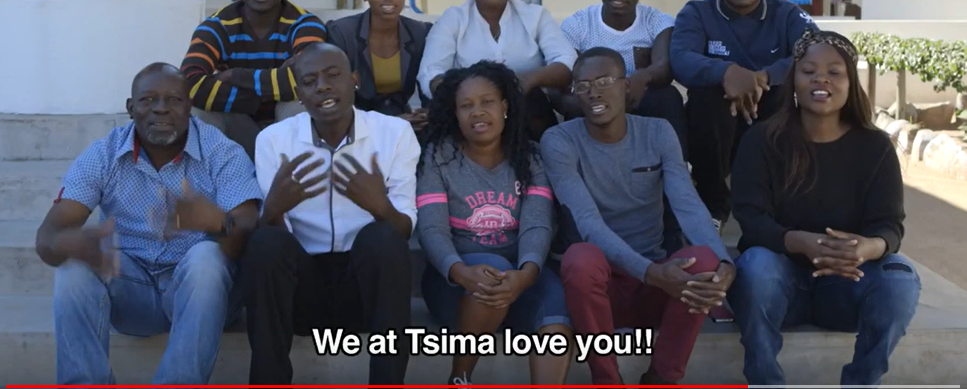
The Community Mobilisation for Treatment as Prevention trial, also called Tsima ra rihanyu ("working together to plough the fields for health"), sought to increase HIV testing uptake, thereby decreasing undiagnosed infections, and to improve HIV care engagement among adults aged 18-49 years, with the goal of reducing new infections and improving health outcomes among those living with HIV. Fifteen villages in the Agincourt sub-district of the rural Mpumalanga Province were randomly assigned to either a community mobilisation intervention engaging residents to address social barriers to HIV testing and treatment (intervention arm) or to a control arm.
The intervention addresses social barriers to care engagement: poor treatment literacy; fear and stigma associated with HIV infection; lack of social support to engage in testing and care; and gender norms that deter men from accessing care. These issues are addressed by implementing activities that map onto six community mobilisation domains: (i) a shared issue or concern that is the target of change; (ii) community sensitisation or building of critical consciousness; (iii) an organisational structure with links to groups or networks; (iv) leadership; (v) collective activities or actions; and (vi) community cohesion. "These domains represent community factors integral to social change that must be addressed or modified for mobilisation to occur and have sustained impacts on behaviours, social norms, and health outcomes."
As detailed in the protocol study and at Related Summaries, below, Tsima ra rihanyu was implemented over 3 years by a team of 16 community mobilisers selected from intervention communities and assigned to work in their own villages whenever possible. These individuals underwent extensive training from master trainers at Sonke; the mobilisers also identified and trained community action teams (CATs) in each village. Intervention activities aimed to open dialogue and community discussion about testing, linkage to, and retention in care through community mobilisation activities, harnessing networks for message dissemination, and forging organised community action by establishing CATs, engaging leadership, and fostering community cohesion to support people living with HIV.
Primary outcomes included quarterly rates of HIV testing, linkage to care, and retention in care documented from health facility records among residents of the intervention and control communities over the 3-year study period. The study also included cross-sectional population-representative surveys done August - November 2014 and August - December 2018, before and following the intervention, to measure social barriers to testing and care and obtain intervention exposure levels.
Between August 1 2015 and July 31 2018, residents in eight intervention communities (n=20,544 residents) and seven control communities (n=17,848) contributed data; 92 residents contributed to both arms. At the endline, 66% of intervention and 18% of control village residents reported knowing about the Tsima intervention, with 45% in intervention and 7% in control villages reporting participation in an intervention activity.
Among men, HIV testing increased quarterly by 12.1% (relative change [RC] 1.121, 95% confidence interval (CI) 1.099 to 1.143, p<0.0001) in the intervention communities and 9.5% (1.095, 1.075 to 1.114, p=0.011) in the control communities; although increases in testing were greater in the intervention villages, differences did not reach significance. Among women, HIV testing increased quarterly by 10.6% (RC 1.106, 95% CI 1.097 to 1.114, p<0·0001) in the intervention communities and 9.3% (1.093, 1·084 to 1.102, p=0.053) in the control communities; increases were greater in intervention communities (exponentiated interaction coefficient 1.012, 95% CI 1.001 to 1.023, p=0·043).
Quarterly linkage to HIV care increased significantly among women in the intervention communities (RC 1.013, 95% CI 1.002 to 1.023, p=0.018) only. Quarterly linkage fell among men in both arms, but decreased significantly among men in the control communities (0.977, 0.954 to 1.002, p=0.043). Quarterly retention in care and treatment visits fell among women in both arms; however, reductions were tempered among women in the intervention communities (exponentiated interaction coefficient 1.003, 95% CI<1.000 to 1.006, p=0.062). Retention fell significantly among men in both arms, with difference in rates of decline.
As compared with men in the control villages, men in the intervention villages were more likely to know their status (44.9% vs 36.9%), be on antiretroviral therapy, or ART (26.1% vs 20.4%), and be virally suppressed (19.8% vs 14.3%). Similar differences were observed between intervention and control village women in known status (68.3% vs 64.0%), being on treatment (44.1% vs 39.2%), and viral suppression (33.6% vs 30.7%). Although all differences were significant when comparing intervention and control communities overall, statistical significance was attenuated when using cluster-adjusted estimates, such that only differences in viral suppression among men remained significant. In absolute terms, these proportions translate into 200 more residents who are virally suppressed in the intervention communities versus control communities, which could lead to stark differences in rates of new infections.
Thus, this RCT identified modest but significant improvements in testing uptake among women in intervention communities relative to control communities, with marginal evidence of increased testing among men and retention in care among women in intervention communities relative to control communities. There were also improvements in linkage to HIV care among women in intervention communities, but not in control communities. Per the researchers, impacts for each individual outcome are modest, but the sum of these incremental improvements resulted in meaningful differences at the population level at the end of the 3-year study, as evidenced in the improved 90-90-90 indicators in intervention community residents.
Reflecting on the findings, the researchers suggest that improvements in the policy environment over the 3 years of the intervention might have reduced the likelihood of study impact across all indicators (e.g., rates of HIV testing uptake are improving across sub-Saharan Africa). They propose that achieving optimal impacts will probably require integrated efforts addressing both social barriers through community mobilisation (e.g., addressing stigma) and provision of improved service delivery (e.g., ensuring confidential services).
In conclusion, the study's results "strengthen evidence that community mobilisation focused on treatment as prevention can improve the HIV care continuum. Community mobilisation has at its core the building of community social resources to address inequities, disparities, and injustices, and for communities to build their own responses to health, in this case HIV....[S]ustained improvements in HIV outcomes will require a purposeful emphasis on broad community capacity building, as community-wide improvements owing to social change have the potential to be sustained."
Full list of authors, with institutional affiliations: Sheri A Lippman, University of California, San Francisco, and University of the Witwatersrand; Audrey Pettifor, University of the Witwatersrand, and University of North Carolina; Mi-Suk Kang Dufour, University of California, San Francisco, and University of California, Berkeley; Chodziwadziwa Whiteson Kabudula, University of the Witwatersrand; Rhian Twine, University of the Witwatersrand; Dean Peacock, Sonke Gender Justice; Rhandzekile Mathebula, Sonke Gender Justice; Aimée Julien, University of the Witwatersrand, and University of North Carolina; Rebecca West, University of California, San Francisco; Torsten B Neilands, University of California, San Francisco; Ryan Wagner, University of the Witwatersrand; Ann Gottert, Population Council/Project SOAR; F Xavier Gómez-Olivé, University of the Witwatersrand; Dumisani Rebombo, Sonke Gender Justice; Nicole Haberland, Population Council/Project SOAR; Julie Pulerwitz, Population Council/Project SOAR; Louis Pappie Majuba, Right to Care; Stephen Tollman, University of the Witwatersrand, and Umeå University; Kathleen Kahn, University of the Witwatersrand, and Umeå University
The Lancet HIV, Vol. 9, Iss. 9, e617-e626. https://doi.org/10.1016/S2352-3018(22)00192-8. Image credit: Sonke via YouTube
- Log in to post comments