










































Community Radio in East Africa: An Impact and Sustainability Assessment of Three Community Radio Within the EACMP
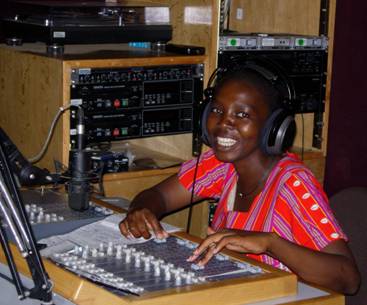
This 55-page report is the result of an impact study commissioned by the Division for Culture and Media with the Swedish International Development Cooperation Agency (Sida). It comprises an overview and summary of the 3 separate impact studies of 3 radio stations supported by Sida via the East African Community Media Project (EACMP). The objective of the studies was to identify the "most significant change" (MSC) in the communities served by each station. The study reports the MSC to be: participation, involving empowerment and change - with most people's responses falling into that category.
The EACMP is a sub-regional initiative involving 4 partners in Kenya, Tanzania, and Uganda, which has developed 3 community-owned and managed radio stations. The project is designed to: strengthen the capacity of the involved communities to formulate, articulate, and implement their development agendas; provide a means of accessing information in a timely and strategic manner; and build the capacity of the radio stations to maintain high quality broadcasting standards, to be of high integrity, and to engage the listening public in professional programming.
The studies conducted in the communities were designed to identify the most significant positive (and negative) changes in poverty and to assess if, how, and to what extent the radio stations have contributed to this change. These changes were divided into 3 general categories: changes in people's livelihoods; changes in their participation, involving empowerment and change; and changes in sustainability of people's institutions and activities.
Some specific changes mentioned include: listening to one another as people of the same culture and community; attitude change related to education of Maasai children, especially girls; improved governance and transparency; socio-economic equality of women, leading to the ability to voice their concerns and issues; communication leading to improved awareness; recognition of people's rights and of value of information; and promotion of people's participation. Changes under the other categories included: improved health, improved efficiency in managing livestock, increased awareness about the environment and conservation, a wider range of livelihood options, general poverty reduction, and reduced crime and tension.
The study found that the presence of the radio stations had an overall positive impact on poverty reduction in the 3 communities. According to the authors, the stations have empowered the communities by: reinforcing identity and dignity; providing information on rights; furthering governance, transparency, and peaceful development; and generating in general a new dynamic of dialogue and debate. The stations also provided choices to the listening community - who, according to the authors, have become subjects of their own development processes. The stations have also improved livelihoods in the area by: providing information on topics such as trading and business development, empowering women to be more economically active, and improving health.
The report also includes a number of recommendations focusing on changes in the 3 communities caused by the radio and the sustainability aspects of the radio. These fall under several categories: ensuring continuation of the overall development framework of the EACMP; further promoting the social sustainability aspects of the radio; strengthening institutional sustainability; enhancing financial sustainability; and replicating the initiative.
Editor's notes:
- Click here to read an article about the project on the Communication for Social Change Consortium website entitled "Stories of Community Radio in East Africa: Powerful Change."
- Click here to read, in PDF format, the final, summary report: Jallov, B. 2007, "Community Radio in East Africa: An Impact & Sustainability Assessment of Three Community Radios within the EACMP", Communication Partners.
- Click here, to read, in PDF format: Jallov B, Lwanga-Ntale C 2007, "Most Significant Change? Report from Radio Mang’elete, Kenya, and Selected Communities", Communication Partners.
- Click here, to read, in PDF format: Jallov B, Lwanga-Ntale C 2007, "Most Significant Change? Report from Radio ORS FM, Tanzania, and Selected Communities", Communication Partners.
- Click here, to read, in PDF format: Jallov B, Lwanga-Ntale C 2007, "Most Significant Change? Report from KKCR, Uganda, and Selected Communities", Communication Partners.
Malmo University Communications for Development course website, April 14 2009; Communication for Social Change Consortium website, January 21 2010; and email from Birgitte Jallov to The Communication Initiative on February 15 2012.
- Log in to post comments