










































COVID-19 in the Americas: Listening to the Most Vulnerable
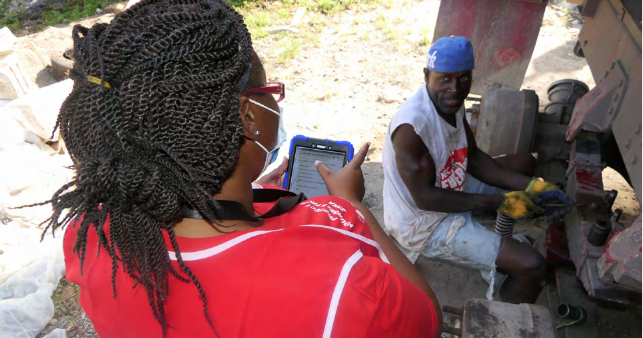
"You have to make an appointment online [for COVID-19 vaccination] and then go by taxi or bus. It is a difficult process because there is no translator, most speak English..." - Female migrant in Trinidad and Tobago
This research report from the International Federation of Red Cross and Red Crescent Societies (IFRC) offers community perceptions of COVID-19 from migrants, refugees, host communities, and indigenous populations in nine countries in the Americas. It reveals the myriad impacts that COVID-19 has had, and continues to have, on vulnerable and hard-to-reach populations. It provides practical recommendations around: the impact and usefulness of health information; trust, awareness, and access to vaccines; and the socio-economic impact of the pandemic.
In total, 7,743 individuals were interviewed in Argentina, Brazil, Bolivia, Colombia, Guatemala, Nicaragua, Jamaica, Panama, and Trinidad and Tobago. Findings are organised into four categories:
1. Access and impact of health information - selected findings:
- Participants around the region receive sufficient COVID-19-related information, and the majority (93%) say the information they receive is useful and relevant. However, in Guatemala, only two-thirds of the persons responding (mostly migrants) say they find the information useful. Indigenous peoples report having received less information overall, especially on prevention measures, isolation measures, and risks and complications if getting sick. Overall, information gaps relate to treatment, testing, and mental health support.
- Respondents reported similar communication means on COVID-19, usually a combination of media and personal contacts. Health information is generally acquired through traditional media (TV, radio), social media, and in communication with family and friends.
- The most trusted sources are health professionals (74%), ministries of health (41%), and Red Cross volunteers (40%) as well as United Nations (UN) agencies. The research shows the importance of understanding and considering the differences that exist within a community and whom the people trust the most.
Recommendations:
- Leverage frontline health workers and volunteers as key community engagement actors, leveraging their voice and expertise across communication channels.
- Provide updated, clear, and comprehensive information on the pandemic evolution in local languages and through culturally appropriate channels.
- Design tailored engagement strategies for youth and elderly people, giving transparent, quality information on COVID-19 through internet and social media for 18- to 29-year-olds and organising direct contact for people above 70 years of age, particularly through trusted religious and community leaders.
- Provide psychosocial support services and grief support when necessary.
2. COVID-19 vaccine awareness and access - selected findings:
- Participants in all countries express a general willingness to take the COVID-19 vaccine. Only two out of ten of the people asked would refuse to take it, except in Jamaica where the number reaches five out of ten. The high rate of acceptance in Trinidad and Tobago (80%) can be explained by the inclusion of refugees and migrants in their vaccination plan, conducted mainly through drive-through vaccination facilities.
- Most of the participants know where to get vaccinated against COVID-19, but 25% say that due to the distance, long waiting lines, inconvenient opening times, and inadequate services, access is not easy at all. In fact, half of the migrants and indigenous populations report high constraints. For example, some migrants say they lack the tools to register for it.
Recommendations:
- Coordinate with partners to advocate for vaccine equity.
- Engage in dialogue with countries about their national vaccination plans for migrants.
- Make sure national vaccination strategies expand to reach remote areas.
- Help governments with their vaccinations - for example, to include drive-through, mobile clinics, and other easily accessible settings.
3. Trust in COVID-19 vaccines - selected findings:
- Participants generally express trust in healthcare providers in charge of the COVID-19 vaccine, as well as in the vaccine itself. However, large differences persist between countries. For instance, 62% of respondents in Brazil report high trust in the vaccine, compared to 27% in Panama. The level of trust respondents express in the vaccine appear to be related to the level of trust in healthcare providers. For example, in Guatemala, 78% of those with no trust in the vaccine also say they have no trust in the healthcare system. The level of mistrust in government authorities and the level of mistrust in the vaccine (safety and efficacy) also appear to be related.
- Migrants express fear of side effects and concerns over safety. In Panama, qualitative data from an assessment on migrants on the move in El Darien revealed that the reason behind not getting vaccinated is mainly because they don't want to experience side effects during their journey to Central America. Trust and willingness to take the vaccine are not necessarily related.
- Secondary sources indicate that unclear communication can heighten vaccine hesitancy that might cause confusion. For instance, migrants interviewed by the Turkish Red Crescent Society reported they are in good health and thus do not need the vaccine.
Recommendations:
- Highlight the benefits of the vaccine and address misinformation, giving clear and understandable facts about the benefits of the vaccines and how effective they are against new variants. Include information about side effects and safety.
- Ensure vaccination strategies are community-centred and evidence-driven. In the specific countries where trust in local authorities is low, community engagement efforts should be increased, driving the population towards reliable information and communication from healthcare providers, humanitarian actors, and scientists. Direct contact with trusted actors such as community leaders and religious leaders should be favoured.
4. Socio-economic impact of COVID-19 - selected findings:
- Health and socio-economic impacts are the main worries in communities. The study shows that Nicaragua is the country that expressed the highest worries (93%) about the pandemic and Jamaica the least (52%). Among all participants, pregnant and lactating women express the highest concern in general. Indigenous groups are particularly troubled by social isolation and not being able to pay their debts.
- The pandemic widely affects economies and housing conditions, with the biggest toll on the most vulnerable. For example, 87% of indigenous respondents report reduced income, increased living costs, and the inability to get basic health care.
Recommendations:
- Prioritise two-way dialogue with pregnant and lactating women to understand and address their main fears and anxieties related to COVID-19.
- Conduct in-depth assessments to identify priority needs of vulnerable households.
- Assist households economically affected by the COVID-19 pandemic, especially indigenous people.
- Create local partnerships to support people's economic recovery with a development perspective.
IFRC website, April 4 2022. Image credit: © Chrysanthia Dixon / Jamaica Red Cross
- Log in to post comments