










































Effect of Intensive Training in Improving Older Women's Knowledge and Support for Infant Vaccination in Nigerian Urban Slums: A Before-and-After Intervention Study
University of Ibadan (Balogun, Bamidele, Bamgboye); University College Hospital (Balogun)
"Participatory learning improved the knowledge about, and support for infant vaccination among older women supervising child care in these urban slum communities. Similar training may be extended to comparable settings in order to improve demand for infant vaccination."
In Africa and many developing countries, older women (grandmothers, aunts, and even non-relatives in a family's social circles) are expected to oversee the care of infants and mothers, a role that is well recognised and respected. They also shape the decision to seek healthcare services for infants. The influence these older women have can be harnessed to improve infant vaccination uptake developing countries such as Nigeria - where infant vaccination coverage suboptimal, especially among those in the lowest wealth quintile - but this potential can only be realised if their capacity is developed to understand the importance of infant immunisation. This study determined the impact of training of older women on their knowledge of and support for infant vaccination in selected urban slum communities in Ibadan, Nigeria.
The study participants - 109 women at least 35 years of age - were recruited over a 6-month period (July 2018 to January 2019) through primary health care centres in selected urban slum communities in Ibadan. The older women, the majority of whom were mothers or mothers-in-law of pregnant women who were attending antenatal clinics, were trained on a monthly basis over an eight-month period using materials that were developed based on findings from earlier interviews conducted among community members. The interviews included 22 focus group discussions (FGDs) among women who were 35 years and above, six FGDs among community birth attendants, and six in-depth interviews among traditional healers.
Specifically, the materials included:
- A seven-module training manual that uses different pedaegogic methods to ensure participatory learning for adults - It covers various aspects of infant vaccination uptake, including how vaccines work, the importance of timeliness and completion of infant vaccination, how to overcome barriers of infant vaccination, common myths about infant vaccination, and how to be an advocate for infant vaccination. The training session for each module was designed to last for 90-120 minutes. There were also assessment strategies for each module to determine how much learning had occurred.
- A short video that was used for video-assisted teaching for the first four modules of the manual - Presented in Yoruba language (the prevalent local language in the study area), it emphasised the importance of infant vaccination, dispelled myths about infant vaccination, and showed ways in which the barriers to infant vaccination can be handled.
The teaching method employed among these older women was participatory learning, which puts learners in charge of the learning process and bases the learning experience on the realities of their worldview. The older women also worked in teams, which was designed to foster socialisation among them, encourage their learning, and boost their confidence at building skills on how to support infant vaccination. Edutainment was also used for the first four sessions of training; this teaching method is thought to be useful among less-literate populations. This made the teaching process more interesting and comprehension easier for them.
The participants' knowledge of and support for infant vaccination at baseline were compared with post-training values using Student's t test and Chi square test with the level of significance set at 5%. At the end of the training, their knowledge about infant vaccination and the support they give to it increased from 4.8 ± 3.8 to 10.7 ± 0.6, and 3.1 ± 3.5 to 8.1 ± 1.7, respectively. Those with good knowledge about infant vaccination increased significantly from 37 (33.9%) to 82 (82.8%), while those with good support for the same increased from 31 (28.4%) to 85 (85.9%).
Women who were 64 years of age or younger had significantly improved knowledge after the training compared to the older ones. Those with post-secondary education had better knowledge and greater support for infant vaccination at baseline. However, there was no difference in the knowledge and support for infant vaccination among the women across the different educational levels after the training, which means that the training of these older women produced faster results in a short term compared with enrolling them in formal education.
The researchers suggest that "[t]he skills gained from the training by these older women would likely have a ripple effect in the demand for infant immunization in their communities in the long run as the training built their capacity to be advocates for infant vaccination....The training will likely impact on the vaccination of the infants they will provide care for, including the quality of their contribution in the decision-making process for uptake of infant vaccination both at the household and community level. They are also likely to have impact on infant immunization in their communities because of the influence they weld and the respect they command."
In conclusion: "The type of training used in this study is an inexpensive way to improve infant vaccination and uptake of other health interventions in a short term which could improve the quality of life in slum communities."
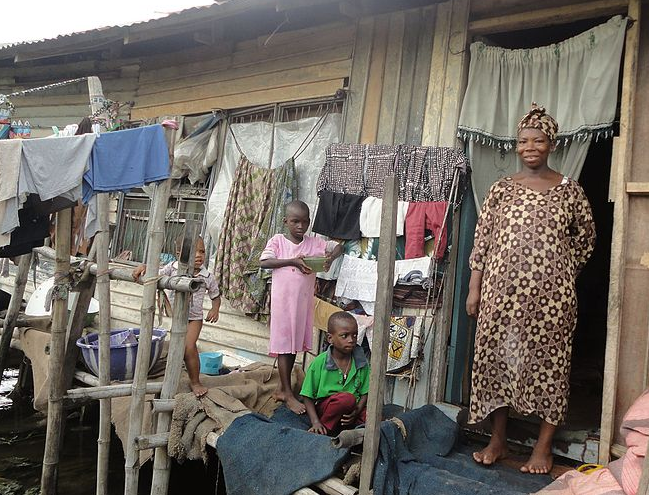
BMC Public Health (2021) 21:266 https://doi.org/10.1186/s12889-021-10310-0. Image credit: CEE-HOPE Nigeria via Wikimedia Commons
- Log in to post comments