










































Effectiveness of Mass Media Interventions for HIV Prevention, 1986–2013: A Meta-analysis
University of Connecticut
"The purpose of the present meta-analysis was to expand on previous systematic reviews to examine the overall effectiveness of mass media-delivered HIV interventions and to identify predictors of changes in condom use and HIV-related knowledge."
This study analyses mass media-delivered HIV interventions, defined as those "wherein the intervention message is delivered in a natural setting through a mass media channel to which individuals may or may not attend (eg, radio, television, newspaper, magazine, or mass distribution or mailing of printed materials)." It explores campaign duration and channels, date of data collection, country of campaign, level of country development, and message and sample characteristics predicting effect size magnitude.
While not including studies for high-risk groups, the inclusion requirements were: "(1) had an HIV/AIDS prevention focus, (2) [focused on] youth or the general population, (3) evaluated a specific intervention delivered through an audio, visual, or printed mass media channel in a natural setting, (4) quantitatively evaluated the target population using a pre-/post-campaign design, (5) measured condom use and/or HIV/AIDS-related transmission or prevention knowledge, (6) reported sufficient information to calculate effect sizes, and (7) were available in English." Study characteristics were coded, effect sizes adjusted for sample size bias, and outcome variables examined - the primary one being condom use. "Secondary outcomes included HIV/AIDS transmission knowledge (eg, HIV is transmitted through unprotected intercourse) and HIV/AIDS prevention knowledge (eg, condoms prevent the sexual transmission of HIV)."
Of 433 reports, 54 reports published between 1986 and 2010 containing evaluations of 72 separate interventions met the selection criteria. Thirty-nine percent of the campaigns pretested message content before campaign launch, and 45% were theory based. "15% used only 1 channel, and of these, 4 used small media, 3 used radio, 3 used newspapers or magazines, and 1 used television. All other campaigns (83%) used 2 or more channels including signage (72%), radio (70%), television (57%), educational literature (51%), newspapers or magazines (33%), and promotional materials (21%). Overall, 47% of the interventions included an interpersonal component. Most interventions focused on condom promotion (76%), and more than a third used an entertainment-education strategy (39%). Most campaigns had an identifying logo, slogan, or brand (57%), and 42% included condom distribution. The median intervention duration was approximately 8 months, though duration varied widely."
Results included the following (chart numbers included for referral to the original document):
- "Overall, analyses indicate significant increases in condom use (d+ = 0.25, 95% CI = 0.18 to 0.21, k = 57; Fig. 2) and significant improvements in HIV-related transmission knowledge (d+ = 0.30, 95% CI = 0.18 to 0.41, k = 47) and prevention knowledge (d+ = 0.39, 95% CI = 0.25 to 0.52, k = 65) following mass media interventions compared with pre-campaign assessments."
- " Greater increases in condom use occurred following interventions conducted in African nations, in countries with lower HDI [human development index] scores (Fig. 3), following longer campaigns, when message content was reportedly matched to the target audience, and when refusal rates were low. Condom use also increased to the extent that campaigns increased knowledge of transmission (β = 0.56, P = 0.009, k =16) and prevention (β = 0.30, P = 0.03, k = 41)."
- Increases in HIV/AIDS transmission and prevention knowledge were most strongly associated with: Asian nations; lower HDI scores; and greater exposure to campaigns; longer campaigns. Condom demonstrations as part of the intervention did not significantly increase prevention knowledge. "No other coded report characteristics (eg, publication status), campaign characteristics (eg, number of communication channels, message branding, reported theoretical background, condom distribution) or sample characteristics (eg, age, gender, proportion sexually active, pre-campaign rate of condom use) were significant predictors of effect size magnitude for any outcome of interest."
The meta-analysis supports the following conclusions:
- Interventions achieve better results where the need is greatest (nations with lower HDI scores).
- Longer campaign duration related to increased condom use (and corresponded to greater individual exposure to campaign knowledge).
- No evidence showed that number of channels was related to greater impact in the present meta-analysis - possibly related to lack of separation of channel effects in the studies considered. There is a need to show which types of interventions work under what conditions, through future research.
- Use of data based solely on exposure with pre- and post-comparisons has limitations. Randomised controlled trials (RCTs) are few due to difficulty of establishing unexposed control groups. It is difficult for a study design to also account for the social or political climate, public policy changes, current events, and the presence of multiple campaigns.
The researchers conclude: "In summary, the present results provide strong testimony to the power that mass media campaigns can have for people living in nations most at need for HIV prevention and other health promotion interventions. Results also suggest that such campaigns generally lack effectiveness in relatively developed countries, where the need for health promotion is generally lessened except in particular locales."
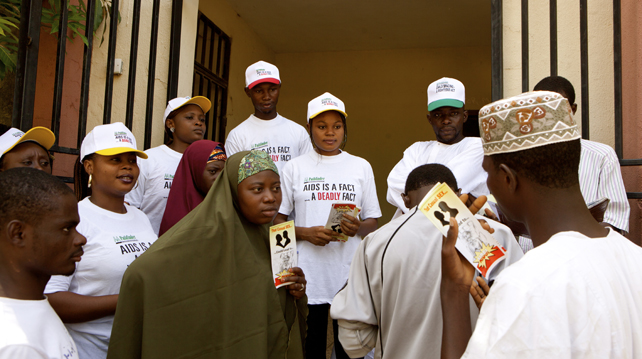
HC3 evidence database, accessed April 21 2015. Image credit: Pathfinder
- Log in to post comments