










































eHealth in the Region of the Americas: Breaking down the Barriers to Implementation
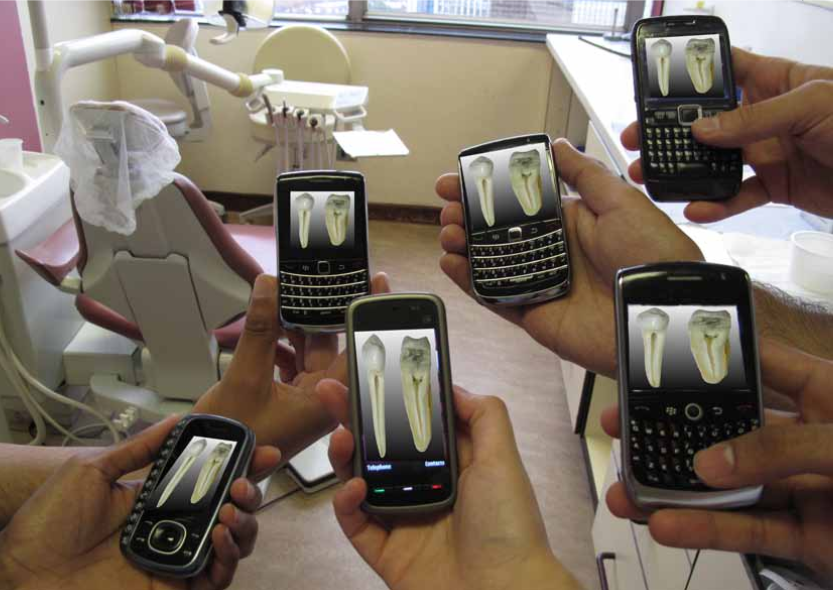
In 2005, all World Health Organization (WHO) Member States committed to working to achieve universal health coverage (UHC) in a collective expression of the belief that all people in need should have access to health services without risk of financial ruin or impoverishment. This, the Third Global Survey on eHealth, conducted by the WHO Global Observatory for eHealth (GOe), reflects on the use of eHealth to support UHC in the Region of the Americas. eHealth - defined here as the cost-effective and safe use of information and communication technologies (ICTs) to support health and health-related areas, including health care, health surveillance, health literature and education, and health-related knowledge and research - promotes UHC such a through use of telehealth or mobile health devices (mHealth) to provide services to remote populations and marginalised communities. eHealth: facilitates the training of health personnel through virtual learning; makes education more accessible, especially for those who are isolated; and improves diagnosis and treatment by providing accurate and timely information on patients using digital health records.
Among the Region's 38 countries, the 19 that responded to the survey are: Argentina, Canada, Chile, Colombia, Costa Rica, Cuba, the Dominican Republic, Ecuador, El Salvador, Guatemala, Honduras, Jamaica, Mexico, Panama, Paraguay, Peru, Trinidad and Tobago, the United States, and Uruguay. Eight topics were covered, including: bases for eHealth, electronic health records (EHR)/digital health records (DHR), telehealth, mHealth, virtual training for health personnel, legal frameworks for eHealth, the use of social networks, and "big data".
Selected findings of the survey: 84% of the countries surveyed report having strategies for national health information systems (HIS). Only 61% of surveyed countries have a national eHealth policy or strategy, which is a lower proportion than the 78% of countries in the region that have a national policy or strategy for universal health. National DHR systems are used in more than half of the countries that responded to the survey (53%); 57.9% of Member States lack legislation facilitating people's electronic access to their own health data in DHR. Practices such as telepathology (42%), telehealth (37%), and the use of big data for health (32%) show lower rates of implementation than DHR. Use of teleradiology was reported in 90% of the countries, social networks for health in 74%, remote monitoring of patients in 58%, and mHealth in 58%. With regard to mHealth, one finding is that all of the countries surveyed report having the 14 programmes (telephone health care centres/telephone health assistance line; free emergency telephone services; compliance with treatment; appointment reminders; community mobilisation campaigns/health promotion; mobile telehealth; emergency services; health surveys; surveillance; patient monitoring; access to information, resources, databases, and tools; support systems for clinical decision-making; digital information on patients; and mobile learning, or mLearning), except for one case, in which there are no support systems for clinical decision-making. 84.2% of Member States offer education or training on the use of ICTs and online health. 95% of the surveyed countries use eLearning to train current health professionals, and future professionals will receive this type of training in 90% of the countries. 78.9% of the Member States reported that their main reason for using eLearning with students is that it improves access to content and to experts, while 52.6% cited as the main reason that it provides access to education where learning facilities are limited. 73.7% of Member States reported that individuals and communities are using social media to learn about health problems, and 100% reported that health care organisations are using social media to promote health messages as part of health promotion campaigns. 78.9% of Member States lack a national policy or strategy on the use of social media in the health professions.
The ultimate objective of this report is to provide recommendations that promote UHC, and to do so by removing barriers to innovation and by promoting changes in health organisations. Here is a summary, excerpted from the report:
"Bases for eHealth
- New eHealth guidance is needed, going beyond establishing national policies and strategies for universal coverage and moving from policy to implementation. eHealth should be seen not as a set of specific isolated practices, but rather as a system composed of a broad set of dimensions (a holistic model)....This requires constructing an aggregate model (a framework for implementation) that includes both the set of systemic practices in eHealth and the different explanatory dimensions of eHealth beyond technological considerations (personal, educational, economic, organizational, social, cultural, and institutional factors), and that do not follow a uniform or sequential pattern.
- The Member States are urged to move forward in supporting (particularly through funding) new strategies in eHealth that go beyond establishing national policies and strategies. Public-private collaboration is essential to overcome funding barriers...
- National policies and strategies must be accompanied by rigorous evaluation mechanisms and economic and financial procedures (of a legislative nature) that incorporate analysis of the cost-effectiveness (for design, as well as for implementation and evaluation) of eHealth practices.
- More emphasis must be placed on professional learning, the organizational dimension, and the new role of the individual as an empowered patient, or e-Patient)...
Electronic health records (EHR)
- Promoting the sustainable, scalable, and interoperable development of EHR-centered programs and initiatives requires that the development of national EHR systems be approached in the framework of a patient-oriented national online health strategy, one that includes a system for unique identification.
- This requires national legislation to appropriately govern EHR systems and their use, and to improve organizational and technological infrastructure, as well as access to information.
- Patient input should be considered in developing the EHR system.
Telehealth
- National strategies and policies must be developed to highlight potential modes of intersectoral collaboration involving the health and social spheres.
- Uniform interoperability of health systems continues to be a challenge for the Region, due to a lack of integration among existing information systems.
- The construction of an aggregate model (a framework for implementation) is needed that includes both the set of systemic telehealth practices and the different explanatory dimensions of telehealth beyond strictly technological issues...
- Greater attention to cost-effectiveness analysis in the design, implementation, and evaluation phases of telehealth projects...could greatly increase effectiveness in establishing networks for public-private collaboration.
Mobile health (mHealth)
- The Member States should address the issues of responsibility, licensing, and informed consent through policies and laws relating to mHealth.
- Each Member State should have an official agency responsible for overseeing mobile health regulation; establishing guidelines on data ownership, safety, and privacy; regulating the quality, safety, and reliability of mobile devices and software used in delivering medical care; and promoting the training of health professionals, as well as informing patients and citizens on the benefits of using mobile health solutions.
- All principal stakeholders should follow the lead of international cooperation schemes in developing regulations, policies, and best practices for the use of mobile health solutions.
- Each intervention carried out in a local, national, regional, or global context should be evaluated, so as to generate findings.
Virtual learning in the health sciences
- Training plans that provide adequately for eHealth innovations should be created, reflecting the inevitable changes in the roles of health professionals, and providing training in new disciplines through the academic curricula of health sciences educational institutions.
- Member States are urged to create incentives for online learning as a part of health sciences education and continuing education for health professionals.
- Educational authorities should conduct a systematic evaluation of online learning programs in order to ensure that they are appropriately adapted and developed.
Legal frameworks for eHealth
- Member States are urged to have national legislation on regulatory issues involving health as related to digital formats, such as: data protection; privacy and confidentiality of data and individual patient rights; and matters concerning responsibility for data.
- Training programs are needed that ensure that professionals are fully aware of what is required to comply with regulations on health-related activities and digital data.
- Awareness among patients of their rights and responsibilities should be facilitated.
Social media
- Member States are encouraged to create clear guidelines on the use of social media, in order to promote a positive impact on the medical profession as a whole and on public confidence in the health system.
- National policies or strategies on the use of social media in the evidence-based health professions should be developed. Also needed are educational programs designed to help health professionals understand the potential of social media and virtual communities in supporting such policies and strategies, as well as in the acquisition and management of new knowledge and the development of computer skills. Incentives could be created for health personnel to incorporate social media in health promotion efforts.
- Programs should be in place to promote societal knowledge regarding the use of social network-based health programs. A culture of self-care, supported by the use of social media, can become a means of generating broader and better coverage for health promotion programs, and of inculcating in users a sense of responsibility regarding health information, circulated through social media.
- Existing regulations in the Member States should also be updated to coordinate the use of technology health programs' preventive approaches; to encourage open dialogue between patients and information providers with regard to health information acquired through social media and via the Internet; and to ensure that technological infrastructure in the developing countries is capable of providing greater access to information for the population (especially in vulnerable areas).
Big data
- In collaboration with ministries of health, ministries of justice, and data privacy regulators, the Member States should take the lead in addressing governance issues as they relate to data at the national level, specifically with regard to data privacy and protection.
- The Member States need to create and implement policies regulating the use of large volumes of health-related data...while promoting funding options for scientific research."
"The big challenge is to ensure the sustainability and continuity of these types of initiatives, whose benefits begin to be seen after 10 to 15 years. And to accomplish this, it is fundamental to promote the production of scientific evidence to raise awareness among decision-makers about the importance of investing in eHealth," said the editor-in-chief of this report, David Novillo-Ortiz, who is also coordinator of PAHO/WHO's Regional eHealth Program.
Click here for the 138-page report in PDF format (English).
Click here for the 148-page report in PDF format (Spanish).
Posting from Knowledge Management, Bioethics and Research (KBR) IBP Consortium Knowledge Gateway, November 7 2016, and PAHO website, November 10 2016. Image credit: WHO/Damien Walmsley
- Log in to post comments