










































Engaging Social Networks in Family Planning Programming: Lessons from Research Interventions
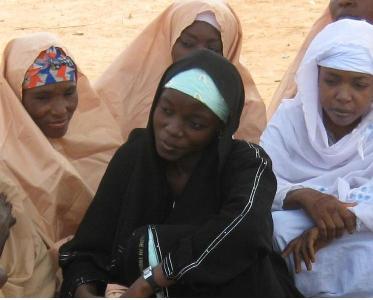
This report from The Centre for Development and Population Activities (CEDPA) examines family planning (FP) literature and interventions to understand how social network ideas are used to overcome barriers to FP use. It describes how the Institute for Reproductive Health (IRH)'s Terikunda Jekulu project in Mali can use this knowledge to approach FP in traditional communities. Particular attention is given to the individuals and groups who play key roles in decisions regarding fertility and FP. The approaches examined focus on demand creation as both a practical and socially transformative means to addressing unmet need.
Ethnographic research and situational analysis, conducted as part of the Terikunda Jekulu project, indicates that any attempt at addressing unmet need for family planning in Mali is likely to encounter significant resistance, due in part to religious opposition to contraception and the premium placed on high fertility. Broaching topics that could be perceived as birth limiting are strictly taboo. Furthermore, challenging gender dynamics that may reduce the power that men have over their families’ procreation and lineage may be perceived as threatening.
Previous research indicates that "the attributes of attributes of women’s social networks, such as number of linkages in the network and the criteria for the selection of discussion partners, exert more influence on fertility and other health decisions than previously thought, even suggesting that social networks have more substantial and significant sway over health decisions than individual attributes like economic status or education attainment". Women use attributes like language, ethnicity, and age to locate other women whom they perceive are similar to themselves and, therefore, likely to share their own existing FP attitudes and behaviours. Research from Mali confirms many of these ideas. "Kinship, credit partners, and other peer constructed social networks (SN) have demonstrated clusters of low fertility, suggesting that these links exert a powerful influence on FP" and other reproductive and maternal health decisions. In addition, studies found that changes in menstruation, a possible result of FP, can lead to accusations of infidelity or infertility, so that discussions of FP take on gendered themes, particularly in sex-separate networks, reflecting gender-differentiated knowledge and attitudes stemming from gendered peer networks.
The conclusion of the document lists specific recommendations learned from various social network approaches, including:
- Engaging Formal Opinion Leaders
- Religious leaders occupy key positions with considerable social influence that can create the space for social learning by adding legitimacy and authority to new or taboo ideas like modern contraception.
- These leaders should be sensitised to the idea that birth spacing leads to healthy and prosperous families - an idea in accordance with the Muslim faith.
- It is important that religious leaders reach consensus on issues related to birth spacing and speak with one voice.
- The Snowball Effect through Peer Education
- Peer educators should be carefully chosen for commitment to reducing unmet need for FP and interpersonal communication skills.
- The peer education approach should extend beyond youth and incorporate adult men and women of reproductive age, and perhaps even other individuals not of reproductive age, such as mothers-in-law.
- Early identified positive deviants (PDs - those who are successfully using FP, in this case), likely to be clandestine users, should be approached with care if seeking to recruit them into any peer educator role.
- Peer educators must receive follow-up trainings and support from programme staff.
- Interpersonal communication will work best if combined with multiple community approaches, including discussion groups, community awareness campaigns, radio programmes, organised community interaction programmes, and performance events.
- Leaders of Established Groups
- The success of the approach of discussion networks depends on how the leaders are identified and incorporated into the project.
- It is best for groups to select their own leaders through a participatory process to increase buy-in and incorporate the feedback of all group members, as well as to avoid negative consequences of an outsider choice to elevate someone to a formal position.
- Strategically Targeted Groups
- Men: Gender transformative programmes for men hold potential for changes in shared decision making and cooperation on the use of FP between partners, but they are time intensive. Cognitive dissonance activities like having men examine pictures of gender-based violence (GBV), authoritarian husbands, or negative outcomes of high fertility can prompt men to understand the negative effects of gender norms, including their dominance over FP decision making. Research indicates that men discuss FP with friends and tend to be influenced on the issue most by this group. Using men to counsel other men through a peer or mentoring approach proved to be a means of reaching men.
- Traditional Birth Attendants (TBAs): Carefully selected TBAs of reproductive age who are pro-FP (which can be determined through a simple survey) should be trained on all modern and natural methods and should not be opposed to sharing any method with a potential FP user. TBAs may be incentivised through increasing their training and providing health kits, transport stipends, identification cards, or uniforms. Training TBAs to conduct eligible couple mapping that introduces data collection on referrals and FP uptake may reveal clusters of couples who have adopted FP and provide monitoring information.
- Couples: Considering gender power disparities in Mali, couples engagement is not an ideal point of entry for an FP intervention until men are sensitised to the idea of FP and women have communication skills and increased confidence in discussing FP.
- Griots (a West African storyteller, praise singer, poet and musician): There may be considerable untapped potential with this group, as they are respected individuals, but their possible role is not yet understood.
- Marginalised Groups: Programme objectives to reduce unmet need will need to be reconciled with calls for social inclusion of these groups. PDs and early adopters are important individuals for diffusing FP ideas and information through marginalised groups, which are less likely to have linkages with the social networks of dominant groups.
- Bridges and Connectors - Finding Potential Links Between Individuals and Networks
- This may include PDs as identifiers of what enabled them to adopt FP, mothers-in-law, and community-based contraception distribution networks. Exchange meetings between community-based distributors and clinic staff can help facilitate dialogue.
- Rewiring Networks: Creating Linkages through Social Mobilisation
- Social mobilisation benefits from complementary processes, like training community members as safe motherhood volunteers (SMVs) and safe motherhood advocates (SMAs), thus filling a programmatic need and engaging the community as participants.
- Contraceptives should be socially marketed and distributed by individuals that potential users feel comfortable approaching. Some social marketers may need to be in anonymous settings for clandestine users.
- The community should be part of a participatory process to satisfy unmet needs, including dialogues between PDs and influential leaders to sensitise leaders and develop strategies for reaching the community with messaging.
- Community members should be included in the development of multiple modes of communication including individual outreach, community dialogues, posters and pamphlets, rallies, television, and radio.
June 2013 update: Due to the political instability in Mali, IRH was forced to move the project, now called Tekponon Jikuagou, to Benin, where a second analysis for that context is being conducted. A report is pending, but when available will be posted here.
IRH website on March 22 2012; and email from Susana Mendoza Birdsong to The Communication Initiative on June 20 2013.
- Log in to post comments