










































Evaluation of the HERhealth Intervention in Bangladesh: Baseline Findings from an Implementation Research Study
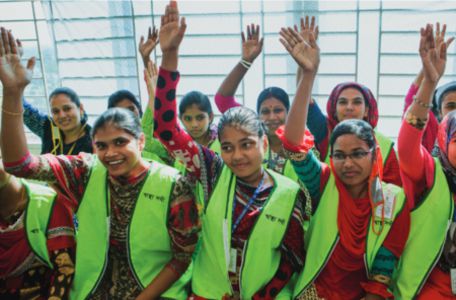
"Women working in global supply chains, many of whom are young and undereducated migrants, have limited health knowledge and often lack access to critical health services and products. Myths and misconceptions, especially stigmas around reproductive health, lead to unhealthy or dangerous behavior." - HERhealth
This study offers insights into the sexual and reproductive health (SRH)-related knowledge, behaviours, and practices of female garment factory workers in Dhaka, Bangladesh. More specifically, it establishes baseline measures for the Business for Social Responsibility (BSR)/HERhealth evaluation, which aims to improve SRH conditions of female factory workers by gathering evidence to validate the HERhealth model, strengthen the intervention, and enable programme inputs for scaling up. This brief presents findings from the baseline survey, with information about the characteristics, knowledge, and experiences of female garment factory workers in Bangladesh.
BSR's HERproject is a collaborative initiative that strives to empower low-income women working in global supply chains in 14 countries worldwide. One of the HERproject's three pillars is HERhealth, which seeks to improve the health-related knowledge and behaviours and access to health services and products of low-income working women. In Bangladesh, HERhealth specifically addresses menstrual hygiene, sexually transmitted infections (STIs) and HIV/AIDS, nutrition, family planning (FP), early detection of breast and cervical cancer, and occupational safety and health (OSH). The HERHealth methodology involves: raising awareness on topics such as healthy eating, personal and menstrual hygiene, and maternal health; improving health-related behaviours such as disease testing, seeking out preventative care, and conducting breast self-examinations; addressing common myths and misconceptions around potentially harmful health practices and beliefs; building confidence and communication skills around discussing important health issues at work and at home; improving the capacity of the workplace clinic to respond to workers' health needs; linking workplaces with external health services providers, such as local clinics; and strengthening workplace policies and systems promoting worker well-being.
BSR asked the Evidence Project/Population Council to conduct an implementation science study assessing the effectiveness of BSR's HERhealth model in Bangladesh. Respondents were selected through single stage randomisation, and data were collected in two phases, beginning in May 2015 and completed in September 2015. The final sample consisted of 2,165 female workers of reproductive age (18-49 years old) living in the three regions where HERhealth was implemented (Dhaka, Gazipur, and Narayanganj). Sample findings:
- Female factory workers at intervention factories (who had not yet been exposed to the HERhealth intervention when the baseline survey was conducted) and control factories generally reported lower levels of SRH-related knowledge than workers at post-intervention factories, including on measures related to menstrual hygiene, the risk period for pregnancy, and SRH service delivery points. Workers from post-intervention factories also reported higher levels of knowledge of STIs and greater awareness of HIV/AIDS and HIV/AIDS prevention measures than both intervention and control factory workers. (For details, see charts on pages 9-10.)
- Example of selected SRH behaviour: Among the garment workers interviewed, a greater proportion used cloths (64%) than used sanitary pads (approximately 34%). This is concerning, because although these cloths should be dried in the sun to maintain hygiene, social taboos mean that this practice is rarely followed, which can contribute to higher prevalence of reproductive tract infections. Indeed, almost 63% of all workers did not know that menstrual cloths need to be dried in the sun. Findings indicate that workers who had been exposed to the HERhealth intervention were more likely to use sanitary pads than workers from other factories. This is likely because those workers had more access to information on menstrual hygiene and to lower-cost sanitary pads, through factory subsidies.
In sum, workers at post-intervention factories: had higher levels of knowledge related to STIs, HIV/AIDS, safe sex, and menstrual hygiene, were more likely to have used FP, and were more likely to have attended at least four antenatal care (ANC) visits during pregnancy than workers at other factories. However, this did not hold true across all indicators. For example, workers at post-intervention factories did not report higher levels of knowledge about emergency contraceptive pills or higher levels of institutional delivery. Furthermore, since this study includes only quantitative measures, it cannot provide information on detailed contextual factors and reasons underlying female factory workers' SRH-related awareness, attitudes and behaviours. Also, data presented are from a single point in time; interpretation and recommendations will require analysis of the combined baseline and endline surveys (forthcoming).
Evidence Project website and HERhealth website - both accessed on October 16 2017. Image credit: BSR
- Log in to post comments