










































Facebook HPV Vaccine Campaign: Insights from Brazil
Federal University of Paraná (UFPR)
"In the digital age, public health institutions need to recognize the importance of using Facebook to communicate their message better through existing networks and engage in ongoing dialogue with the public."
Facebook is a channel for content related to vaccines, including the human papillomavirus (HPV) vaccine, as well as a social, cultural, and behavioural thermometer. In the context of a falling HPV vaccination rate in Brazil, where the vaccine is part of the routine schedule available through the National Immunization Program (NIP), the Brazilian Ministry of Health (MoH) runs an HPV vaccination advertising campaign to mobilise the population and remind people of the need for HPV vaccination. This study investigates how the HPV vaccine is portrayed on the MoH's Facebook page and interprets the user-generated content.
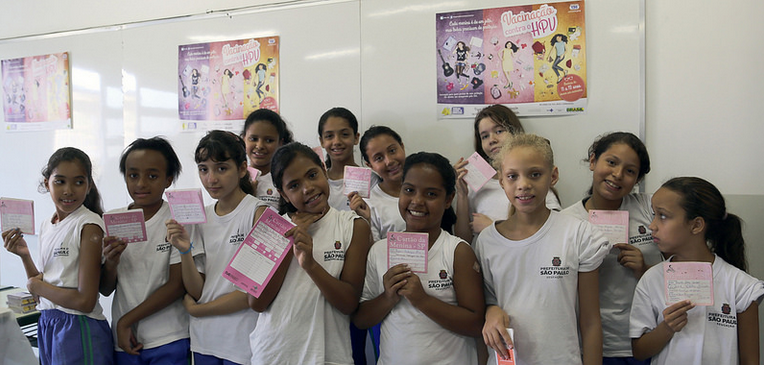
The slogan of the MoH's 2018 HPV vaccine campaign, as expressed in several advertising pieces, was "Do not miss the new season of HPV vaccination". The campaign film, included on the Facebook page, mixed real images and animation and showed two adolescents, a boy and a girl, fleeing from a virus in a scenario inspired by a popular series identifiable by both the young audience and their parents. The escape of the teenagers ends when they enter a public health office and are vaccinated. The vaccination campaign also provided information on the expansion of the age group eligible for the booster vaccine against meningitis: adolescents aged 11 to 14. The campaign was developed to redirect users from the Facebook page to a dedicated page on the MoH website, and all the published information included a call to action for users to find out more about the HPV vaccine at that website.
The study evaluated the posts published by the MoH, as well as posted comments, shares, and reactions of the population related to the HPV vaccination campaign on the specific Facebook page between January and July 2018. The data were analysed in 3 stages:
- Overview of published posts - Table 1 in the paper shows the general descriptive statistic analysis of 28 published posts studied. (Detailed information on each post and attached comments, reactions, and shares can be found in the supplementary material.)
- Analysis of posted comments - The researchers evaluated the type of emotions and sentiment polarity of 4,302 comments attached to the 28 posts expressing opinions on the HPV vaccination campaign. One finding: The publications that were designed to reach teenagers generated a higher rate of positive comments (59.1%) than posts addressed to the general public, health professionals, and parents, in which neutral comments prevailed (45.7%, 48.8%, and 57.4%, respectively).
- Sub-group analysis of posted comments - The researchers evaluated the comments attached to the 4 subgroups of posts published by the MoH regarding the specific type of emotion (see Table 4, positive and negative comments) and sentiment polarity (see Table 5, all comments). Overall, the campaign generated significant user activity and user engagement. On the other hand, some doubts remained concerning the HPV vaccine and intended audience for the vaccine among the Brazilian population, despite all the information conveyed during the MoH's campaign.
Insights that emerged are related to the importance of:
- Examining online discussion groups and correcting unintended errors in communicating vaccination campaigns - In general, there was a low rejection rate or negative repercussions among the Facebook users who left comments on the MoH's posts. However, this information should be interpreted with caution because Facebook allows echo chambers to emerge - meaning that an MoH campaign that uses Facebook to advocate for HPV vaccination should be expected to reach more pro-vaccination users. A prevalent sentiment in the posted comments, such as joy, can contribute to the government's viral marketing efforts by encouraging positive electronic word of mouth with regard to the HPV vaccine campaign. The researchers caution that the MoH should not ignore negative posted comments (11.8%) because they might illuminate what is not going right in the vaccine campaign. The idea is that the more insight the MoH has from the population, the better equipped it will be to deliver meaningful messages about the HPV vaccine campaign.
- Monitoring the engagement rate, sentiment polarity, and emotion types of specific audiences to which HPV vaccine messages were/are directed - Notably, Brazilian Facebook requires everyone to be at least 13 years old before they can create an account, which leads the researchers to conclude that Facebook is not the main form of communication for the intended audience of the HPV vaccination campaign. However, parents as well as health professionals - to whom some of the Facebook posts were directed - also play a critical role in HPV vaccination decisions. The post with the most frequent positive comment rate was an image that was meant to resonate with health professionals. The researchers suggest that the managers of the Facebook page should attempt to gauge the opinions of the leading members in the reference group of their intended audience and use their posts to promote user engagement.
- Determining which types of content represent the most effective message for positively engaging Brazilians in adolescent HPV vaccination campaigns - One finding is that messaging from government agencies, at this point in time, emphasised the role of the vaccine in preventing cancer, which is an effective message for young women but may not be the most effective message for vaccinating teenagers. Other issues worth highlighting because of the high rate of negative comments were investment and cost of vaccination campaign, vaccine availability, and political issues. One specific suggestion: The Brazilian HPV vaccination campaign for pre-adolescent girls and boys should communicate to parents that the safety of the vaccine has been firmly demonstrated.
- Evaluating whether the engagement strategies used by the MoH are in line with what the literature indicates to be effective strategies - The prevalence of images on the Facebook page shows that the MoH recognises the importance of visual content sharing on social media. This study also found that posts with video content generated the highest user activity and user engagement among Facebook followers, but more research is needed to determine whether video content is preferred over the posting of images.
Beyond the need to review new HPV vaccination campaigns, other future research suggestions include investigating how to integrate many types of social media and traditional media to increase awareness and promote HPV vaccination.
"In conclusion, although Brazil is a country strongly influenced by social networking, it appears that social media analysis as a monitoring tool in public health has yet to become routine practice in Brazilian government health agencies. As people are increasingly accessing information online, health professionals need to move quickly beyond simply offering online information about vaccinations and proceed to monitoring and measuring the consequences of each published item of information, including investing in social listening technologies."
Human Vaccines & Immunotherapeutics 2020, Vol. 16, No. 8, 1824-34. https://doi.org/10.1080/21645515.2019.1698244
- Log in to post comments