










































Factors Related to Vaccine Hesitancy during the Implementation of Measles-Rubella Campaign 2017 in Rural Puducherry-A Mixed-Method Study
Jawaharlal Institute of Postgraduate Medical Education and Research (JIPMER)
"[C]ountries should undertake training and education of family physicians and primary care workers to empower them to address the issues regarding vaccine hesitancy as well as addressing the vaccine-hesitant behaviors among the health workers."
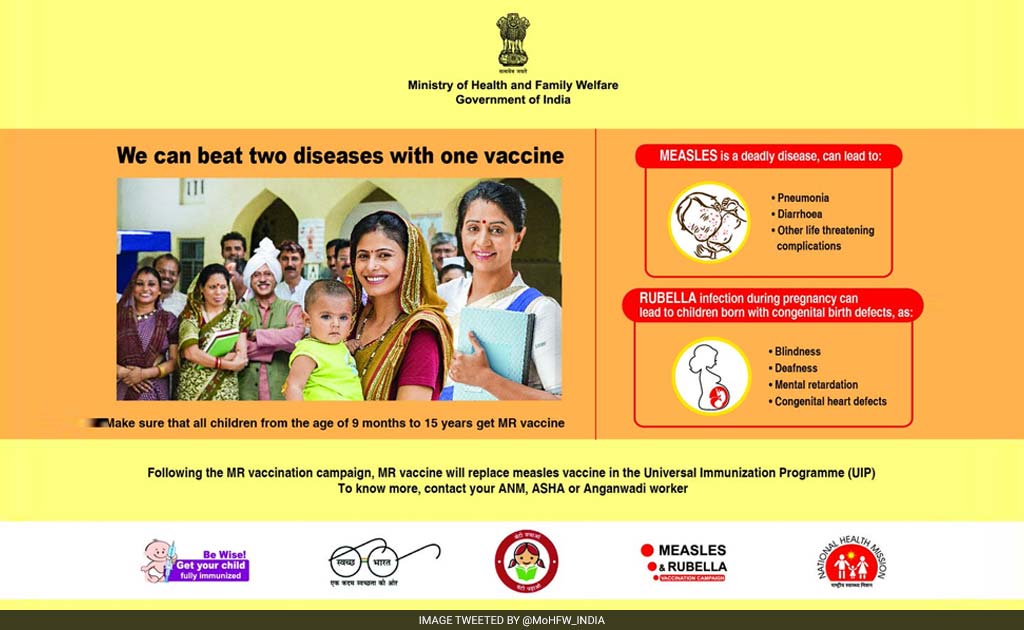
Even before India's Ministry of Health and Family Welfare (MoHFW) initiated a nationwide measles-rubella (MR) vaccination campaign on February 6 2017, rumours regarding the safety of vaccines were circulated on social media, which led to confusion among parents. Furthermore, minor adverse events following immunisation (AEFIs) were magnified disproportionately by social media, leading to panic and an increase in vaccine hesitancy. This mixed-methods study was conducted to explore in greater depth the reasons behind the hesitancy in the MR campaign in rural Puducherry, which is one of the Indian states in which the campaign was first launched.
During January and February 2018, 461 parents of children between 9 months and 15 years completed a cross-sectional survey, featuring the World Health Organization (WHO) Strategic Advisory Group of Experts (SAGE) vaccine hesitancy survey tool. The prevalence of vaccine hesitancy for the MR campaign in rural Puducherry was found to be 14.1% (95% confidence interval (CI): 11-17.6%). Six (1.3%) parents refused to give vaccination during the campaign, saying they do not believe the vaccine protects their children from disease but only causes serious side effects.
After adjusting for other variables and clustering between the villages using the random intercept model, only mother's age was found to be a significant predictor of vaccine hesitancy in rural Puducherry. Mothers over 30 years of age were 2.65 times more likely to be vaccine hesitant when compared to younger mothers (P < 0.001).
In-depth interviews were also conducted among 6 parents: 2 of whom had refused the MR vaccine, 2 of whom initially hesitated but accepted after motivation from a health worker, and 2 of whom agreed to have their children vaccinated without any hesitation. Furthermore, 2 female senior nursing officers, one male medical officer, and one Auxiliary Nurse Midwife (ANM) providing immunisation services in the rural health centre were interviewed. Select findings:
- In addition to inadequate knowledge regarding the importance of and eligibility for the vaccine, a major reason cited by almost all the respondents for vaccine hesitancy was the rumours spread about the safety of the vaccine. From the health system perspective, one senior nursing officer mentioned that there was lack of time in preparation for a campaign, which led to fewer awareness sessions with the general public. In spite of the limited time, health workers - from the grassroots level to programme managers - reportedly made efforts such as conducting meetings with leaders and community members to reduce the spread of rumours.
- Schools played an important role in the promotion of the campaign by conducting awareness sessions and addressing questions about the vaccination campaign during parent/teacher meetings. However, some schools created panic by asking for written willingness from the parents to vaccinate their children and by indicating that the school administration holds no responsibility in the event of any adverse reaction.
- A major role was played by doctors in facilitating the MR campaign by spreading awareness regarding the importance of vaccine and in fostering parents' trust in healthcare workers. ("Hence, family physicians and primary healthcare providers have an important role in counseling the vaccine-hesitant parents and [in] establish[ing] confidence in them.") One middle-aged father mentioned that, as most of his neighbours vaccinated their children, he also perceived that the vaccine is safe.
Figure 3 in the paper enumerates strategies and solutions to overcome hindering factors at parent, school, community, and health system levels in implementing a future large-scale vaccination campaign. One of the suggestions made by all the healthcare workers was to plan and provide information about the campaign in advance, which might help in the preparation of activities. Another common suggestion was to create awareness through rigorous information, education, and communication (IEC) activities, as well as through various mass media channels, to convey the importance of vaccinating children and the need for that extra dose if the vaccine is already in the routine immunisation schedule.
The researchers propose: "Creating a vaccine safety system with an effective communication approach will address the vaccine concerns and help in maintaining public confidence. For a vaccination campaign, better planning, participation, and collaborative effort between various ministries and technology sectors, public health professionals, pediatricians, family practice, and primary care physicians as well as community members might help in its successful implementation." They conclude that further surveillance on trends in vaccine hesitancy could provide further insights on the interventions that might work to reduce the hesitancy level and help increase uptake of the MR vaccine among all children in India.
Journal of Family Medicine and Primary Care. 2019 Dec; 8(12): 3962–3970. doi: 10.4103/jfmpc.jfmpc_790_19. Image credit: Visaspedia.in
- Log in to post comments