










































Gender Implications of COVID-19 Outbreaks in Development and Humanitarian Settings
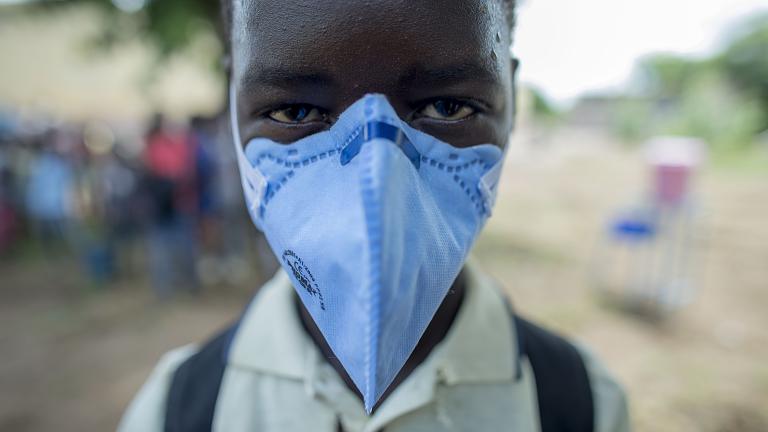
Informed by lessons learned from past public health emergencies, in this paper, CARE explores the numerous adverse ways in which COVID-19 outbreaks in development or humanitarian contexts could disproportionately affect women and girls around the world. In presenting recommendations for various actors based on this analysis, CARE calls on development and humanitarian organisations, national governments, and international donors to consider the gendered implications of the pandemic.
CARE contends that the dangers COVID-19 outbreaks pose will be magnified for the nearly 168 million people around the world already in need of humanitarian assistance and protection. Development and humanitarian programmes that support women and girls are often disrupted during public health emergencies, although their needs may in fact be amplified. This can have serious implications for women and girls in the short and long term, in the following areas, for example:
- Health: Social norms, which put a heavy caregiving burden on women and girls in many countries, are likely to cause their physical and mental health to suffer and impede their access to education, livelihood sources, and other critical support. In addition to the caregiving burden, social norms in some contexts dictate that women and girls are the last to receive medical attention when they become ill, which could hinder their ability to receive timely care for COVID-19.
- Protection: As CARE saw while working on Ebola and Zika outbreaks, women's and girls' needs for gender-based violence (GBV) and intimate partner violence (IPV) prevention and mitigation are likely to increase as the accessibility of protection services declines. Evidence from the 2014-16 West Africa Ebola virus disease (EVD) outbreak and 2018-20 EVD outbreak in Democratic Republic of Congo suggests that incidents of sexual exploitation and abuse (SEA) of vulnerable populations by development and humanitarian personnel increase during public health emergencies.
- Economic empowerment and wellbeing: Public health emergencies can have a tremendous, sustained impact on livelihoods. This can be particularly true for women, who are more likely to be engaged in informal or low-wage activities or migrant work.
- Education: As some schools in COVID-19-affected countries are closing for an indefinite period to mitigate the spread of the outbreak, girls in development and humanitarian contexts may be particularly affected. During the 2014-16 EVD outbreak in West Africa, girls whose mothers were infected with EVD were forced to take over their caregiving responsibilities; thus, even when their schools were not closed, girls found it increasingly difficult to balance their caregiving burdens with education.
- Water, sanitation, and hygiene (WASH): During public health crises, resources may be reallocated away from WASH services, which can contribute to reduced access to hygiene and sanitary materials for women and girls.
- Food and shelter: For example, the risk of heightened food insecurity and malnourishment during public health emergencies is particularly grave for women and girls because social norms in some contexts dictate that they eat last and least.
In light of this analysis, CARE urges all actors to: "Commit to proactive, early information sharing and coordination to ensure a robust global response that utilizes intersectional analyses to account for the needs of all individuals, irrespective of ethnicity, gender, nationality, or sexual orientation. These efforts should take place with the full participation of at-risk populations, particularly women and girl."
Select recommendations for specific groups include:
- For health services delivery actors: Short-term example: Engage with local communities to provide access to information for all populations, avoiding convening large groups where this may increase the risk of transmission. Account for age, disability, education, gender, migration status, sexual orientation, and the existence of pre-existing health conditions in this engagement. Long-term example: Involve more women of all ages in global health leadership; "[o]rganizations that do not include women in their decision-making processes cannot make the best decisions for women."
- For development and humanitarian organisations: Short-term example: Support mobile hotlines to mitigate and respond to possible surges in GBV, IPV, and SEA incidents where it can be done safely, understanding that not all women and girls will have access to phones. Long-term example: Work with local communities, particularly women's groups, before, during, and after public health emergencies to ensure continued trust and access to services.
- For national governments: Short-term example: Prepare and put in place, when necessary, plans to ensure the continuity of education, including via remote learning or radio broadcast. Long-term example: Ensure that emergency preparedness and response plans are grounded in sound gender analyses, considering gendered roles, risks, responsibilities, and social norms, and accounting for the unique capabilities and needs of other vulnerable populations.
- For international donors: Example: Require that all funding proposals contain comprehensive gender analyses and protection mainstreaming provisions.
In conclusion, CORE stresses that it is only through such an intersectional analysis and multistakeholder response that the international community can fully understand the implications of the COVID-19 pandemic and put an appropriate plan into action.
LeaderNet March 25 2020 newsletter, forwarded to IBP Global; and COVID-19's Gender Implications Examined in Policy Brief from CARE, March 16 2020 - accessed on March 25 2020. Image credit: Josh Estey/CARE
- Log in to post comments