










































'Happy Prostitutes' AIDS Campaign Sparks Debate
IPS News Service
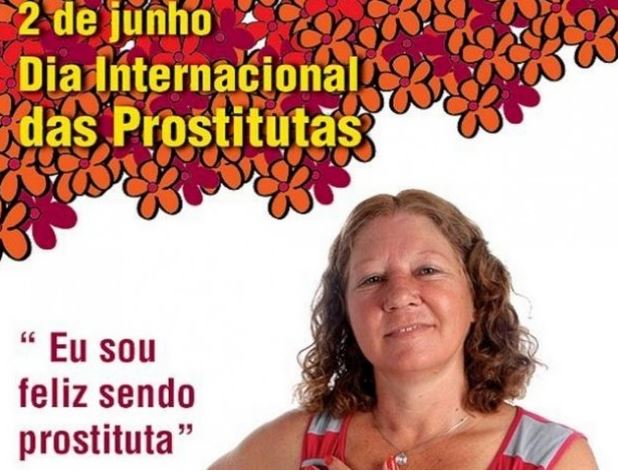
As part of a strategy against HIV/AIDS in a Brazilian prevention campaign focusing on prostitutes in Brazil, the slogan "Sou feliz sendo prostituta" (I'm happy being a prostitute) arose from national debates and workshops involving the prostitutes as participants. The Health Ministry campaign run by the Department of Sexually Transmitted Diseases (STD), AIDS and Hepatitis was released over the internet on June 2 2013, International Sex Workers Day, and was then withdrawn due to debate on its approach.
As stated in this IPS News article, messages for this campaign included other statements such as "O sonho maior é que a sociedade nos veja como cidadãs" (Our greatest dream is for society to see us as citizens). Groups supporting and organising prostitutes as working professionals hoped that the approach would reduce stigmatisation and marginalisation of this group. "(The slogan) expresses the dignity of our profession. To remove that phrase is a violation of our rights, especially because of the social stigma we suffer," said Leila Barreto, of the Group of Women Prostitutes in the northern state of Pará.
According to the article, "The version that replaced it reverted to the old-fashioned style: advice to sex professionals about the importance of using condoms and encouraging them to seek preventive measures in public hospitals. 'Prostituta que se cuida usa sempre camisinha' (Prostitutes who take care of themselves always use condoms) says the new campaign, which seeks to 'strengthen tolerance' and 'eliminate prejudice'."
Brazil's prevention campaigning has become the focus of debate, as it draws in conservatives, liberals, and HIV/AIDS activists, arguing along the lines of human rights. Other cases fueling the scrutiny include the banning of a carnival video that showed a relationship between two men and a cartoon strip for schools on homophobia and sexuality. "[D]iscussions are centred on the scope of a call for social participation in real politics." Activists argue that the messages are political, not designed as approval or disapproval of choices: "Designing a campaign for gays, prostitutes or prisoners is in itself a recognition that grants dignity to these persons..."
According to a profile of Brazilian prostitutes drawn up by the Health Ministry: "The majority of female sex workers are between the ages of 20 and 29, have not completed primary school, and are proud of being able to support their children. They do not suffer discrimination in the public health service, they like the freedom of their work, and they consider that it pays better than other jobs. However, they feel humiliated and discriminated against, they avoid telling others what they do, especially their children, and they are forced to put up with unpleasant clients and those who refuse to wear condoms."
The originators of the campaign hoped that its participatory methods and messages would put "them on a level with the rest of the citizenry...which is a powerful political decision. It confronts stigma from the heights of power, with the message that 'we do not care only about rich heterosexuals, but also about poor gays, prostitutes, transsexuals and so on, because to us they are all equal'...."
IPS website, October 4 2013. Image credit and caption: Beijo da Rua "'I'm happy being a prostitute,' says the HIV/AIDS prevention campaign poster that was subsequently withdrawn."
- Log in to post comments