










































HC3 in Action: Supporting Youth Health with SBCC
This brief describes key examples, challenges, insights, and resources to emerge from Health Communication Capacity Collaborative (HC3) initiatives to improve sexual and reproductive health outcomes for youth and adolescents, ages 10 to 24, around the world. Working in support of United States Agency for International Development (USAID)'s Youth in Development Policy, HC3 has developed tools that can be adapted by programme managers to ensure that social and behaviour change communication (SBCC) programming for youth is based on evidence and strategic principles. The report forms part of the "HC3 in Action" series, which seeks document and synthesise the HC3 project's experiences and lessons learned on topics that cut across the project's diverse portfolio of activities.
Strategies described in the report have included:
- Monitoring approaches and testing new activities: HC3's goal in Côte d'Ivoire is to reduce vulnerability to HIV among higher-risk populations, including girls aged 15 to 24. Super Go ("Go" is Ivorian colloquial for "girl") is a community-focused SBCC activity that uses health education, entertainment, and group trainings to engage girls in conversations and role plays covering a wide range of themes, including reproductive health, family planning, gender, and HIV. Young girls and women practice negotiation and gain the competence to prevent sexually transmitted infections (STIs), HIV, and unwanted pregnancies. To improve negotiation for condom use, Super Go facilitators and implementers began to invite participants' boyfriends, though facilitators were unsure if boyfriends would attend and if girls would talk freely in their presence. Despite these apprehensions, several Super Go sites tested the approach - finding that some boyfriends do join and that they engage in the role play, provide feedback, and create a lively atmosphere. Testing and monitoring the programme's approaches allowed programme implementers to see Super Go's ripple effect and to reach a larger audience. Since Super Go's start in 2013, 113,230 young girls have been reached, and 43,952 of them have agreed to test for HIV.
- Meeting youth where they are: In Mozambique, HC3 has provided communication support to USAID's voluntary medical male circumcision (VMMC) programme in Manica and Tete provinces since late 2015. Site-level data revealed the critical role of community mobilisers ("activistas") as a key source of referrals. Ongoing evaluations, supervision, improved subsidies, better training, job aids, and accessories allowed mobilizers to achieve better results. For example, it was important to ensure that they were trained to communicate age-appropriate information. Furthermore, working with community leaders greatly contributed to the success of the 15 mobile brigades that were created to help deal with transport as a barrier to VMMC service uptake. HC3 community mobilisers also reached youth in public spaces, including markets, schools, workplaces, and events like a local music festival ("Super Bock Super Rock"), where an additional 200 clients received VMMC. Amplifying the voices of satisfied clients was a key strategy in improving VMMC uptake. Male mobilisers who had been circumcised provided information as well as personal stories to address concerns about the procedure HC3 has also produced videos of satisfied client testimonials to share at mobilisation meetings, in health centre waiting areas, and on social media. In Manica, VMMC services for 15- to 29 year-olds increased from 6,463 in 2015 to 9,127 in 2016. In Tete, services increased from 3,040 in 2015 to 4,601 in 2016.
- Engaging the whole community: HC3 Swaziland fosters local ownership and accountability for HIV prevention among adolescent girls and young women (AGYW) by working with community leaders in 19 local government areas. HC3 developed and used a community leaders' manual to increase leader awareness of the vulnerabilities that young women face and actions to protect them. HC3 reports that, with capacity for community engagement and action planning, community leaders became strong advocates in addressing the social and gender norms that place AGYW at risk, and in working towards greater acceptance of HIV risk reduction. HC3 analysed and addressed the economic and social contexts that influence youth HIV infections, finding that, for example, access to money is a significant barrier to HIV risk reduction among AGYW in Swaziland. Thus, HC3 conducts weekly financial literacy and business skills self-help groups in which participants gain skills such as assertiveness for communicating their needs and wants. HC3 also encourages young women to lead community activities that increase awareness and stimulate open discussion on the HIV issues affecting them. HC3 community engagement activities in Swaziland reached 49,264 people from 2015 to 2017. A total of 6,856 were tested for HIV.
- Providing opportunities for youth to listen to youth: HC3's Family Planning (FP) INFOcus Guide (see Related Summaries, below) is a tool for encouraging young people to produce and promote mobile phone videos that share contraceptive information - including about long-acting reversible contraceptive methods (LARCs) - and model essential skills. When HC3 pretested its collection of LARCs for youth tools, youth audiences in Nigeria expressed interest in receiving LARC information through more modern channels, including mobile phones, serial dramas, and social media. They also wanted to learn about other young people's experiences with contraception. To that end, the guide uses a "mobile first" approach, so videos are filmed, shared, and viewed with mobile phones. It provides step-by-step information and identifies the key considerations for reaching peers through digital storytelling. HC3 partnered with HACEY Health Initiative, a youth-led organisation in Nigeria, to pilot FP INFOcus. Ultimately, the HACEY partnership proved that the FP INFOcus approach can successfully engage youth audiences, from planning to production to promotion. To address provider-related barriers to LARC uptake among youth, HC3 created adaptable SBCC materials that can be used by FP programme managers, including: a three-minute animated video, a video discussion guide, a take-home brochure, and seven LARC posters that encourage young women to talk with a healthcare provider on the benefits of LARCs. Since its launch in April 2016, this collection has been adapted 29 times for audiences in over 20 countries.
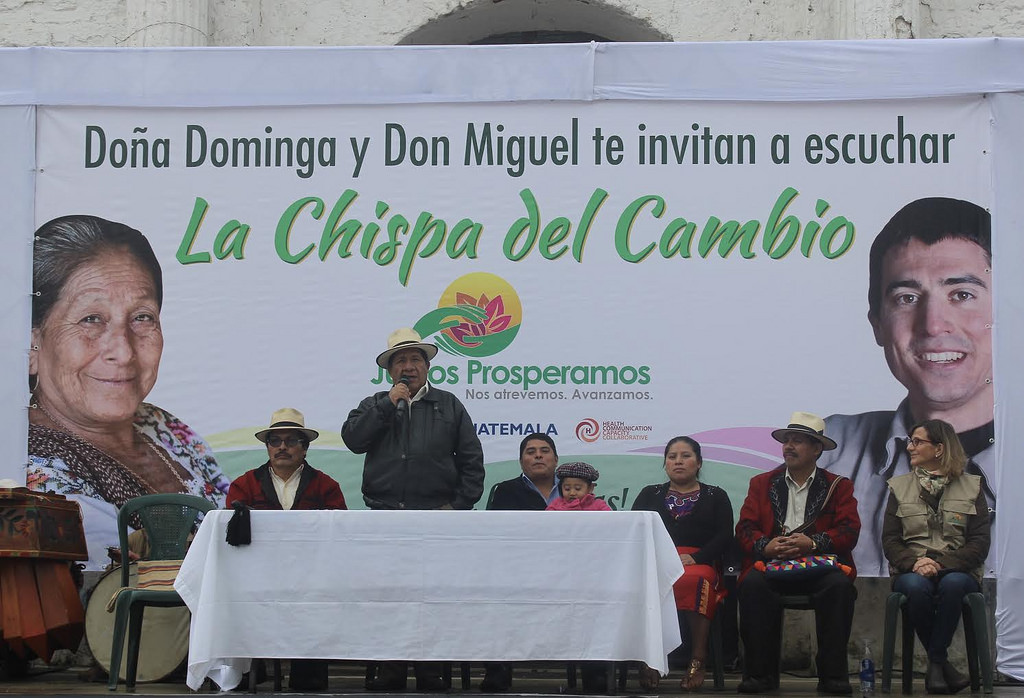
- Establishing healthy habits for young couples: In Guatemala and Nepal, HC3 strategically focused on improving health outcomes during the "first 1,000 days" of a young family (from pregnancy until a child is two years old). The Western Highlands Integrated Program (WHIP) supports USAID Guatemala to address malnutrition and other developmental challenges in the Western Highlands of Guatemala. The strategy (see Related Summaries, below) focuses on transforming the home into the "heart of change" by appealing to young family aspirations and deepening the involvement of key influencers and decision-makers. It appeals to young family aspirations that are supported by healthy choices and behaviours and draws on a mix of channels (radio programmes, a TV series, a tablet app that has stories of positive change for discussion groups and home visits, and dialogues among couples, men, grandmothers, and religious and indigenous leaders) to create communication and dialogue legitimising new norms. In Nepal, the Smart Jeewan campaign combined high-profile events with a digital campaign and focused district outreach efforts to maximise contacts with young 1,000 day families. A cohort study of married young families in six HC3 and six control districts found that among young cohabitating married couples with one child, contraceptive use was 68% among those of who recalled the Smart Jeewan media campaign (versus 52% among those who did not recall the campaign). Among all young couples with a recent delivery, postpartum FP use at six months was 40% among those who reported face-to-face contact with any HC3 community volunteer workers (versus 28% of those who had no contact).
Throughout this brief, there are lists of "Resources for Success" - for HIV prevention among young girls, for VMMC demand generation among youth, for reducing AGYW HIV vulnerability, for promoting contraceptive choice among youth, and for establishing healthy habits for young couples. These resources include documents as well as videos.
The brief concludes that, "[w]hen programming meaningfully engages youth, works across various socio-ecological levels, is carefully monitored and reaches youth during critical windows of opportunity, it supports young people in making a safe and productive transition to adulthood."
HC3 website, September 29 2017. Image caption: "HC3 and partners launched an engaging radio magazine programme, 'The Spark of Change' on health behaviors."
- Log in to post comments