










































How Trust in Experts and Media Use Affect Acceptance of Common Anti-Vaccination Claims
Annenberg Public Policy Center of the University of Pennsylvania
"How does the use of traditional media vs social media affect the belief in false information regarding vaccines in the US [United States] population? What is the relationship between trust in medical experts and acceptance or rejection of common anti-vaccination claims?"
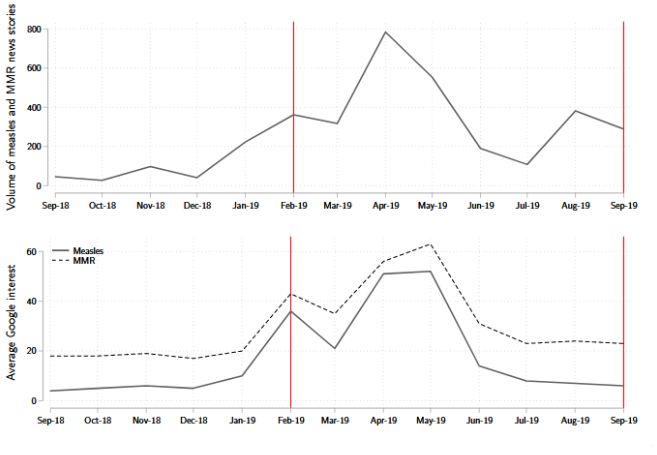
Drawing on evidence gathered during a measles outbreak in two periods in 2019 from a nationally representative survey panel of nearly 2,500 Americans, this group of researchers studied how anti-vaccination claims are widely held, persist, and relate to an individual's media consumption and levels of trust in medical experts. This report shares the details of their research.
The researchers found that:
- 18% of the respondents mistakenly state that it is very or somewhat accurate to say that vaccines cause autism.
- 15% mistakenly agree that it is very or somewhat accurate to say that vaccines are full of toxins.
- 20% wrongly report that it is very or somewhat accurate to say it makes no difference whether parents choose to delay or spread out vaccines instead of relying on the official Centers for Disease Control and Prevention (CDC) vaccine schedule.
- 19% incorrectly hold that it is very or somewhat accurate to say that it is better to develop immunity by getting the disease than by vaccination.
- In many cases, those who reported low trust in medical authorities were the same ones who believed vaccine misinformation (i.e., distrust of medical authorities is positively related to vaccine misinformation). This was true across different demographic groups and political beliefs.
Not only was the percent of individuals holding misinformed beliefs high, but mistaken beliefs persisted over the 5-month period between data gatherings (i.e., February 28 - March 25 and September 13 - October 2). During the intervening time, health experts at the National institutes of Health (NIH) and CDC responded to the measles outbreak by appearing in both mainstream and social media to make the case for vaccination, while those hostile to immunisation found a more hospitable venue online than in traditional venues.
- The individuals who said that they were exposed to an increased amount of content about measles or the measles, mumps, and rubella (MMR) vaccine on social media were more likely to have grown more misinformed.
- By contrast, those who reported to have saw, read, or heard information on these topics in traditional media were more likely to respond accurately.
Taken together, these results:
- ...point to the role of health professionals in preventing and addressing vaccine misinformation. As reported here, research suggests that those who distrust expert sources may nonetheless accept the recommendations of their own doctor if he or she takes the time to listen and explain (Brenner et al., 2001) and presumes the value of vaccines (Dempsey & O'Leary, 2018). For example, a doctor's use of interpersonal motivational interviewing (MI) has been shown to increase the likelihood that a patient will agree to vaccinate their child.
- ...underscore the value of efforts to educate the public through traditional sources and minimise exposure to vaccine misinformation on social media. There are ongoing debates on the merits and limits of the self-regulation by technology companies; in 2019, Facebook, Twitter, YouTube, and Pinterest announced decisions to reduce or block access to anti-vaccination misinformation.
- ...highlight the need for future work to move beyond establishing correlations to examine whether the relationships among trust in medical experts, media exposure, and vaccine misinformation are causal.
The Harvard Kennedy School Misinformation Review, January 2020, Volume 1, Issue 1. DOI: https://doi.org/10.37016/mr-2020-007
- Log in to post comments