










































Interim Advice on Risk Communication and Community Engagement during the Monkeypox Outbreak in Europe, 2022
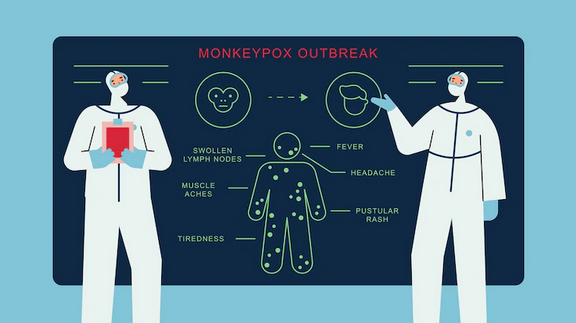
"RCCE is instrumental to achieve results across all the main areas of the response, from laboratory testing, contact tracing and isolation, to treatment and preventative and protective measures. For all these measures, support from affected communities is crucial for their success."
Health emergencies in the European Region have highlighted risk communication and community engagement (RCCE) as a key measure available to health authorities to enable at-risk or affected communities to make informed decisions to protect their health, particularly when there is no vaccine and little in the way of treatment available. This document from the European Centre for Disease Prevention and Control (ECDC)/World Health Organization (WHO) Regional Office for Europe is intended for health authorities working on RCCE in the context of the monkeypox outbreak in Europe, which began on May 13 2022. It provides advice on approaches to the communication of risks and engagement of population groups based on the outbreak's epidemiology and context, recommended preventive measures, and people's perceptions and behaviour.
The document is grounded in key principles of risk communication, which are designed to build trust between health authorities and at-risk groups. These principles include: communicating early; being transparent, consistent, and relevant; and applying WHO's principles of effective communication. As noted here, social listening insights should form the basis of risk communication interventions, particularly to understand public perceptions related to certain population groups and detect and address rumours and misinformation in a timely manner. Based on such data, more direct channels and engagement than that used for the general public can be leveraged to reach those at increased risk through two-way communication.
The features of the monkeypox outbreak in Europe contribute to a complex RCCE context, which includes several key components:
- Predominantly affected community - Most cases reported as of this writing were in men who have sex with men (MSM), meaning that the risk of stigmatisation needs to be properly considered in all RCCE activities. (The document offers a list of actions to be considered to mitigate any possible stigmatisation. It also looks at other priority groups for RCCE in this context, including commercial sex workers, healthcare workers, and immunocompromised people, pregnant women, and children.)
- Uncertainty - There are many unknown aspects of the disease in this early stage of the outbreak, so it is important for RCCE to acknowledge the rapidly evolving nature of the outbreak and incomplete knowledge and to adapt initial prevention strategies as more scientific information becomes available.
- Mass gatherings - As summer approaches and COVID-19 related restrictions ease, festivals and events (including Pride events) were planned in many European countries, offering an environment that may accelerate disease transmission yet also providing opportunities to conduct outreach for specific population groups with public health messaging.
- Relaxation of COVID-19 public health measures - In light of the fact that many countries have reported pandemic fatigue, some individuals may be demotivated to follow new recommendations on protective behaviour; this context will need to be considered in RCCE strategies.
The practical document includes 10 risk communication tips, as well as a list of possible communicators, communication channels, and messages that can be used to address the monkeypox outbreak in Europe.
ECDC/WHO suggests that public health authorities at national and sub-national level identify and actively work with relevant civil society organisations, community-based organisations, and stakeholders, leveraging the trust they have to ensure that the affected communities are properly informed and empowered to protect themselves from the disease. This work includes communicating in relevant and culturally appropriate language and using communication channels preferred by their members.
7
ECDC website, June 13 2022. Image credit: Freepik
- Log in to post comments