










































The Language Factor: Lessons for the 11th Ebola Outbreak on Adapting to the Language Needs of Communities Learned during the 10th Ebola Epidemic in the Democratic Republic of Congo
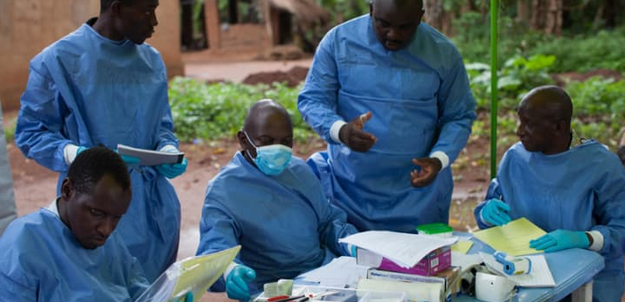
"When you're ill, you're there with staff that speak only French. You don't understand each other, and then the trust is gone." - Woman, Tamende, Beni
From Translators without Borders (TWB), this report was produced in the midst of the 11th outbreak of Ebola virus disease (EVD), which rapidly followed the 9th and 10th outbreaks in the Democratic Republic of the Congo (DRC). It offers lessons for language-aware risk communication and community engagement with people facing Ebola and other epidemics.
These lessons include four main conclusions:
- People at risk of contracting Ebola need information to keep themselves and their families safe. Information they don't understand will not help them. They need clear communication in plain, localised language, in a format they understand, and through channels they trust.
- In the 10th Ebola outbreak in DRC, the use of French and standard Swahili, which many local populations did not understand, exacerbated mistrust between health workers and communities, hampering vaccine sensitisation efforts. The fact that local health communicators lacked the tools to clearly address communities' questions and concerns compounded the situation.
- In general, language barriers pose the greatest challenges to women, older people, and other vulnerable groups when it comes to obtaining the information they need. For example, during a rapid information needs assessment in Goma, TWB found that women over 35 years old did not understand critical terms such as vaccine (chanjo) in standard Swahili.
- Because language use and information preferences vary by location, further research is needed to determine the most effective approaches to risk communications and community engagement in the future.
On the basis of these considerations, the report offers eight recommendations applicable to EVD responses and other public health crises, in DRC and beyond:
- Include language data in early assessments and surveys.
- Use the local language for all oral or written risk communication on the risks of EVD.
- Test the understanding and communication preferences of residents of areas affected by or at risk of EVD.
- Develop information materials in plain language.
- Use terms consistently.
- Localise translation of national languages.
- Place audio formats at the heart of communication strategies.
- Use audiovisual formats to further facilitate understanding.
The report concludes with short descriptions of, and links to, TWB tools and resources for responders in DRC.
This publication is based on work funded by the United Nations Children's Fund (UNICEF), with support by UK aid from the United Kingdom (UK) government and by the Paul G. Allen Family Foundation.
Click here for the 21-page document in PDF format in English.
Click here for the 21-page document in PDF format in French.
ReliefWeb, January 25 2021, World Health Organization (WHO) DRC website, November 18 2020 - both accessed on March 4 2021; and email from Mia Marzotto to The Communication Initiative on March 11 2021. Image credit: TWB
- Log in to post comments