










































Men as Contraceptive Users: Programs, Outcomes and Recommendations
The Population Council (Hardee); What Works Association (Croce-Galis, Gay)
"Efforts to expand the vision for constructive male engagement are evolving from encouraging men to be supportive partners of women's reproductive health to also focus on meeting men's own reproductive health needs and engaging men as contraceptive users and agents of change in families and communities. Knowledge about reaching men as clients of family planning services in today’s programming environment is still limited."
This paper from the Evidence Project reviews 47 current activities, programmes, and evidence that affect men's use of contraceptive methods, drawing from published and grey literature, as well as interviews with organisations and institutions, focused on men as users of contraception in low- and middle-income countries around the world. The review includes 3 methods that men use directly (condoms, vasectomy, and withdrawal) and one that requires their direct cooperation (the Standard Days Method, or SDM). (A companion review by Perry et al., 2016 [PDF] includes a more detailed review of vasectomy programming.)
The range of 47 interventions identified in this review were spread across 27 countries spanning Africa, Asia, Latin America and the Caribbean, and Europe. The programming for men generally fell under 5 broad strategies, which are characterised as proven, promising, or emerging, drawing from the criteria used by the Family Planning High Impact Practices (FP HIP) Initiative. The definitions are as follows:
- "Proven: Sufficient evidence exists to recommend widespread implementation, provided that there is careful monitoring of coverage, quality and cost, and implementation research to help understand how to improve implementation.
- Promising: Good evidence exists that these interventions can lead to impact; more information is needed to fully document implementation experience and impact. These interventions should be promoted widely, provided that they are implemented within the context of research and are being carefully evaluated both in terms of impact and process.
- Emerging: Although emerging practices have a strong theoretical basis, they have limited evidence to assess impact. Therefore, emerging practices should be implemented within the context of research or an impact evaluation."
This review describes the range of evidence supporting the interventions comprising each strategy and also indicates the countries in which the interventions under the strategy have been implemented.
The 5 strategies are:
- Clinic provision of information and services to men - In particular, provision of vasectomy to men was found to be "promising". The review includes 4 interventions that include training providers in both provision of vasectomy and in counseling, including addressing barriers specific to vasectomy, such as myths about loss of virility. The evidence supporting these interventions generally comes from service statistics. Client-provider communication was assessed in one intervention through use of mystery clients. Where vasectomy services were provided, use generally went up. While the numbers of vasectomy users remains small, the trends are in the right direction and show promise of expanding provision of clinical family planning services for men.
- Outreach programmes through male motivators and peer educators/mentors - Providing outreach programmes through male motivators is a proven intervention, and use of peer educators/mentors is an emerging intervention. The review includes 10 interventions that had male motivators/educators provide information to other men, build condom use and communication skills and, in some cases, provide contraceptives directly or refer participants to nearby services. In a number of interventions, male motivators were part of complementary programming of female motivators for women. While not all male peer programmes are designed to promote increased contraceptive uptake specifically by men (e.g., they include male methods in discussion of a broader range of methods), many do have a positive impact on gender equality and more gender-equitable approaches to contraceptive decision-making. "Ensuring that these programs include a focus on promoting male contraceptive use would strengthen this approach to reaching men."
- Communication programming:
- Social marketing of contraceptives is considered a proven high-impact practice for family planning. The review includes 3 interventions (in Pakistan, Cameroon, and Senegal) with measured outcomes related to men's use of condoms, with evidence from pre-post intervention surveys and a post-intervention survey. In general, social marketing interventions have used television and radio advertising campaigns focusing on condoms - to increase awareness of the effectiveness of condoms, reduce embarrassment when purchasing or negotiating condom use, and increase use of condoms. Social marketing can challenge social norms and help overcome barriers to acceptability of contraceptive use. The 3 social marketing programmes included in this review generally aimed to increase awareness of contraceptive methods overall and addressed method-specific challenges, information and service provision, and gender norms and equality.
- Mass media is found to be a promising intervention for reaching men as family planning; use of social media, which is more recent, is an emerging intervention. The review included 7 interventions that included media and advertising campaigns carried out via radio, television, newspapers, billboards, brochures, and use of the social media site Facebook to promote family planning. Most reached men to increase men's support for their partners' contraceptive use, while some addressed men's use of contraception as well. The evidence supporting these promising (mass media) and emerging (social media) interventions include: pre-post intervention surveys and service statistics. In addition, 2 interventions included focus group discussions, and one included interviews with men that augmented service statistics. There were a range of outcomes associated with these interventions, from increased use of condoms and vasectomy to shifting the perception that family planning is a women's affair and addressing gender norms and equality in family planning and contraceptive use. For example, in Vietnam, an information, education, and communication (IEC) programme promoted male responsibility in family planning with messages such as "he is very manly, he always cares for his family". In addition to the IEC materials, radio broadcasts promoted couple communication about reproductive health and encouraged men to use condoms. By the end of the project, condom use increased by 50% (MacDonald et al., 2013).
- Mobile health (mHealth) text messaging programmes are gaining traction in family planning programming. The review includes 4 interventions, with evidence from pre-post intervention studies and service statistics. Experience suggests that men, particularly young men, are drawn to them as a means of getting information about family planning and that women often rely on their partners to use SMS (text messaging) systems. Yet, little is known about the extent to which men's knowledge about, access to, or use of services increases as a result of these programmes due to a lack of evaluation and/or sex-disaggregated data.
- The review includes 3 interventions that included hotlines, an emerging intervention, supported by evidence from call statistics and a survey of hotline users. Similar to SMS services, men use hotlines for information about family planning. Statistics suggest that where hotlines are available, men tend to more heavily use hotlines than women. Men call both for themselves and for their partners. Yet, little is known about the extent to which men's knowledge or access to services increased as a result of these programmes due to a lack of evaluation and/or sex-disaggregated data.
- Community engagement:
- Engaging the larger community is found to be a strongly promising intervention to foster a sense of legitimacy and normalcy for men's participation in conversations about and use of contraception. Community engagement approaches bring men and women together, sometimes with community and religious leaders, to create a unified understanding of family planning, including norms, values, roles in family planning, and availability of and access to services. The review includes 10 interventions that primarily consisted of social and behavioural change communication (SBCC) strategies intended to promote equitable gender norms and attitudes. None of the programmes focused solely on male use of contraception, although increasing acceptability of family planning generally could have positive effects on couple communication and use of contraception, including by men. Overall findings from these programmes found reductions in myths around family planning, improved communication with partners about family planning, and increased use among men (although not all programmes indicated if the increased use was of male methods).
- Engaging religious leaders to support family planning is deemed an emerging intervention, although few interventions have focused specifically on men's use of family planning. The review includes 2 evaluated interventions that engaged religious leaders, with evidence from a longitudinal survey with baseline and endline measurements and a baseline/endline survey with qualitative interviews. These interventions provided orientation and updated information on family planning to religious leaders and, in turn, the religious leaders reached out to their communities with the information and their support for family planning. Religious outreach was linked with availability of services. The interventions increased men's support for family planning and increased male use of contraception.
- Sex education programming, a promising intervention, offers an opportunity to address the sexual and reproductive health needs of boys as well as provide information about family planning and fatherhood. However, relatively few sex education curricula specify anything related to the unique sexual and reproductive health needs of men and boys. The Comprehensive Sexuality Education (CSE) programs in this review increased boys' awareness of sex and pregnancy prevention and increased gender-equitable attitudes. The retrospective study of a CSE programme in Tanzania suggests that while boys may not fully comprehend the messages they are receiving at the time, they internalise them later as they become sexually active. While there are a number of ongoing CSE programmes, evaluations of the impact of comprehensive sexuality education on boys' use of contraception, particularly beyond condoms, were not found.
The review found few robust evaluations of programmes to engage men, let alone of programmes directed at men as users. Not all programmes report findings disaggregated by sex and by contraceptive method, making it difficult to determine the effect of programming on male use of methods. The researchers state that more systematic data collection on men's fertility and relationships could greatly enhance information and service provision for men. Furthermore, critical research is missing on what are effective programmes to increase responsibility by adolescent boys, prior to sexual activity, to prevent unintended pregnancy and to ensure both dialogue on pregnancy prevention and that the sexual act is consensual. In general, they say, "filling in the gaps in implementation science research and evaluation can begin to change the direction of family planning programming toward more inclusive approaches for men as family planning users."
In conclusion, the authors suggest that, while direct programming addressing men's contraceptive use remains limited, "the existing evidence of men's desire for information and services, as well as men's positive response to existing programming, illustrates the value of expanded programming for men and boys in family planning and contraceptive services. Scaling up successful programming identified in this review will increase men’s knowledge and use of family planning services, reduce barriers, increase gender equality and improve the health and well being of men and women, boys and girls worldwide."
Led by the Population Council, the Evidence Project is made possible with support from the United States Agency for International Development (USAID).
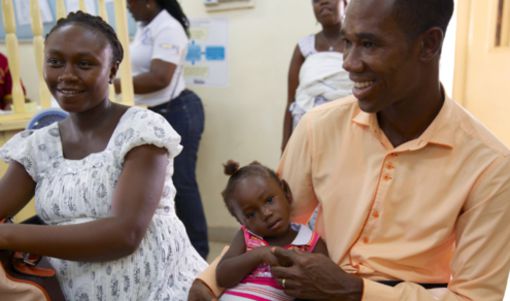
Email from Population Council/Evidence Project to The Communication Initiative on September 8 2016. Image credit: © 2016 Sarah Hoibak/VectorWorks, Courtesy of Photoshare
- Log in to post comments