










































A National Survey to Assess the COVID-19 Vaccine-Related Conspiracy Beliefs, Acceptability, Preference, and Willingness to Pay among the General Population of Pakistan
Bahauddin Zakariya University (Arshad, Hussain, Mahmood, Majeed, Imran, Uzair, Rehman, Ashraf, Akbar, Chaudhry, Saleem, Shakeel, I. Iqbal, Rasool); University of Veterinary and Animal Sciences (Hayat); Xi'an Jiaotong University (Hayat); University of the Punjab (Saeed, Islam, Hashmi); Ocean University of China Qingdao (M.O. Iqbal); Nishter Medical Hospital (Usman); University of Management and Technology Lahore (Syed); Al-shifa Pharmacy (Ramzan)
"...the public is the ultimate decider of the success or failure of a vaccination program."
With the development of COVID-19 vaccines, various conspiracy theories have been promulgated around the globe. In Pakistan, where vaccine hesitancy is the major barrier to curbing vaccine-preventable diseases, such narratives may plant seeds of resistance against the COVID-19 vaccination programme. Anti-vaccination behaviour on the part of the general public was reported previously with polio vaccination in Pakistan due to various conspiracy theories and religious beliefs. In this context, the current study assesses the beliefs of the general public in Pakistan with regard to conspiracy theories, acceptance, and preferences for the COVID-19 vaccine. It is hoped the findings might assist the health regulatory agencies in designing strategies for increasing vaccine acceptance.
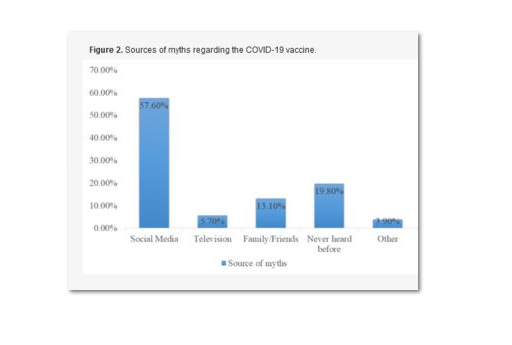
A cross-sectional study was conducted through an online self-administered questionnaire completed by 2,158 respondents from all provinces of Pakistan in January 2021. The survey revealed that conspiracy beliefs circulating regarding the COVID-19 vaccine are believed by 9.3% to 28.4% of the study participants: 410 (19.0%) believe the COVID-19 vaccine can kill people; 200 (9.3%) believe the COVID-19 vaccine contains 5G-nanochips to control people; 285 (12.0%) believe the vaccine can cause infertility; 282 (13.1%) believe the COVID-19 vaccine is designed to harm Muslims; and 354 (16.4%) think COVID-19 and its vaccine are the propaganda of non-Muslims to rule the world. Furthermore, 1242 (57.6%) of participants mentioned social media as the major source of COVID-19 vaccine-related myths or conspiracy theories.
More than one-quarter of participants (612;28.4%) have concerns about the safety of the COVID-19 vaccine and believe that it could be harmful, as it was developed quickly. Just under half of the participants (1,040;48.2%) agreed to vaccinate themselves when the vaccine was available. The conspiracy beliefs of the participants were significantly associated with acceptance of the COVID-19 vaccine. Moreover, the majority of participants 934 (43.3%) showed their preference for the COVID-19 vaccine developed by Sino Pharm, a pharmaceutical company from China. About half of the participants (1,138;52.7%) were willing to pay less than 500 PKR (US$3.12) for the COVID-19 vaccine.
In response to the findings, the researchers recommend that the health administration and policymakers take immediate action to neutralise misleading information through evidence-based public education regarding the safety and efficacy of vaccines. In light of the finding that social media was mainly responsible for the spread of conspiracy beliefs among the general population, the researchers suggest that the regulatory authorities take concrete steps in countering the spread of such conspiracy beliefs. This can be done by advocating vaccine safety and disease prevention messages at the national level using electronic and social media platforms.
In conclusion: "The results of this study revealed the existence of conspiracy beliefs regarding the COVID-19 vaccine with a low acceptance rate among the general public of Pakistan. These beliefs are posing a major threat to the upcoming immunization program for the control of COVID-19 in Pakistan."
Vaccines 2021, 9(7), 720; https://doi.org/10.3390/vaccines9070720.
- Log in to post comments